- China's foreign trade hit 5.16 trillion yuan (USD 771 billion) in September 2026 — the first month ever above 5 trillion yuan — up 27.5% year on year, per the General Administration of Customs.
- Dollar-denominated exports jumped 36.3%, far above the 25.5% Reuters poll forecast, while the monthly trade surplus set an all-time record of USD 133.53 billion.
- Growth accelerated through 2026: 15.3% in Q1, 18.3% in Q2, 22.3% in Q3 — the fastest pace for the same period in five years.
- For Arab importers this means tighter factory capacity and longer lead times ahead of the year-end season, plus sustained high freight rates on China–Gulf lanes.
- Action point: lock Q4/Q1 orders now, book shipping space early, and review war-risk insurance terms on Red Sea routings.
On 14 October 2026, China's General Administration of Customs released the strongest trade figures in years: monthly foreign trade above five trillion yuan for the first time in history, and dollar-denominated exports growing by more than a third in twelve months. These numbers translate directly into how busy your factories will be, the freight rates you will pay, and the delivery dates you will be quoted. Keerki Limited reads the official data through the eyes of the Arab importer: what happened, what it means for your next orders, and how to move before year-end.
What Did Chinese Customs Announce on 14 October 2026?
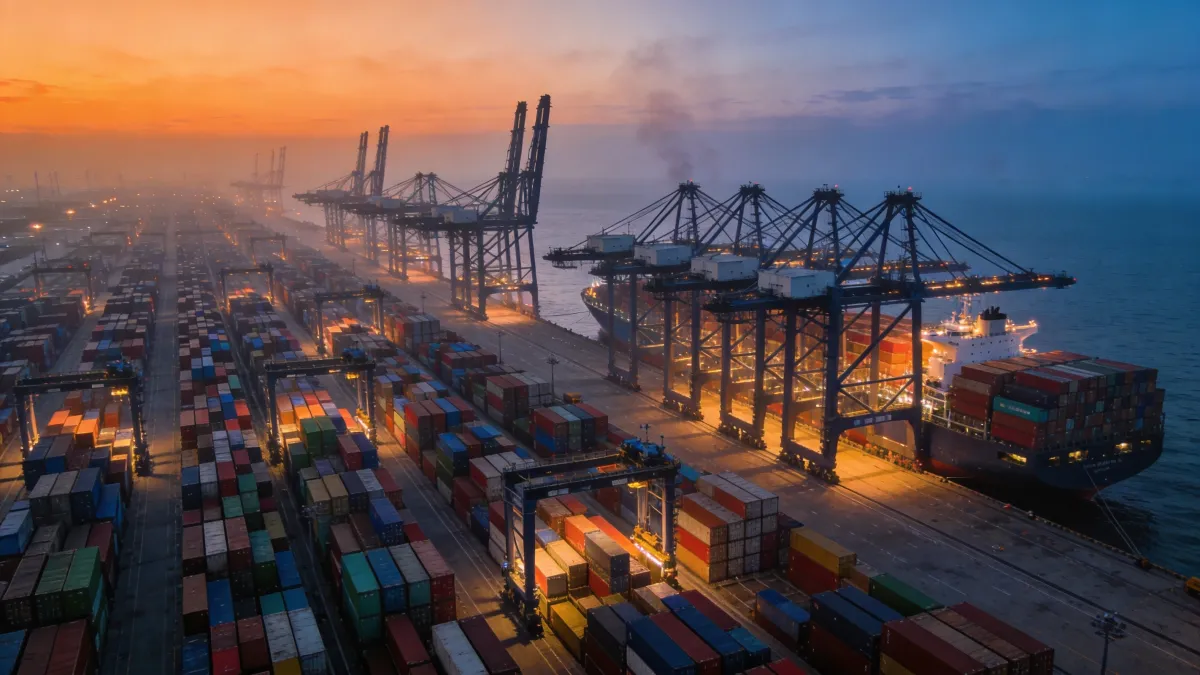
Chinese customs announced that total goods imports and exports reached roughly 5.16 trillion yuan (USD 771 billion) in September 2026, crossing the five-trillion-yuan mark in a single month for the first time, with year-on-year growth of 27.5%, according to the official data carried by Xinhua and CGTN. It was also the sixth consecutive month of double-digit monthly trade growth.
The details reveal even stronger momentum than the headline. In yuan terms, exports rose 29.6% to 3.03 trillion yuan and imports grew 24.6% to 2.13 trillion yuan. In dollar terms, exports reached USD 447.18 billion, up 36.3% — the fastest since February and well above the 25.5% forecast in the Reuters economist poll — while imports climbed 31% to USD 313.65 billion. The monthly trade surplus widened to USD 133.53 billion, a record for any single month in customs data.
| Indicator | September 2026 | Year-on-Year Change |
|---|---|---|
| Total foreign trade | 5.16 trillion yuan (USD 771 billion) | +27.5% |
| Exports | 3.03 trillion yuan (USD 447.2 billion) | +29.6% (+36.3% in USD) |
| Imports | 2.13 trillion yuan (USD 313.7 billion) | +24.6% (+31% in USD) |
| Monthly trade surplus | USD 133.53 billion | All-time monthly record |
| Reuters poll forecast for exports | +25.5% | Beaten by 10.8 points |
For the first nine months of 2026, total trade reached 39.94 trillion yuan, up 18.8%: exports of 23.2 trillion yuan (+16.4%) and imports of 16.74 trillion yuan (+22.3%), meaning imports are outpacing exports by 5.9 percentage points. Growth is accelerating rather than cooling — 15.3% in Q1, 18.3% in Q2, 22.3% in Q3 — the fastest for this period in five years, according to GAC deputy head Wang Jun. The number of companies with actual import activity also rose to 289,000, up 12,000 year on year, a sign that China's own buyer base is widening too.
Why Should the Arab Importer Care About These Numbers?
They matter because strong global demand for Chinese goods means factories are running near full capacity, and that directly affects three things in your business: price, delivery time, and available shipping space. When the US, Southeast Asia and Europe compete for the same production lines, the buyer who orders early moves to the front of the queue.
From Guangzhou, we at Keerki see how a strong demand cycle changes factory behaviour: hot production lines (electronics, vehicles, new energy) raise minimum order quantities and show less price flexibility, while factories accept next-quarter orders earlier than usual. September's data shows Chinese exports to ASEAN surged 52.3% in a single month, with the EU up 25.3% and the US up 39.6% — competition for factory capacity is coming from every direction at once.
There is a positive side as well. China's imports growing 22.3% means factories are buying components and raw materials aggressively to fulfil future orders — a classic leading indicator of continued activity. Customs data shows equipment manufacturing contributed nearly 90% of the export increment, and intermediate goods made up more than half of total exports. China is deepening its role as the first source of components and production lines — a direct opportunity for Gulf importers buying machinery, equipment and spare parts.
Which Export Sectors Are Growing Fastest?
AI-related electronics and new-energy products are leading the current surge: integrated circuit exports jumped 99.1% in the first nine months of 2026 and electric vehicle exports rose 72.3%, according to Chinese customs. This shift matters for Gulf buyers because it determines where factory capacity concentrates, where prices are heading, and which sectors will offer abundant supply and competitive pricing.
| Sector | Export Growth (9M 2026) | What It Means for Gulf Buyers |
|---|---|---|
| Integrated circuits | +99.1% (+136% by value in September alone) | Red-hot global electronics demand; expect firm prices and longer lead times |
| Electric vehicles | +72.3% | Wider model availability and sharp pricing; opportunity for dealers and fleets |
| Lithium batteries | +36.4% | Better availability for Gulf solar and energy-storage projects |
| Wind turbines and parts | +22.4% | An emerging sector for regional renewable-energy projects |
| Automobiles (total) | 8.63 million units (+52%) worth USD 149.8 billion | Rising Chinese-car presence drives growing demand for their spare parts |
| Auto parts | USD 79.6 billion (+10%); September USD 9.77 billion (+24%) | The Gulf aftermarket faces a wave of Chinese-brand replacement parts |
In the auto sector specifically, data released on 15 October by Cui Dongshu, secretary-general of the China Passenger Car Association (CPCA), shows vehicle exports reached 1.18 million units in September alone, up 56.3%. As Chery, Geely, Haval and BYD accelerate across Gulf markets, spare parts become the most durable slice of this growth — the very sector Keerki specialises in, through a supplier database of over 50,000 sources covering OEM and aftermarket parts factories (see our auto parts supplier directory).
The sector takeaway: if you import in any of these hot categories, the market favours sellers this quarter, and securing capacity matters more than squeezing price. If you operate outside them, strong exports mean factories in other segments — furniture, building materials, consumer goods — are readier to negotiate to fill remaining capacity.
What Does Strong Demand Mean for China–Gulf Freight Rates?
It means continued pressure on already-elevated Middle East freight rates, because rising cargo volumes coincide with constrained vessel capacity and congested transshipment ports. South Korean customs data for September showed average freight rates to the Middle East jumping 11.2% month on month, while Drewry and CCFGroup confirm rates on these lanes remain elevated as transshipment yards stay near full utilization.
Looking ahead, Drewry has moved up its Suez Canal recovery forecast, expecting container transits to reach 80% of pre-diversion levels by February 2027. Yet it warns that war-risk insurance premiums could fully offset the fuel and distance savings of the Suez route. Practically, do not build your 2027 budget on a guaranteed rate decline: Sea-Intelligence reports global schedule reliability fell to 49.9% in August with average delays of 6.81 days, so a delivery buffer must remain part of your planning.
The immediate logistics advice: when negotiating Q4 shipments, request quotes from multiple carriers and forwarders, compare transshipment routings with the newer direct China–Gulf services, and review the war-risk clause before signing — not after. Our Guangzhou team consolidates goods from multiple suppliers into single containers daily, a proven way to cut per-shipment cost while rates stay high.
Practical Steps for Arab Importers Before the End of 2026
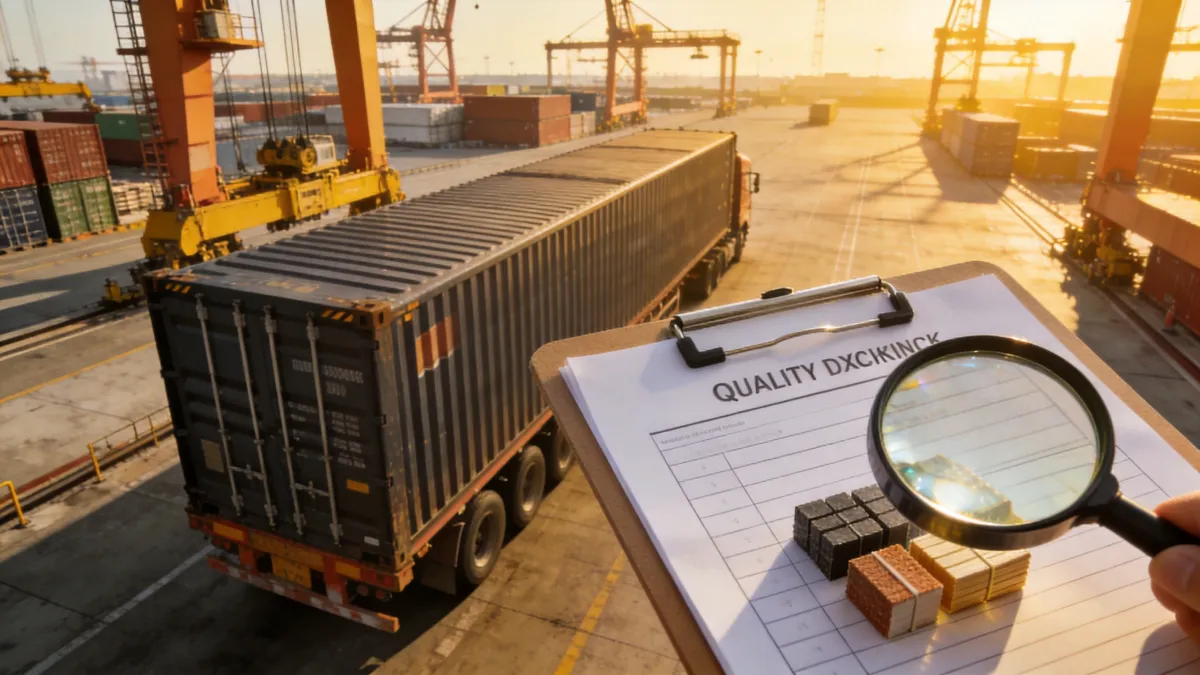
The best response to data this strong is organised early action: secure production and logistics capacity before the year-end peak and the Chinese holiday slowdown, while tightening quality control, because faster lines breed hidden defects. Here are the steps we recommend this week:
- Map your needs through the end of Q1 2027 and place purchase orders now; factories fill their schedules many weeks before Chinese New Year.
- Book shipping space early and compare at least three quotes across carriers and forwarders before committing.
- Get written delivery commitments with a late-delivery compensation clause; in peak season, verbal promises are worthless.
- Review insurance and war-risk clauses for Red Sea routings, and ask about alternative routes and their costs in advance.
- Verify any new supplier through a factory visit or third-party check, and make pre-shipment inspection mandatory in hot sectors.
- Rebalance your product mix toward the fastest-growing categories; the Chinese-car and electronics wave is creating new Gulf demand you can ride early.
A note from the field: in the weeks following data releases this strong, Chinese factories receive orders from multiple markets at once, and from our Guangzhou office we see lead times on new orders in hot sectors stretch by an extra two to four weeks. Our practical advice: do not wait for the "better price" in a peak season — secure your production capacity first, then negotiate. And never skip pre-shipment inspection, no matter how trusted the supplier; accelerating production lines are exactly where hidden defects are born.
Frequently Asked Questions
How big was China's foreign trade in September 2026?
China's total goods trade reached 5.16 trillion yuan (about USD 771 billion) in September 2026, up 27.5% year on year — the first time a single month crossed five trillion yuan, according to the General Administration of Customs data released on 14 October 2026.
Are China–Gulf shipping rates going to fall soon?
There are no strong signs of a near-term decline; Middle East lane rates remain elevated with congested transshipment ports, and global schedule reliability fell to 49.9% per Sea-Intelligence. Drewry expects Suez transits to recover to 80% of pre-diversion levels by February 2027, which may gradually ease pressure, but war-risk premiums could absorb much of the benefit.
When should I place orders before Chinese New Year?
The practical rule is to place purchase orders at least 8–10 weeks before your required shipping date, and ideally 12 weeks in peak seasons like Q4. September's strong data means factory schedules are filling faster than usual this year.
Which Chinese export products are growing fastest right now?
Integrated circuits lead with 99.1% growth in the first nine months of 2026, followed by electric vehicles (+72.3%), lithium batteries (+36.4%) and wind turbines (+22.4%), while China exported 8.63 million vehicles overall, up 52%, per customs and CPCA data.
Does strong Chinese export growth mean higher prices for importers?
Not necessarily; it means less negotiating flexibility in hot sectors like electronics and vehicles, but other segments such as furniture and consumer goods remain competitive and eager for orders to fill capacity. Timing and the strength of your factory relationship make the real difference.
How can I simplify importing from China amid these changes?
Keerki helps through supplier sourcing and verification, factory negotiation, pre-shipment quality inspection, cargo consolidation, and shipping and customs clearance — precisely the services that make the difference in peak seasons, when lead times stretch and shipping space runs scarce.
Conclusion
September 2026 is no ordinary month in Chinese trade: the first above five trillion yuan, the fastest export growth since February, and a record monthly surplus. For the Arab importer the message is clear: global demand for Chinese products is at its strongest in years. Those who secure capacity early enter 2027 with stocked inventory and controlled costs; those who wait will compete for what is left.
Keerki Limited is a China-based sourcing and commercial representation company headquartered in Guangzhou, helping businesses in the Gulf and the Arab world import from China safely for over 10 years. Our Arabic-, Chinese- and English-speaking team handles supplier verification, factory negotiation and visits, pre-shipment quality inspection, and shipping and customs clearance — shortening the distance between market data and the right purchasing decision. Start at our request page, browse the supplier directory, our services and the China exhibitions calendar, or reach us on WhatsApp at +86 133 9212 7362.