Key Takeaways
- Pre-Shipment Inspection (PSI) is your last line of defense before goods leave the factory in China — skipping it risks losses of up to 30% of shipment value.
- The AQL standard (Acceptable Quality Limit) per ISO 2859-1:2026 is the globally accepted statistical framework for determining sample sizes and defect thresholds.
- Third-party inspection in China costs between $150 and $350 per man-day — far less than the cost of returning defective goods or re-shipping replacements.
- A multi-stage approach (IPC + DUPRO + PSI) reduces defect escape by over 80% compared to relying on a single pre-shipment check.
- In 2026, China intensified export quality enforcement: over 16,000 inspection batches by SAMR, and 16 new product categories will require mandatory CCC certification by January 2027.
Arab importers source billions of dollars in goods from China annually — from auto parts and home appliances to cleaning products and consumer electronics. Yet many are unaware that the first-inspection failure rate stands at approximately 30%, according to 2026 industry data, meaning one in every three shipments could contain significant defects if not properly inspected. How do you protect your investment and avoid costly surprises when the container arrives at Jeddah or Dubai port?
In this comprehensive guide, we draw on Keerki's (Keerki Limited) field experience in Guangzhou and China's manufacturing hubs to walk you through everything you need to know about pre-shipment quality inspection: when to conduct it, how to choose the right inspection company, which statistical standards to apply, and how to read an inspection report with confidence before authorizing shipment.
What Is Pre-Shipment Inspection (PSI) and Why Is It Essential?
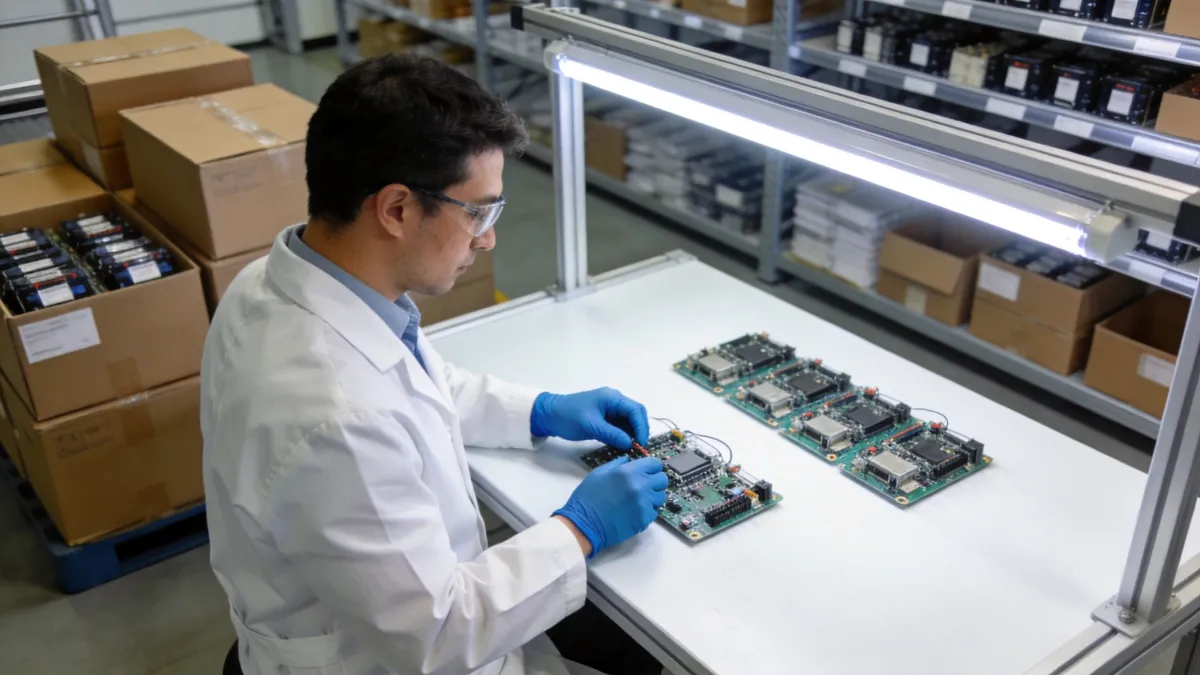
Pre-Shipment Inspection is an independent verification process conducted when at least 80% of production is complete and packed in export cartons. Its purpose is to confirm that the finished goods match the agreed specifications before they are loaded into the shipping container. The process relies on random sampling per the international AQL statistical table, combined with visual and functional checks against the approved reference sample.
Several realities underscore the importance of PSI for every import shipment:
- According to the 2026 Quality Control Guide for Foreign Companies in China, approximately 30% of first-time importers unknowingly deal with trading companies rather than actual factories — significantly increasing the risk that quality differs from the approved sample.
- Shipping a defective container from Jeddah or Jebel Ali back to China can cost more than double the original product value when you factor in return freight, customs re-entry, and lost sales time.
- Your customers in the Gulf market will not accept defective products — your reputation is at stake with every container that arrives.
- Gulf customs systems, such as Saudi Arabia's SABER platform, require documented proof of product compliance — and pre-shipment inspection ensures you have that documentation in hand.
When Should Pre-Shipment Inspection Be Conducted?
The golden rule is to conduct the inspection after at least 80% of production and packaging is complete. At this stage, the goods are representative of the final product, and there is still sufficient time to address any issues before the container is sealed and the bill of lading is issued.
The AQL Standard: The Foundation of Accept/Reject Decisions
AQL (Acceptable Quality Limit) is the globally recognized statistical standard used to determine how many units to sample from each production batch, and the maximum number of defects permitted at each severity level. The standard was updated in ISO 2859-1:2026 to include a "Skip-Lot Sampling" system that rewards suppliers with consistent quality by reducing the number of units that need to be inspected — saving time and cost for both parties.
| Defect Classification | AQL Value | Description and Examples |
|---|---|---|
| Critical Defect | 0% | Safety hazards to the end user — zero tolerance. Example: exposed electrical wiring |
| Major Defect | 1.0% or 2.5% | Functional failures or significant defects preventing normal use. Example: fluid leaks, structural breakage |
| Minor Defect | 4.0% | Cosmetic imperfections that do not affect functionality. Example: minor surface scratch, slight color variation |
How Does AQL Work in Practice on a Real Shipment?
Suppose you have ordered 5,000 units of automotive oil filters from a supplier in Guangzhou. According to the AQL table (General Inspection Level II), 200 units are randomly sampled (code L). If the agreed AQL for major defects is 2.5%, the shipment is accepted if 10 or fewer major defects are found, and rejected if the count exceeds that — giving you a clear contractual basis to demand replacement or a price reduction.
| Lot Size | Code | Sample Size | AQL 1.0 (Ac/Re) | AQL 2.5 (Ac/Re) | AQL 4.0 (Ac/Re) |
|---|---|---|---|---|---|
| 501–1,200 | J | 80 | 2/3 | 5/6 | 7/8 |
| 1,201–3,200 | K | 125 | 3/4 | 7/8 | 10/11 |
| 3,201–10,000 | L | 200 | 5/6 | 10/11 | 14/15 |
Important note: For safety-critical products (children's toys, electronics, brake components), experts recommend specifying AQL 0% for critical defects and AQL 1.0 for major defects — because the cost of a product recall or potential accident far exceeds the marginal expense of stricter inspection.
The Multi-Stage Approach: Don't Rely on Final Inspection Alone
Relying solely on a single pre-shipment inspection leaves significant risks that cannot be remedied at the last moment. The best-practice approach, used by leading inspection companies worldwide, consists of several consecutive stages covering the entire production cycle:
- Initial Production Check (IPC) — At 5–10% completion: verification of raw materials, tooling setup, and first-article conformity to specifications.
- During Production Inspection (DUPRO) — At 20–50% completion: monitoring defect trends, rework rates, and any process drift from the agreed manufacturing parameters.
- Pre-Shipment Inspection (PSI) — At 80%+ completion: AQL sampling on finished and packed goods, inspection of outer packaging, labels, and shipping marks.
- Container Loading Supervision (CLS/CLC) — During container loading: verification of SKU mix accuracy, actual carton count, and security seal numbers.
According to published industry data, combining IPC and DUPRO stages reduces defect escape rates by more than 80% compared to PSI-only approaches. This means you catch problems when fixing them is still cheap and simple — not after the container is sealed and the ship has departed.
How Much Does Quality Inspection in China Cost? Is It Worth It?
Third-party inspection services in China range from $150 to $350 per man-day, depending on the type of inspection firm and the scope of services required:
| Inspection Firm Type | Daily Rate (USD) | Best Suited For |
|---|---|---|
| Major global TIC firms (SGS, Bureau Veritas, Intertek) | $300+ | Access to highly regulated markets (EU, North America) |
| Asia-specialized inspection companies | $200–$310 | Multi-supplier analysis across different regions |
| Budget/mid-range services | $149–$250 | High-volume products for e-commerce and retail |
| Compliance specialists | $298+ | EU regulations (CE/REACH) and Gulf standards (SASO) |
Let's put this in perspective: if a $50,000 shipment arrives at Jeddah port and 30% of the goods are defective, you would lose at least $15,000 in wasted product value, plus additional costs for unloading, warehousing, and return shipping. Meanwhile, the cost of a pre-shipment inspection ($200–$350) represents less than 1% of the shipment value. It is genuine, cost-effective insurance.
How to Choose the Right Quality Inspection Company for Your Product?
Here is a practical, field-tested checklist for selecting a reliable and professional inspection company:
- Are inspectors full-time employees or temporary freelancers? — In-house inspectors are more consistent and accountable to company standards, while freelancers may vary in performance from assignment to assignment.
- Do they follow the standardized AQL methodology (ISO 2859-1)? — Ensure they use the updated 2026 version and a clearly documented, standardized defect classification system.
- Do they provide detailed reports with photographs? — A professional report should include clear photos of every defect found, its location on the product, and its classified severity level.
- Do they cover the geographic area where your factory is located? — Factories in Guangdong, Yiwu, and Foshan require different logistics coverage than those in northern or inland China.
- Do they have specific expertise in your product category? — Inspecting automotive parts requires very different standards and measurement tools than inspecting cleaning products, furniture, or electronics.
Keerki's Tip — From the Field
From our experience at Keerki Limited managing thousands of inspections across Guangzhou and various Chinese manufacturing zones: never rely on the supplier's own inspection report. The supplier's primary incentive is to pass the goods and collect payment — not to find defects that might cost them money. Use a completely independent third party, and request that the inspection be conducted on two different days when possible for broader coverage. Most importantly: include a clear clause in your purchase contract allowing you to reject the shipment or deduct additional inspection costs if the defect rate exceeds the agreed AQL threshold — this single clause protects you both legally and financially.
2026 Regulatory Developments: Why Inspection Is More Critical Than Ever
In 2026, the Chinese government has significantly tightened quality oversight for export manufacturing. Here are the key developments that directly affect Arab importers:
- SAMR (State Administration for Market Regulation) launched a dedicated inspection program covering 173 product types with over 16,000 inspection batches throughout 2026, as reported in SAMR's official announcement.
- The non-compliance rate for Chinese e-commerce products reached 19.1% in 2025 — a full 12 percentage points higher than the traditional manufacturing sector.
- Starting January 2027, 16 additional product categories will transition from self-declaration certification to mandatory third-party CCC certification — requiring both laboratory testing and factory audits.
- In Q1 2026 alone, Chinese regulatory authorities handled 18,200 product quality violation cases, issuing fines totaling RMB 130 million.
These figures mean that Chinese suppliers who do not invest in quality systems will face increasing barriers to export in the coming period. This, in turn, represents a genuine opportunity for you as an importer: serious suppliers are investing in quality management, and third-party inspection firms have become more available and competitively priced. Your investment in pre-shipment inspection today is an investment in the continuity of your business tomorrow.
Frequently Asked Questions
What is the fundamental difference between PSI and DUPRO inspections?
PSI (Pre-Shipment Inspection) is conducted when 80% or more of production and packaging is complete, while DUPRO is performed at an earlier stage (20–50% of production) to detect deviations when correction is still possible and affordable. Combining both approaches reduces defect escape by over 80% compared to relying on PSI alone.
Can I rely on the supplier's own quality certificate instead of an external inspection?
This is strongly discouraged. A supplier's self-issued certificate carries an obvious conflict of interest — their primary motivation is to pass the goods, not find defects. Independent third-party inspection follows a standardized AQL statistical methodology and documents all findings with photos and reports that hold legal and commercial weight.
How many days does it take to arrange and complete a pre-shipment inspection?
Typically, an inspection can be arranged within 2–3 business days from your request. We recommend booking the inspector at least 5 business days before the expected shipment date, allowing sufficient time for corrections if any quality issues are discovered.
Which products require mandatory CCC certification when exporting from China?
CCC (China Compulsory Certification) currently covers 17 major categories including household electrical appliances, automotive parts, and IT equipment. As of early 2027, 16 additional product categories will join the mandatory list. For Saudi importers specifically, registration on the SABER platform is also required to obtain the necessary conformity certificates.
Should I inspect every shipment or only the first order from a new supplier?
The first order from any new supplier should always be inspected without exception. With established suppliers who demonstrate consistent performance, you can gradually transition to a "reduced inspection" regime after 5 consecutive fully compliant shipments. However, any change in production lines, raw materials, or sub-suppliers warrants a return to full inspection.
What options do I have if the inspector rejects the shipment?
If the defect rate exceeds the agreed AQL threshold in your contract, you have three main options: request full re-production or rework at the supplier's expense, accept the shipment with a proportional price reduction corresponding to the defect rate found, or reject the shipment entirely and claim a refund. The key is ensuring that the AQL clause is clearly defined in your purchase contract from the very beginning.
Conclusion
Pre-shipment quality inspection from China is not a luxury or bureaucratic formality — it is a strategic, small investment that protects you from massive losses and costly surprises. With updated standards (ISO 2859-1:2026), intensifying government enforcement by SAMR, and the expanding scope of mandatory CCC certification, importers who adopt an independent, multi-stage inspection system are the ones who ensure their business continuity without unpleasant surprises.
Keerki Limited is a China-based sourcing and commercial representation company headquartered in Guangzhou, helping businesses in the Gulf and the Arab world import from China safely for over 10 years. Our multilingual team speaks Arabic, Chinese, and English, and handles everything from finding and verifying reliable suppliers to factory negotiation, on-site quality inspection, and shipping and customs clearance coordination.
Contact us today via our service request form or directly on WhatsApp at +86 133 9212 7362 — and let our expertise protect your investment and ensure the quality of every shipment that reaches you.