- The true landed cost of importing furniture from China = factory price + freight + duties and taxes. In Saudi Arabia, add 5% customs duty and 15% VAT on top of your CIF value.
- A 40ft high-cube container from China to Jebel Ali currently costs $1,200–$3,500 port-to-port, while the Drewry spot index showed extreme volatility on Shanghai–Jebel Ali at $8,199/FEU on November 5, 2026.
- Foshan, Guangdong is the world's furniture capital: the Lecong market alone spans 4 million m² with 10,000+ traders.
- Our worked example shows a $25,000 furniture order lands in Saudi Arabia at roughly $33,429 — about 33.7% above the goods value.
- Three fast wins: request three freight quotes, consolidate into one full container, and inspect before shipping.
Every week, Gulf traders ask us the same question: "What does it really cost to import a container of furniture from China?" The honest answer is that the factory quote is only the starting line. Between volatile freight, customs duties, and VAT, your final landed cost can run more than a third above the goods price — and in November 2026, China–Gulf freight rates are moving fast enough to make an October 2026 budget obsolete. This guide breaks down every cost line with documented figures, then walks through a worked example you can copy for your first shipment.
What is happening in the furniture and freight market right now?
Short answer: demand for Chinese furniture is strong, but freight into the Gulf is volatile — and that changes how smart importers price and plan. China's total exports grew 16.4% year on year in the first three quarters of 2026 to reach 23.2 trillion yuan, per customs data reported by Xinhua. In furniture specifically, monthly exports ran at about $5.565 billion in April 2026 and rose to $5.743 billion in May, per customs figures tracked by Expert Market Research. Meanwhile, the global furniture market is worth roughly $775.23 billion in 2026, with the Middle East and Africa at about $46.5 billion, estimates Precedence Research — you are competing with buyers from every continent for the same production lines.
Freight is the moving part. The Freightos weekly update of November 3, 2026 reports roughly two-thirds of Asia–Europe capacity back through the Red Sea per Alphaliner, yet carriers are scheduling GRIs of $1,000–$1,500 per FEU for November 2026. Closer to home, the Drewry index recorded an elevated spot rate of $8,199 per FEU on Shanghai–Jebel Ali on November 5, pressured by regional geopolitical tension and bunker fuel costs, per DataPortuaria. Takeaway: never budget on a single second-hand freight number — plan around a range.
Where should you buy furniture in China? The Foshan–Lecong map
Direct answer: Foshan, in Guangdong province — specifically the town of Lecong in the Shunde district — is the first stop for any serious furniture importer, because it is the largest furniture manufacturing and trading cluster on earth. Foshan alone produces around 35% of China's furniture output, and Lecong spreads across more than 4 million m² in 180+ trading complexes hosting over 10,000 dealers, with annual transactions estimated near RMB 80 billion, according to the Source Foshan guide citing local official media.
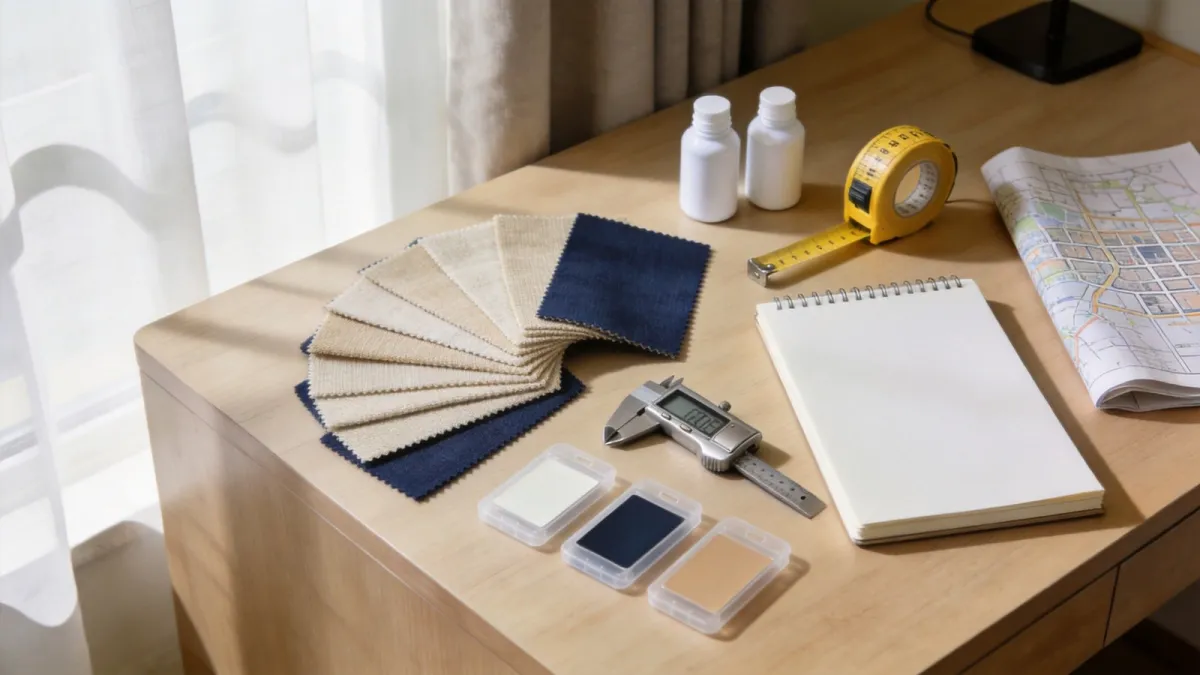
Foshan is not one market but a system of specialized towns: Lecong for showrooms across every price tier; Longjiang for sofa, bed, and upholstery factories where you can walk the production lines; Shatou for panel, foam, fabric, and hardware markets. The rule of thumb: premium malls charge more but quality is documented; factory zones are cheaper provided you verify rigorously.
From the Keerki (Keerki Limited) team's experience guiding Gulf buyers through Foshan, the most common mistake is buying from the first beautiful showroom: a premium hall in the Louvre complex may display the very same product a Longjiang factory makes for far less. The golden sequence: see the product in the showroom, negotiate with the factory, then inspect before shipping. You can shortlist verified suppliers in the supplier directory and plan your trip with our China city guide.
How much does shipping from China to the Gulf cost in November 2026?
Direct answer: a 40ft high-cube from major Chinese ports to Jebel Ali currently runs $1,200–$3,500 port-to-port, and LCL consolidation costs $65–$130 per CBM, per the November 2026 rate tables of CNDDP Shipping. Transit: 16–22 days FCL, 20–28 days LCL.
Live quotes confirm these bands: Tianjin–Jebel Ali offers published on November 7, 2026 priced a 20GP at $1,700 and a 40ft box at $3,200 on a roughly 28-day voyage, per the MCK Ship platform. But note the gap between "spot index" numbers like Drewry's and the contract rates importers actually secure through forwarders: the former captures a peak moment, the latter is what you usually pay after negotiation. That gap is exactly why you collect at least three quotes before booking.
| Shipping option | Reference cost (Nov 2026) | Approx. transit | Best for |
|---|---|---|---|
| FCL 40HQ (port-to-port) | $1,200–$3,500 | 16–22 days | Large furniture loads filling a container |
| FCL 20GP (port-to-port) | $1,050–$2,550 | 16–22 days | Mid-size or weight-heavy shipments |
| LCL (port-to-port) | $65–$130/CBM | 20–28 days | Samples and small trial orders |
| DDP LCL (door-to-door, duties included) | $100–$300/CBM | 25–33 days | Buyers who want one all-in price |
Customs duties and taxes: a complete worked example for Saudi Arabia
Direct answer: Saudi Arabia charges 5% customs duty on the CIF value for most goods, then 15% VAT calculated on (CIF + duty), plus a ZATCA administration fee of 0.15% of CIF capped at SAR 500 per declaration, according to the TFTIOR guide to the Saudi customs framework 2026. The UAE applies a similar GCC common customs framework, but always verify the exact HS code classification for your specific goods before shipping.
Now the worked example. A trader buys furniture worth $25,000 FOB (an illustrative goods figure), pays $2,500 in ocean freight (inside the documented market range above) and $150 for insurance. Total CIF value: $27,650. Customs duty at 5% = $1,382. VAT at 15% on ($27,650 + $1,382) = $4,355. ZATCA admin fee = $41.5 (about SAR 156, below the SAR 500 cap). Final landed cost at clearance: $33,429 — roughly 33.7% above the price of the goods.
| Line item | Basis | Amount (USD) |
|---|---|---|
| Goods value (FOB) | Factory price — illustrative example | 25,000 |
| Ocean freight 40HQ | Within documented $1,200–$3,500 range | 2,500 |
| Cargo insurance | Illustrative example | 150 |
| Total CIF value | Sum of the above | 27,650 |
| Saudi customs duty | 5% of CIF | 1,382 |
| VAT | 15% of (CIF + duty) | 4,355 |
| ZATCA admin fee | 0.15% of CIF (cap SAR 500) | 41.5 |
| Approximate final landed cost | — | 33,429 |
Do not forget the line items outside this table: port handling, inland haulage, inspection, and storage if clearance is delayed. Keep a contingency margin instead of fixing a final retail price before arrival.
FCL, LCL, or DDP — which one fits your shipment?
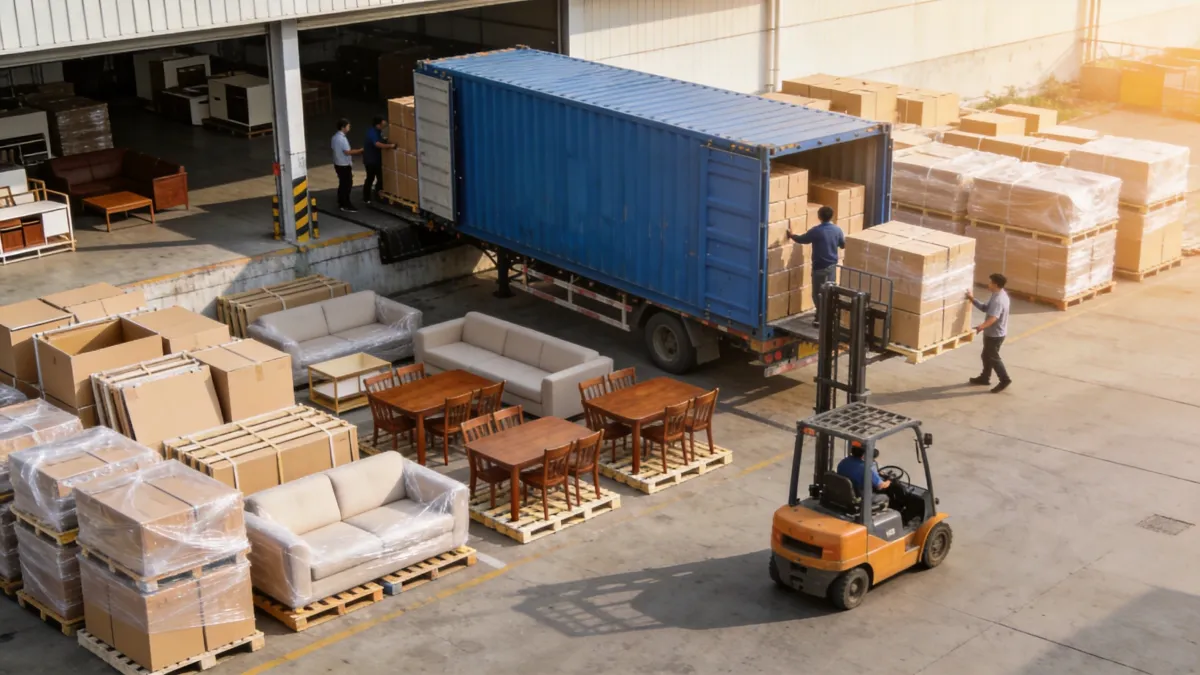
Direct answer: if your goods fill most of a container, FCL is always the cheapest per cubic meter; for a small trial batch, LCL or DDP makes sense despite the higher per-CBM rate. Furniture is "light but bulky" — the container fills by volume long before it hits its weight limit, which is why packing to maximum density and flat-pack designs matter so much.
LCL works for testing the market, but beware: handling and consolidation fees stack on top of the advertised per-CBM rate. DDP gives one all-inclusive price to your door — comfortable for beginners, but less transparent on duties. Traders who graduate from DDP to FCL once demand is proven unlock a tangible extra margin per container.
Practical steps to land your first furniture container successfully
- Define your segment and price tier precisely (home, office, hospitality) and gather reference photos before contacting any factory.
- Shortlist 5–8 factories in Foshan and Longjiang, request written FOB quotes, and confirm you are dealing with a real manufacturer, not a broker adding a margin.
- Order samples or visit the showroom and factory; a catalog photo reveals nothing about foam density or frame thickness.
- Negotiate payment terms: a reasonable deposit with the balance after inspection — never full prepayment, however tempting the price.
- Book freight early and collect at least three quotes; the spread can exceed a thousand dollars per container in volatile weeks.
- Run a pre-shipment inspection of materials, dimensions, finish, and packaging, and verify pallets are heat-treated to the ISPM 15 standard.
- Prepare clearance documents in advance: invoice, packing list, certificate of origin, conformity certificate, and the correct HS code.
- Calculate your full landed cost using the example above before setting your selling price.
A tip from Keerki: the biggest loss we see in furniture importing comes not from the factory price but from the half-empty container. Furniture ships by volume, so every unfilled cubic meter is money spent on air. At Keerki we consolidate goods from multiple factories in our Guangzhou warehouse and pack to maximum density after inspecting every piece, visibly lowering the per-item cost. Before booking your next container, ask: how many empty cubic meters am I paying for?
Frequently Asked Questions
Is importing furniture from China actually profitable?
Yes, for most Gulf traders, because the price gap between a Chinese factory and local retail absorbs shipping and duties while leaving a healthy margin — provided you fill the container and pick a category with real demand. Failure usually comes from poor product selection or a half-empty container, not from importing itself.
What is the minimum order quantity at Chinese furniture factories?
Minimums vary by factory: large Longjiang manufacturers prefer container-size orders, while Lecong showrooms and many mid-size factories accept smaller mixed orders. The rule: the smaller the order, the higher the unit price and the weaker your position, so start with a trial batch and scale gradually.
How long does furniture take to arrive from China to the Gulf?
A full container takes 16–22 days from major Chinese ports to Jebel Ali, and LCL takes 20–28 days, per CNDDP Shipping's November 2026 data. Add production time (often several weeks) and customs clearance, and the full cycle runs about two months.
Does wooden furniture need special certificates when imported?
Yes, watch two points: wooden packaging (pallets and crates) must be heat-treated and stamped to the ISPM 15 standard, and some furniture categories may require conformity certification depending on their HS code. Check Saudi Arabia's SABER platform or your local authority before shipping — not after.
How do I avoid quality fraud when buying furniture from China?
Real protection is threefold: verify you are dealing with a genuine factory (business license, a production line you can visit), pay the balance after inspection, and run an on-site pre-shipment check matching the product against the approved sample. The most common furniture fraud is swapping invisible internals: lower-density foam, thinner frames, weaker fittings.
Which is the best city in China for buying furniture?
Foshan, without serious competition, for home, office, and hospitality furniture — it packs the world's densest cluster of factories and showrooms into a few kilometers, letting you compare dozens of suppliers in a single day. For the Gulf buyer who wants to mix bedrooms, majlis seating, and office sets in one container, Foshan remains the clear first choice.
Bottom line: importing furniture from China in November 2026 is a real opportunity for anyone who knows their numbers — a huge global market, Foshan's factories at full capacity, and growing Gulf demand. Success rests on three pillars: calculate the full landed cost before committing to a selling price, track freight weekly and book early, and inspect quality before the goods leave the factory.
Keerki Limited is a China-based sourcing and commercial representation company headquartered in Guangzhou, helping businesses in the Gulf and the Arab world import from China safely for over 10 years. Our team sits minutes from the Foshan markets and manages factory selection, negotiation, inspection, container consolidation, and shipping on your behalf — saving you time and money and sparing you costly mistakes. Start your next shipment with confidence through our service request form or message us on WhatsApp at +86 133 9212 7362.