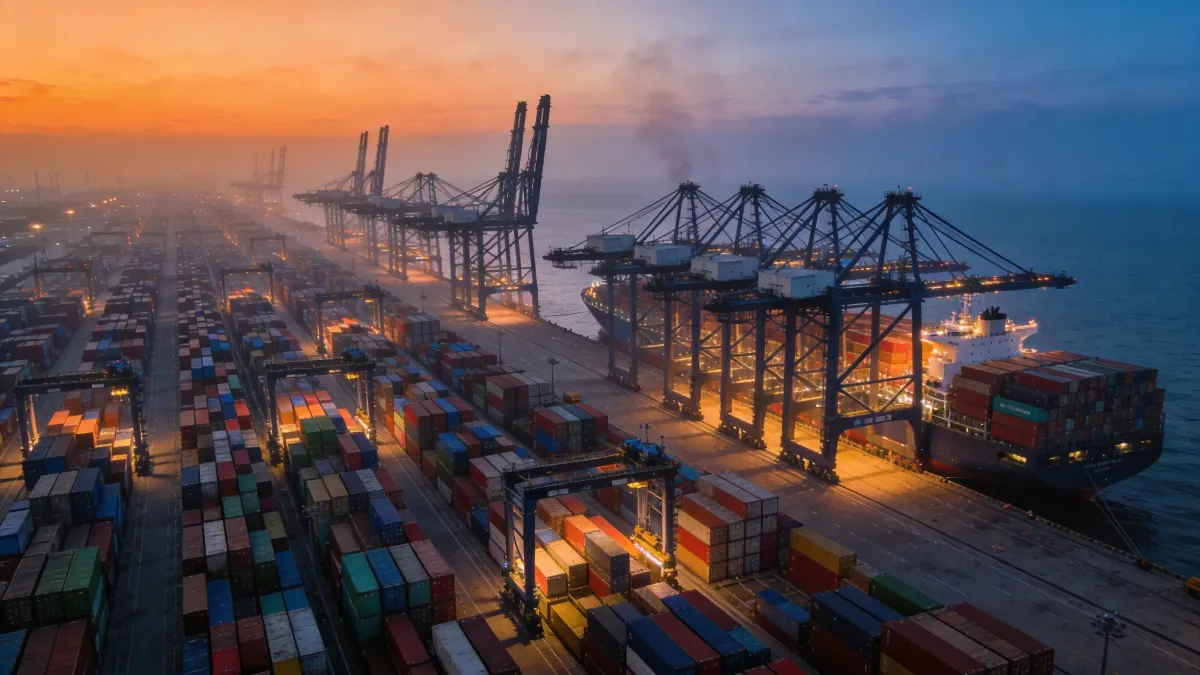
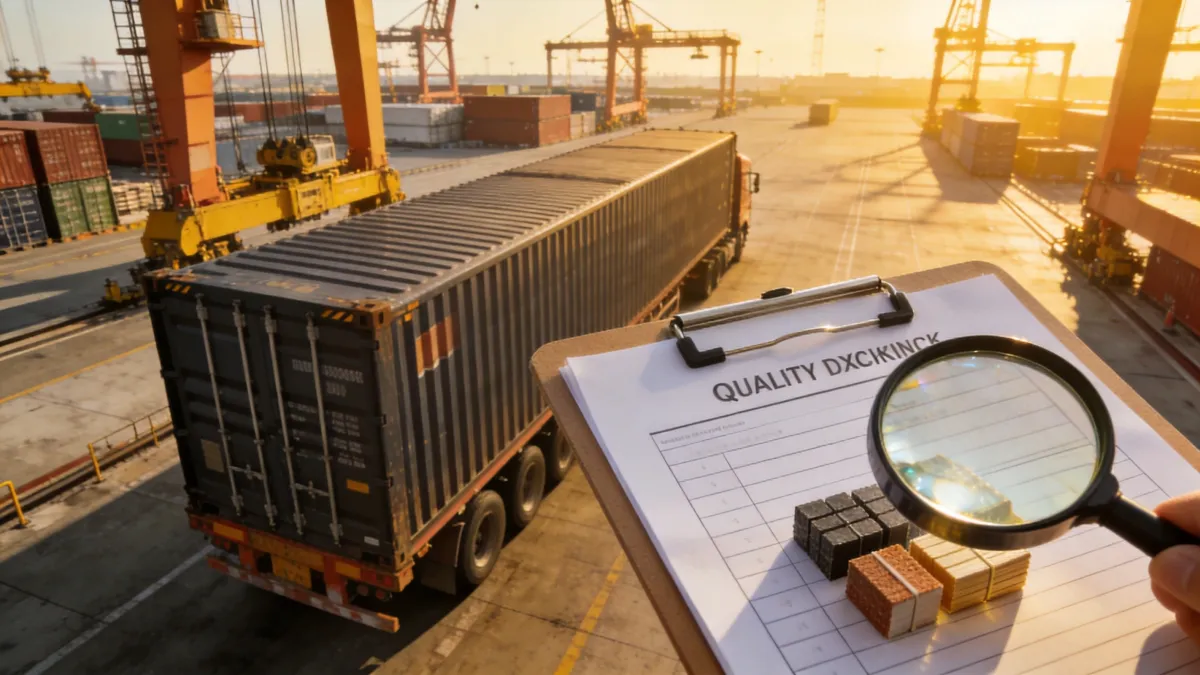
- On 19 October 2026, China issued export-control rules taking effect on 18 November 2026, covering specified drones and components, tunnel boring machines, and dredgers.
- Drones flying beyond visual line of sight with endurance of 3 hours or more — or 30 minutes to 3 hours with gust resistance of 46.3 km/h — now need an export licence, as do drones with a range of 300 km or more.
- A new customs challenge process (Notice No. 52) lets customs hold any suspect shipment; the exporter must supply technical documentation within 7 working days, and goods stay held during the review.
- Light civilian and recreational drones are mostly out of scope, and some categories now benefit from simplified per-shipment registration instead of full licensing.
- Practical rule for Arab importers: get the full written technical specifications from your supplier before paying any deposit, and confirm the product's classification before 18 November to avoid a held shipment.
If you import drones for agriculture, surveying or imaging — or heavy tunnelling and dredging equipment from China — the next few weeks are decisive. On 19 October 2026, China's Ministry of Commerce and Customs published announcements that redraw the map of what can leave Chinese factories without a licence, effective 18 November 2026. This article explains, with the actual numbers, what changed, who is affected, and the practical steps to take now — from a team working inside China every day.
What exactly did China announce in October 2026?
China issued three announcements on 19 October 2026, all effective 18 November 2026: Announcement No. 49 on unmanned aerial vehicles, controls on tunnel boring machines, walking excavators and high-altitude concrete-spraying machines, revised controls on dredgers and their pumps, drag heads and cutters — plus Notice No. 52 regulating how customs may challenge and hold suspect shipments.
According to the text of Announcement No. 49 of 2026 published on the MOFCOM website, the list covers 13 categories of UAV-related items that may not be exported without permission. On the same day, MOFCOM and Customs issued Notice No. 52 detailing the customs "challenge and determination" procedure. Three days earlier, on 16 October, Notice No. 48 had proposed adding 40 technologies (23 in AI, five in biomedicine and 12 in photovoltaics) to the catalogue of prohibited and restricted technologies, with an interim registration regime already in force, as analysed by the law firm CMS.
The key thing to understand: this is not a ban. The official wording is "optimise and adjust" — raising thresholds for light civilian products while tightening them around high-performance ones.
Does the decision cover the drone you import? Check these numbers
The answer depends on five figures in your product's specifications: endurance, wind resistance, range, spraying capacity, and engine ratings. Crossing any threshold below puts the product inside the licensing scope from 18 November 2026.
| Item | New control threshold | What it means for the importer |
|---|---|---|
| Beyond-visual-line-of-sight drones | Endurance ≥ 3 hours, or 30 minutes–3 hours with stability in gusts ≥ 46.3 km/h | Most large agricultural spraying and long-endurance survey drones need a licence |
| Range | Range ≥ 300 km | Long-range platforms are controlled regardless of endurance |
| Aerosol dispersal | Spray capacity > 80 litres (raised from 20 litres) | The higher threshold takes small crop-spraying drones out of scope |
| Electric motors | Voltage ≥ 48 V, power ≥ 3 kW, power density ≥ 3 kW/kg | Heavy multirotor motors are covered as standalone parts |
| Combustion and jet engines | Power > 16 kW, or jet thrust ≥ 400 N, or designed for altitudes > 15,420 m | Large engines and their spare parts need their own licence |
| Control systems and software | Purpose-designed autopilots, swarm control, autonomous navigation, obstacle avoidance | Buying "spare parts" or software separately can also be controlled |
A point many importers miss: the controls apply to components individually, not only to complete aircraft. A company importing motors or carbon-fibre propellers with a blade radius of 762 mm or more for local assembly could fall inside the scope without ever buying a complete drone. Full technical detail is in the Akin Gump legal alert (30 October 2026).
The good news: the same announcement raised the endurance threshold in category 9A012.a from one hour to three hours, so many mid-range drones now need only per-shipment registration instead of a full licence — the same applies to drones at non-defence exhibitions. "General licences" will also reward exporters with effective internal compliance programmes, which makes choosing an organised supplier more valuable than ever.
What about heavy machinery: tunnel boring machines and dredgers?
Yes — heavy machinery enters the export-control regime for the first time on this date: tunnel boring machines (TBMs), walking excavators, concrete-spraying machines designed for altitudes above 3,000 metres, plus dredger pumps, drag heads and cutters, all from 18 November 2026.
Why does this matter for the Gulf? Because tunnel, metro and port projects in Saudi Arabia, the UAE and Qatar increasingly rely on Chinese equipment. According to AInvest (2 November 2026), China holds roughly 70% of the global TBM market and exported about US$793 million of tunnelling machinery in 2025. Crucially for buyers, the controls also cover purpose-designed components and remanufacturing technology — spare parts and servicing for equipment already on your project sites may need a licence too.
If your project operates Chinese TBMs, the priority now is to inventory critical spares (cutter heads, seals, drive systems) and raise safety stock before every spare-parts shipment becomes hostage to a licensing cycle.
The new customs challenge process: what if customs holds your shipment?
Notice No. 52 empowers Chinese customs to hold any export shipment suspected of being controlled even if presented without a licence, and the exporter must provide supporting documents — including the goods' technical specifications — within 7 working days; the cargo is not released for the duration of the challenge.
In practice, that has three direct consequences for the Arab importer:
- Longer, less predictable lead times: a challenged shipment can be delayed for weeks even if it ultimately proves uncontrolled, because release depends on completing the technical file.
- The burden shifts to documentation quality: a factory without an organised technical file (datasheets, customs classification, test reports) will drag you into repeated delays.
- Customs descriptions are no longer a formality: a generic "spare parts" invoice line for a sensitive product now invites a challenge, because customs is explicitly authorised to demand technical detail and refer the file to MOFCOM.
According to the CMS analysis, exporters must now "maintain appropriate technical documentation for potentially controlled items and factor possible customs-clearance delays into their export planning". For you as a buyer: add two to four weeks of safety margin for any product near the thresholds above.
How should an Arab importer act now? Practical steps before 18 November
Here is the executive summary in seven steps — the same checklist we apply at Keerki (Keerki Limited) with clients importing sensitive products:
- Collect the full technical specifications of every product you import in the categories above: endurance, range, wind resistance, spray capacity, engine ratings — in writing from the factory, not from a marketing catalogue.
- Match the specifications against the thresholds in this article's table, and assign each product one of three statuses: out of scope, simplified registration, or full licence.
- Ask the supplier explicitly: do you have an internal compliance programme qualifying for general licences? Have you exported under dual-use controls before?
- Expedite confirmed shipments: any order ready before 18 November is best shipped beforehand, because every later shipment is judged by the new standards.
- Renegotiate delivery terms: assign the factory responsibility for obtaining the licence, set a maximum timeline, and agree a deposit-refund mechanism if the licence is refused.
- Raise safety stock of critical spares for heavy equipment already in your projects, especially TBM cutter heads and purpose-designed components.
- Review your customs classification with your broker before every shipment, and avoid generic descriptions that trigger challenges.
A tip from Keerki: from our Guangzhou office, the real problem is not the rules themselves — it is that eight out of ten small factories do not yet know whether their product is in scope. Before paying any deposit on a product close to these thresholds, have a neutral party inside China review the specifications against the control list. Two days of verification are far cheaper than a shipment held at the port for a month.
Frequently Asked Questions
Do the new rules ban importing drones from China?
No, the rules are a licensing and registration system, not a ban. Light civilian and recreational drones are mostly out of scope, mid-range categories need only simplified registration, and high-performance categories require a licence the Chinese exporter applies for.
When do China's new export controls take effect?
The three announcements covering drones, tunnel boring machines and dredgers take effect on 18 November 2026, having all been issued on 19 October 2026. The interim registration system for the forty technologies has been in force since 16 October 2026.
How do I know if the drone I import needs a licence?
Compare five figures from your product's specifications with the official thresholds: endurance (3 hours), gust resistance (46.3 km/h), range (300 km), spray capacity (80 litres) and engine ratings (3 kW and 16 kW). Crossing any one threshold brings the product into licensing scope; the final determination comes from the exporter's official classification.
What happens if Chinese customs challenges my shipment?
Under Notice No. 52, the shipment is held and the exporter must provide technical documents within 7 working days; goods are not released during the review. We therefore recommend budgeting two to four weeks of safety margin and confirming the factory's technical file is ready before shipping.
Are spare parts for heavy machinery I already own affected?
Yes, the controls cover purpose-designed components and remanufacturing technology, not just new machines. Project owners should raise critical spare-parts stocks and plan longer ordering cycles, allowing for the possibility that each shipment needs a licence.
Who applies for the licence: me or the Chinese factory?
The licence application is filed by the Chinese exporter (the factory or export company) with MOFCOM, not by the foreign importer. Your role is to verify the supplier can obtain the licence and to include contract clauses protecting you if licensing is delayed or refused.
Conclusion
China's new export controls are not bad news for the Arab importer — but they end the era of "buy and ship, no questions asked" in specific categories. The winners will be those who know their product's specifications numerically, work with organised factories capable of securing licences, and plan realistic lead times.
Keerki Limited is a China-based sourcing and commercial representation company headquartered in Guangzhou, helping businesses in the Gulf and the Arab world import from China safely for over 10 years. We review your product's specifications before you sign, verify the factory's compliance and licensing capability, and follow the shipment until it arrives. Contact our team via the service request form or WhatsApp +86 133 9212 7362. You can also browse our supplier directory and services page, and read our guide on finding reliable suppliers in China.