- Saudi Arabia is building the largest hotel pipeline in the Middle East: more than 94,500 rooms under construction or in advanced planning according to Knight Frank, creating huge demand for hotel fit-out through 2030.
- China is the world's No. 1 source of hotel furniture and supplies, and the single city of Foshan accounts for roughly one-fifth of China's total furniture export value.
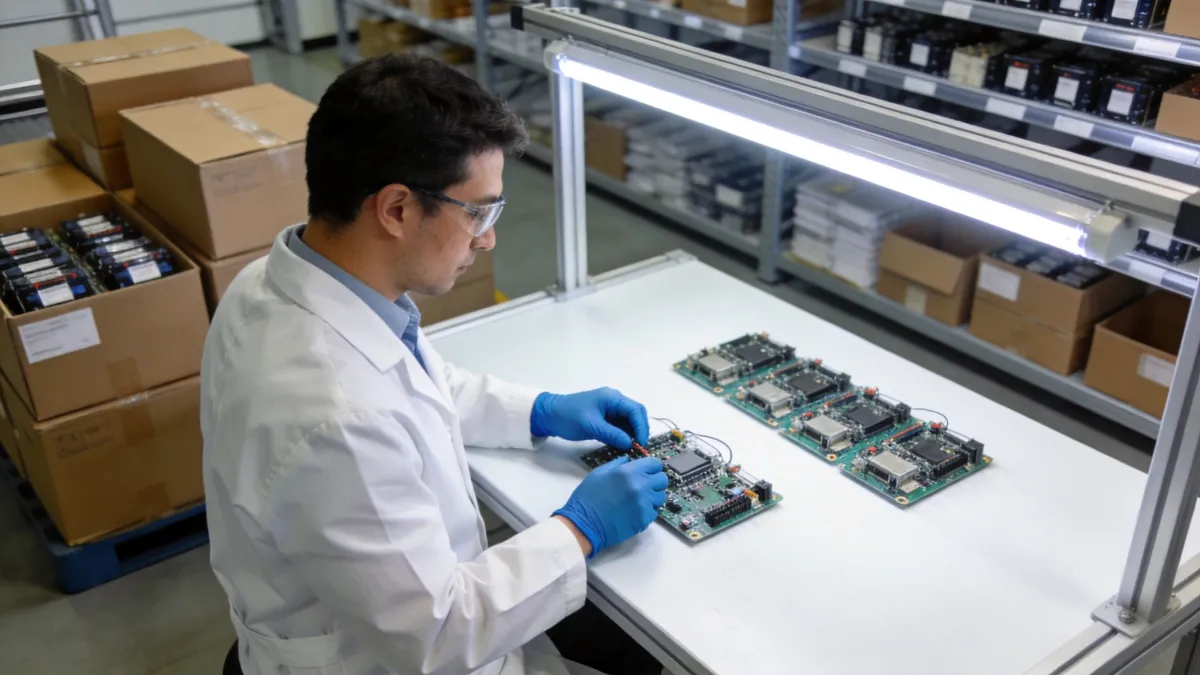
- A successful hotel fit-out from China rests on three pillars: a detailed bill of quantities (BOQ), one approved mock-up room before mass production, and independent pre-shipment inspection.
- GCC import duty on most furniture and hotel supplies is around 5%, with conformity requirements such as Saudi Arabia's SABER platform.
- Consolidating goods from multiple factories into one managed shipment is the smartest way to cut landed cost — a core service a local buying agent runs from Guangzhou.
If you are an investor behind a new Gulf hotel, or a procurement manager in a hospitality group, you face a practical problem: how do you fit out hundreds of rooms, restaurants and lobbies with consistent quality, on budget and on schedule? The answer most operators now arrive at is China — not simply because it is cheaper, but because it is the only market where every category sits under one roof. This guide explains how, with verified figures.
Why is the Gulf hotel boom a once-in-a-decade sourcing opportunity?
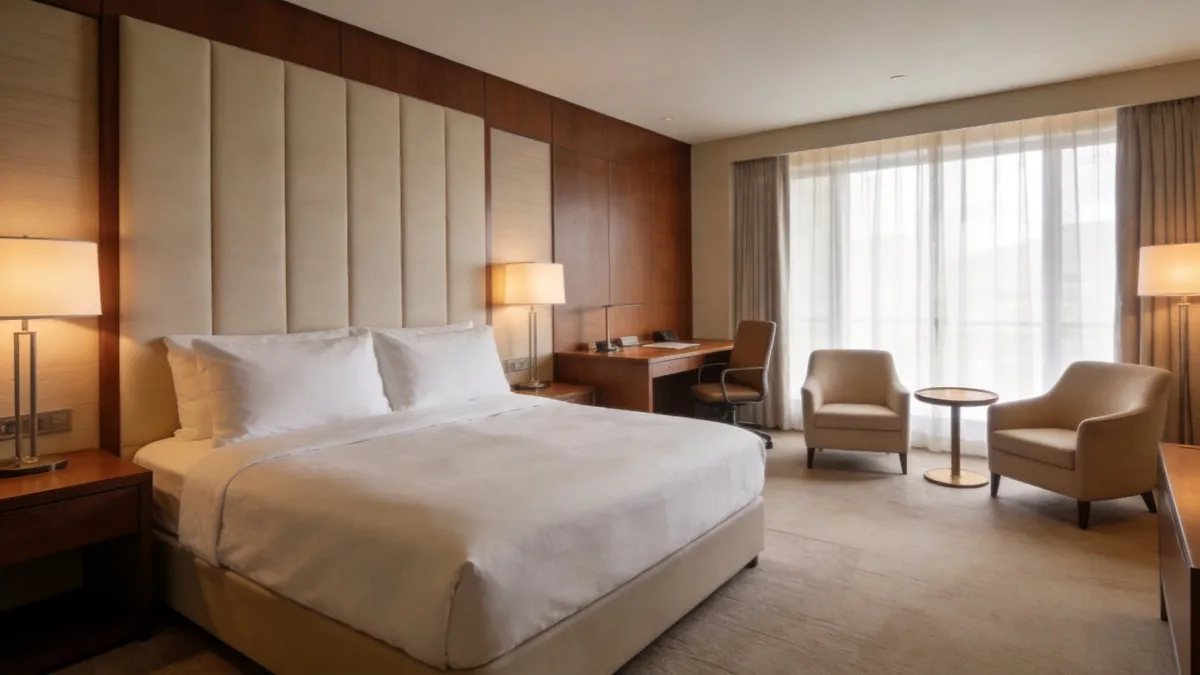
The Gulf hotel sector, led by Saudi Arabia, is the largest concentrated hotel procurement opportunity in the region's history — every announced project will need fit-out and operating supplies within the next few years.
The official numbers tell the story. According to the Saudi Ministry of Tourism's Q1 2026 hospitality report, the Kingdom had 6,122 licensed hospitality facilities with about 615,862 room keys. The forward pipeline is even bigger: Knight Frank data published by The Hotel Show Saudi Arabia puts existing supply at 171,650 rooms, with a further 94,500 keys under construction or in advanced planning. Tourism contributed SAR 444.3 billion to the Saudi economy in 2024 (around 11.5% of GDP), with a target of 150 million visitors per year by 2030.
On the investment side, China's commercial office in Riyadh reports that more than 50 international hotel brands are expanding in the Kingdom with investments exceeding USD 120 billion and plans for over 200,000 new rooms, according to China's Ministry of Commerce. In October 2026 alone, Diriyah Company awarded USD 728 million for five new luxury hotels, per Construction Week Saudi. Every one of those rooms needs beds, curtains, lighting and loose furniture — which is why your sourcing timing matters.
FF&E vs OS&E: what does hotel fit-out actually cover?
Hotel fit-out worldwide splits into two categories: FF&E (furniture, fixtures and equipment — the relatively fixed items) and OS&E (operating supplies and equipment — consumables replaced regularly). Understanding this split is the foundation of any sound budget, because each category has its own factories, specifications and replacement cycle. The table below maps the full landscape:
| Category | Examples | Where it is made in China |
|---|---|---|
| Guestroom furniture (FF&E) | Beds, headboards, wardrobes, desks, chairs, TV units | Foshan (Shunde: Lecong & Longjiang), Guangdong |
| Mattresses & fixed upholstery | Hotel mattresses, bed bases, upholstered panels | Foshan, Shenzhen, Suzhou |
| Lighting & chandeliers | Lobby chandeliers, room and corridor lighting | Guzhen, Zhongshan — China's lighting capital |
| Curtains & textiles | Blackout curtains, bed linen, towels, throws | Shaoxing (Zhejiang) and Nantong (Jiangsu) |
| Restaurant OS&E | Cutlery, porcelain, glassware, serving items | Chaozhou (ceramics), Guangzhou (tableware) |
| Commercial kitchen equipment | Ovens, refrigeration, prep lines, dishwashers | Guangzhou and Shandong |
| Housekeeping supplies | Cleaning trolleys, laundry equipment, guest amenities | Guangzhou's specialized hotel-supply markets |
Most categories cluster in one geography: the Pearl River Delta in Guangdong. That is a huge logistical advantage for a Gulf buyer, because consolidation, inspection and shipping can be managed from a single point. You can pre-screen factories for these categories in Keerki's supplier directory, which lists more than 35,000 vetted suppliers, before booking a flight.
Why source from China — and where exactly should you buy?
China is the first choice for hotel fit-out because it combines category depth, customization capacity and competitive pricing, and Foshan specifically is the undisputed furniture capital of the world.
According to an analysis published by Great Handshake, Foshan exported more than RMB 80 billion of furniture in 2023 — roughly one-fifth of China's total furniture export value. The Longjiang–Lecong corridor alone hosts about 1,800 registered furniture manufacturers and 4,000 component suppliers, while the Lecong International Furniture Exposition Center offers over 3.5 million square meters of showroom space, the largest furniture trade complex on the planet.
The Gulf relationship is deepening fast. A Nanfang Plus report shows Foshan's furniture exports to the Middle East grew 13.6% in the first seven months of 2025, and the city opened a trade liaison office in Saudi Arabia in 2025. At the bilateral level, China–Saudi trade reached USD 108.1 billion in 2025, with Chinese exports to the Kingdom at about USD 53.4 billion, and roughly 750 Chinese companies now operate in the Kingdom, according to the Chinese Embassy in Riyadh.
Supply-side momentum continues: China Customs announced on October 14, 2026 that national exports grew 16.4% in the first three quarters of 2026 to RMB 23.2 trillion, with a 29.6% jump in September alone, per official data on the Chinese government portal. For importers, that signals strong production capacity and buyer-friendly price competition.
For OS&E, the wholesale markets cluster in Guangzhou itself — the city where Keerki Limited is headquartered. From our daily experience, one trip to Guangzhou and Foshan covers roughly 80% of a buyer's purchasing list.
How do you build a realistic budget and avoid fatal buying mistakes?
A realistic hotel fit-out budget is built from a detailed bill of quantities (BOQ) extracted from the design drawings — not from a per-room guess — then topped up with freight, duties, conformity costs and spare attic stock.
Market sizing confirms the opportunity: estimates published by HomeLife Expo put Saudi Arabia's home furnishings market at USD 5.46 billion in 2025, heading toward USD 7.54 billion by 2031, while the Saudi kitchenware market grows from USD 528 million in 2025 to USD 941.4 million by 2033. That growth means tougher competition for factory capacity, so booking production slots early is part of budget management.
On compliance, six Gulf states including Saudi Arabia launched a "Green Home Product Voluntary Certification Framework" in April 2026 under the Gulf Standardization Organization, covering wood-based panels, upholstery fabrics and LED lighting, with mutual recognition of China's ENF formaldehyde standard (GB/T 39600-2021), as reported by RCG. Choosing a factory that already holds these certifications saves duplicate testing and extra clearance costs.
Recurring mistakes to avoid:
- Buying from a catalog: a brochure is never enough — always request a physical sample or mock-up room before mass production.
- Forgetting attic stock: we recommend ordering a small extra percentage of textiles and operating items to cover breakage in the first years.
- Unwritten specifications: wood species, foam density, fabric weight — anything not documented in the contract is interpreted in the factory's favor.
- Ignoring consolidation: shipping dozens of small parcels from different suppliers multiplies logistics cost; consolidate in one warehouse, then ship as one consignment.
- Skipping independent inspection: pre-shipment inspection costs far less than remaking a full container; see our complete guide to pre-shipment quality inspection in China.
Practical steps: how do you fit out your hotel from China in seven steps?
Fitting out a hotel from China proceeds smoothly when you follow seven sequential steps, from an accurate bill of quantities to a pre-planned customs clearance strategy.
- Build the BOQ from the design: extract every FF&E and OS&E item from the project drawings, with specification, quantity and target quality grade for each.
- Split the budget by category: separate guestrooms from public areas, restaurants and operating supplies, and invest in higher quality at guest touch points.
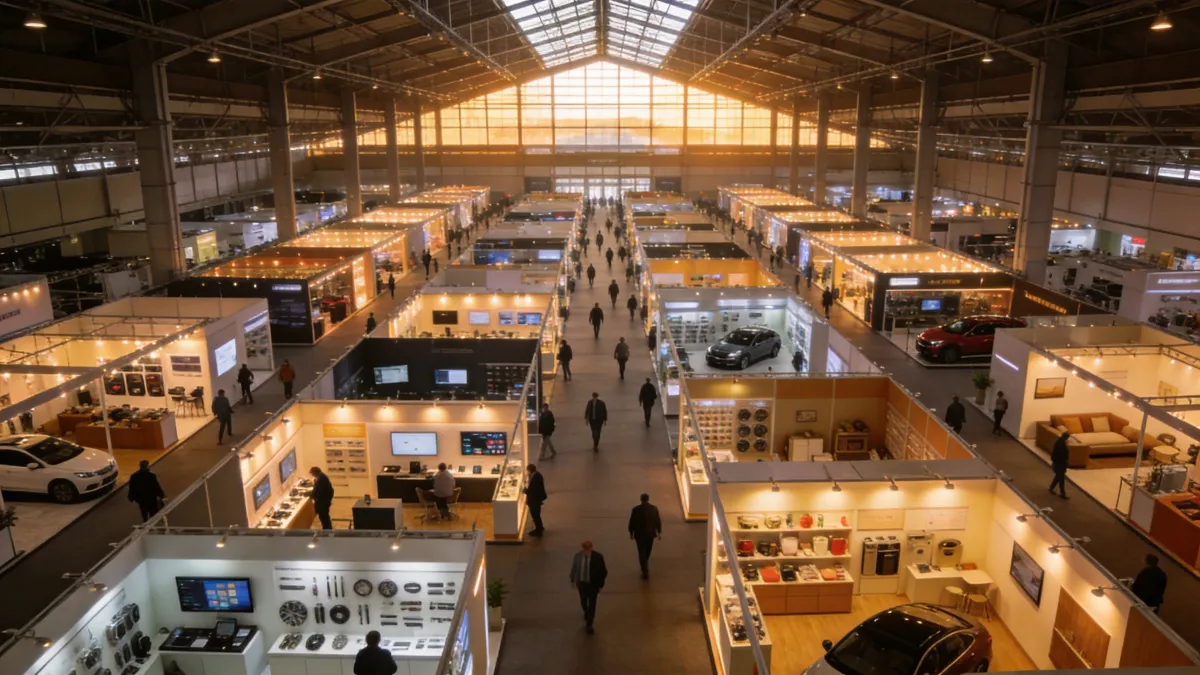
- Shortlist and verify factories: start from China's specialized trade fairs or a vetted supplier database, and verify business licenses, export records and past hospitality projects.
- Order samples, then a mock-up room: approve one fully fitted room before mass production, and document the approval in writing as the reference for final inspection.
- Sign a contract that describes everything: materials, dimensions, colors, packaging, delivery dates, late penalties, and payments tied to production milestones.
- Inspect before shipping — and hold the final balance until inspection passes: an independent inspection compares production against the approved sample, then supervises loading.
- Plan clearance early: prepare conformity certificates (SABER for Saudi Arabia) and shipping documents before the vessel arrives, and review our guide to China–Gulf shipping costs to budget logistics realistically.
A tip from Keerki: the biggest savings on hotel projects do not come from squeezing a factory's price, but from two decisions: approving one mock-up room that all production is measured against, and consolidating purchases from several factories into one shipment managed from a single warehouse. From Guangzhou, Keerki runs cargo consolidation and pre-shipment inspection for hospitality buyers, and we recommend timing factory visits with a specialized trade fair on the same trip.
Frequently Asked Questions
How long does it take to fully fit out a hotel from China?
From hands-on experience with hospitality projects, the full cycle from bill of quantities to on-site delivery typically takes four to eight months depending on hotel size and customization level. The mock-up room alone can take several weeks, so start procurement at least six months before your target opening date.
What is the difference between FF&E and OS&E in hotel procurement?
FF&E covers long-life furniture, fixtures and equipment such as beds, wardrobes and lighting, while OS&E covers consumables that are replaced regularly, such as linens, tableware and housekeeping items. Each category has different suppliers and inspection criteria.
Do I need SABER certification to import hotel furniture into Saudi Arabia?
Yes, most imported furniture and hotel supplies require product certificates of conformity through the SABER platform, run by the Saudi Standards, Metrology and Quality Organization, before shipment. Some categories need extra testing, so confirm each item's customs classification early.
How can I verify the quality of Chinese furniture before shipping?
The reliable method is threefold: a written approved sample, an independent pre-shipment inspection against that sample, then supervised loading. Inspection costs a small fraction of the shipment value compared with the loss of receiving a defective container.
Can purchases from multiple factories be consolidated into one shipment?
Yes, and this is the optimal approach for hotel projects buying from 10 to 30 different suppliers. Goods are received at one consolidation warehouse in China, inspected and repacked uniformly, then shipped in containers scheduled to the on-site installation sequence — cutting freight costs and preventing lost parcels.
Do I need to travel to China myself to buy?
Travel is valuable for approving the mock-up room and building factory relationships, but it is not a prerequisite. Many investors rely on a local representative inside China for shortlisting, negotiation, inspection and consolidation, with one visit at the approval stage.
Conclusion
The Gulf's hotel construction wave is an exceptional opportunity, but it rewards those who prepare early and methodically: an accurate bill of quantities, an approved mock-up room, a contract that describes every item, independent inspection, and smart shipment consolidation. Follow that path and you get global-brand quality at direct Chinese factory cost — and reach opening day without surprises.
Keerki Limited is a China-based sourcing and commercial representation company headquartered in Guangzhou, helping Gulf and Arab businesses import from China safely for over 10 years. For hospitality projects our team manages the full cycle: factory shortlisting, negotiation, production follow-up, pre-shipment inspection, consolidation, shipping and customs clearance. If you have a hotel or restaurant project in the fit-out stage, reach us through the service request form or directly on WhatsApp at +86 133 9212 7362, and we will come back with a practical plan for your project.