Key Takeaways
- For the first time ever, 17 Chinese companies appear on the Global Top 100 Auto Parts Suppliers list — surpassing the United States and Germany combined.
- China's auto parts exports reached $60.36 billion in H1 2026, up 8.5% year-on-year, with July alone hitting $9.34 billion (+13.9%).
- Japanese suppliers are losing major customers — even Toyota and Honda are shifting to Chinese-made components.
- European suppliers face a crisis: 76% expect profit margins below 5%, the minimum needed to sustain R&D.
- Gulf importers now have a historic opportunity to access world-class Chinese suppliers at competitive prices across multiple categories.
October 2026 marks a watershed moment in the global automotive parts industry. The latest "Global Top 100 Auto Parts Suppliers" ranking by Automotive News reveals that 17 Chinese companies have made the list for the first time — overtaking both the United States and Germany in the number of companies ranked, and placing second globally behind only Japan. Meanwhile, Japan's and Germany's legendary parts makers are describing their situation in existential terms: "operating at full capacity," "facing difficulties," and "barely holding on."
For Arab importers in the Gulf, this is far more than an economic headline. It is a structural transformation that redraws the entire supply chain map — and opens doors that were firmly closed just a few years ago. What exactly happened, and how can you take advantage of this historic shift?
The Great Shift: Japan and Europe Retreat as China Advances
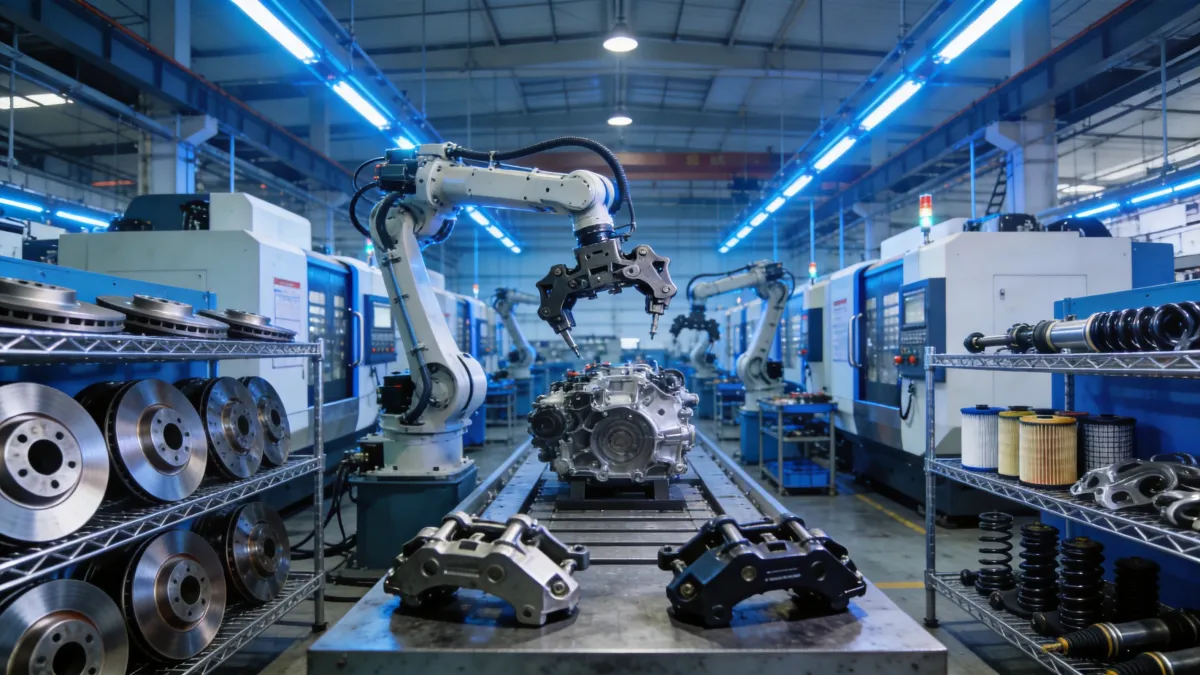
According to the 2026 Global Top 100 Auto Parts Suppliers ranking published by Automotive News this month, China's 17 representatives surpass the US and Germany for the first time in history. This is not a temporary fluctuation — it reflects a full decade of intensive investment in R&D, quality certification, and production capacity expansion across the Chinese automotive supply chain.
On the other side, traditional suppliers face unprecedented pressure. A 2026 survey by the European Association of Automotive Suppliers found that 76% of European suppliers expect profit margins below 5% — the absolute minimum needed to sustain research, development, and industrial investment — while the remaining 24% face outright losses. Research by Strategy& (a PwC subsidiary) revealed that average interest expenses for major German automotive suppliers reached 102% of operating income — meaning nearly all operating profits are consumed by debt servicing alone.
| Criteria | Chinese Suppliers | Japanese Suppliers | German Suppliers |
|---|---|---|---|
| Overall Trend | Growing revenue and global ranking | Losing customers, declining rapidly | Mounting debt, margins below 5% |
| Market Response | Faster development cycles, lower cost | Slow adaptation to electric vehicles | High-cost factories, heavy debt burden |
| Global Expansion | New factories in Thailand, Morocco, Turkey | Attempting entry through Chinese OEMs | Selling assets or merging with Chinese firms |
| Export Growth (Jul 2026) | $9.34B (+13.9% YoY) | Continuous year-on-year decline | Stagnant with margins below 5% |
| Investment in Europe (2025) | EUR 7.6B (+46% YoY) | Reducing operations across the board | Receiving Chinese investment (EUR 2.5B) |
Why Are Japanese Suppliers Losing Their Customers?
Japanese auto parts companies face three simultaneous pressures that are systematically eroding their business foundations — and creating opportunities for alternative suppliers.
Pressure one: New energy vehicles (NEVs) require 30-40% fewer parts than internal combustion engine vehicles, directly shrinking demand for traditional components like multi-speed transmissions and complex exhaust systems. Jatco, the Japanese transmission supplier, has been severely impacted since most pure electric vehicles no longer use conventional automatic gearboxes at all.
Pressure two: Even their historical clients — Toyota and Honda — are shifting procurement strategies within China. Toyota's China-specific electric model "bZ3X" significantly increased its locally sourced parts ratio from Chinese suppliers. Honda explicitly stated it would expand procurement of "standardized parts" developed and market-validated by Chinese manufacturers. This represents a fundamental shift in supply relationships that were once considered immovable for decades.
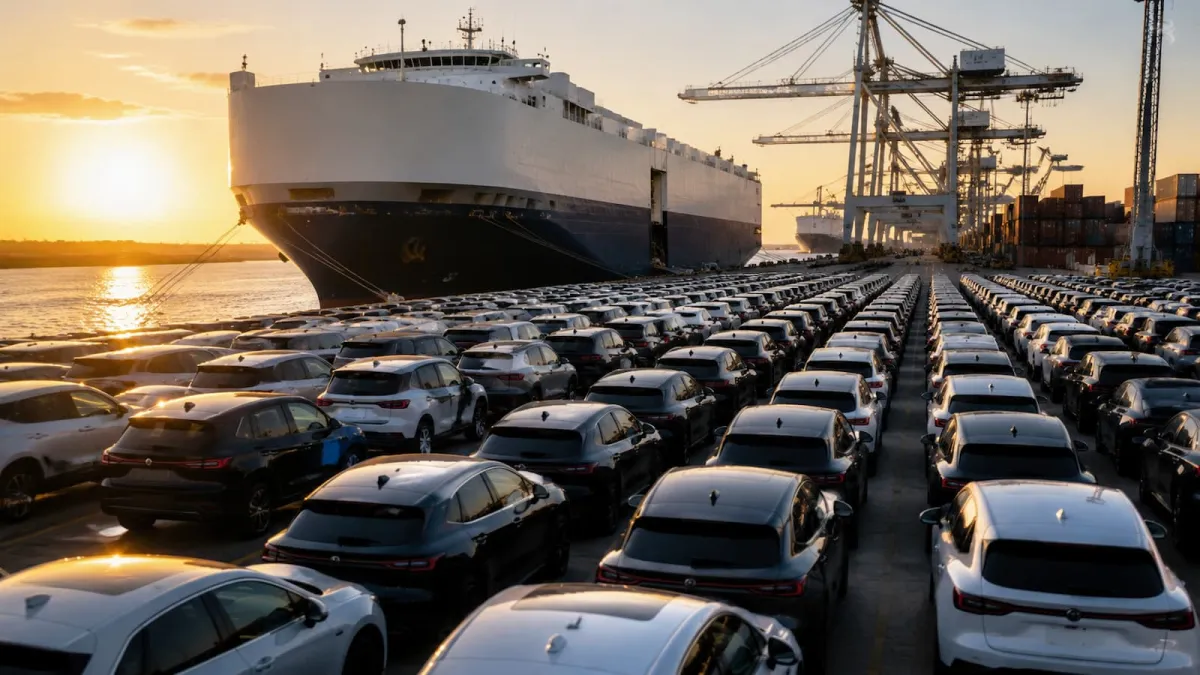
Pressure three: Chinese manufacturers are going global aggressively with both direct product exports and overseas factory construction. According to customs data compiled by the China Association of Automobile Manufacturers (CAAM), auto parts exports totaled $60.36 billion from January to July 2026, up 8.5% year-on-year. In Thailand alone — ASEAN's largest automotive manufacturing country — 165 Chinese auto parts companies have established operations to support BYD, Great Wall, SAIC, GAC, and Chery's production capacity expansion.
Perhaps the most telling indicator: major Japanese companies like TS TECH (a seat supplier that once derived 90% of revenue from Honda) are now actively turning to GAC Group and Changan Mazda for new business — attempting to leverage joint venture partnerships to penetrate China's rapidly growing independent brand ecosystem.
What Does This Structural Shift Mean for Gulf Importers?
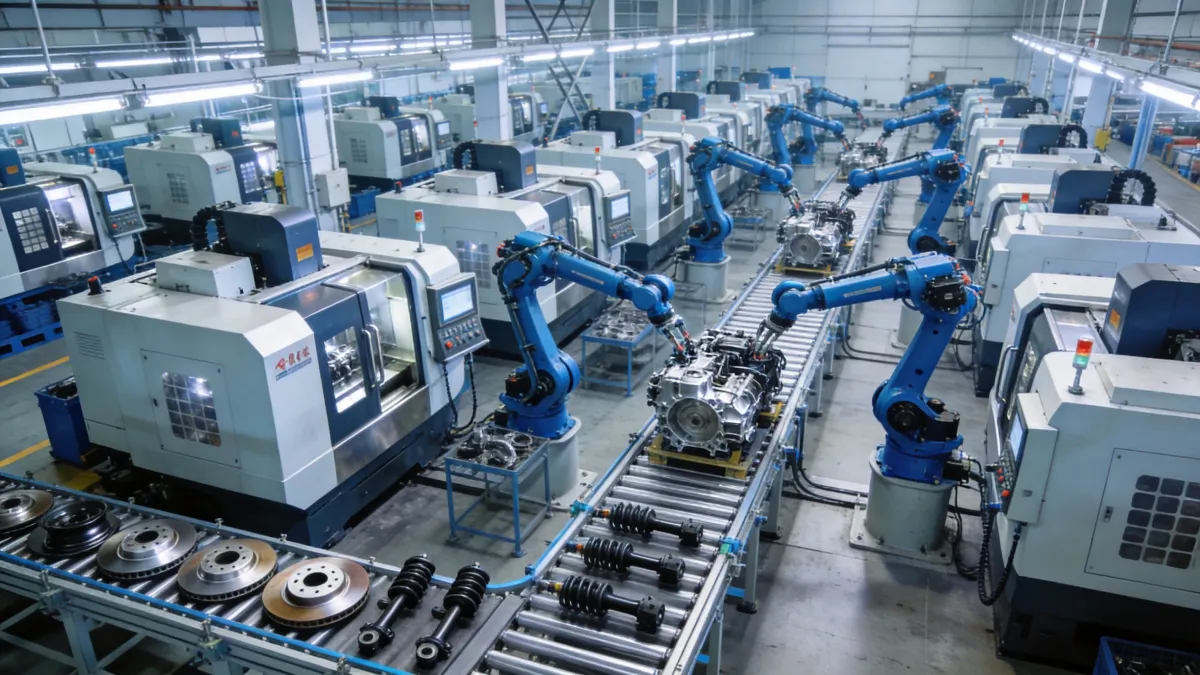
Simply put: you now have sourcing options that simply didn't exist five years ago. Chinese suppliers offer not just lower prices — but quality levels comparable to, and in several product categories exceeding, Japanese and European manufacturers. The reason is straightforward: massive, sustained investment in international certifications, automated production lines, and dedicated R&D capabilities focused on export markets.
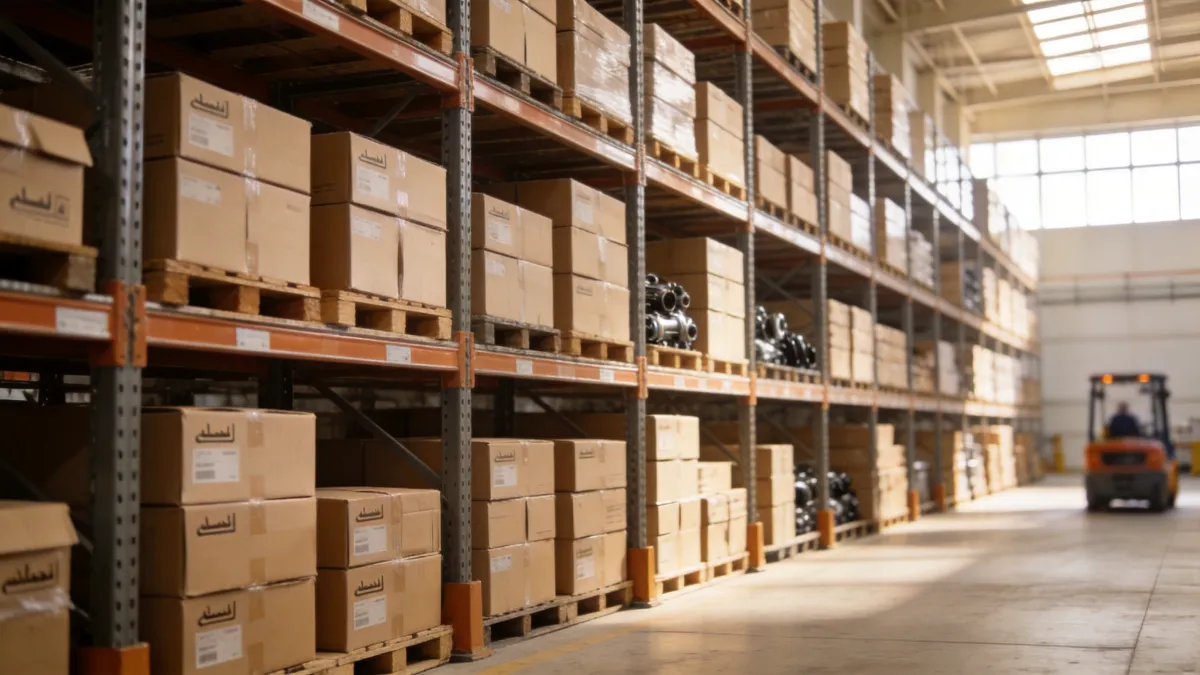
Based on Keerki Limited's hands-on experience in Guangzhou working with a verified network of over 50,000 Chinese suppliers, we've observed a dramatic and accelerating shift in Gulf importer demand patterns throughout 2026: instead of exclusively seeking Japanese-made replacement parts, a growing majority now request "Chinese equivalents with identical specifications" — especially in categories like ceramic brake pads, oil and air filters, suspension components, and cooling systems. In many cases, the Chinese alternative offers superior pricing with significantly shorter lead times.
| Category | Opportunity for Gulf Importer | Expected Savings |
|---|---|---|
| Ceramic Brake Pads | Chinese factories with IATF 16949 and OEM supply capability | 30-45% vs. Japanese equivalent |
| Oil & Air Filters | Abundant OEM-capable manufacturers with full certification | 25-40% cost reduction |
| Suspension Parts (Control Arms) | OE quality at competitive aftermarket pricing | 35-50% savings |
| Body Parts (Bumpers, Grilles) | Direct fitment for BYD, Chery, Haval popular models | 20-35% vs. dealer parts |
| Cooling Systems (Radiators) | Specialized Zhejiang factories with strong export track records | 30-40% savings |
| Engine Parts (Water/Oil Pumps) | Chongqing-based factories with ISO and IATF certification | 25-35% cost advantage |
How to Choose the Right Chinese Auto Parts Supplier in 2026
With the rapidly growing number of Chinese suppliers actively seeking export business, supplier selection has become both more critical and more complex. Here are the practical evaluation criteria Keerki applies when vetting suppliers for our Gulf client network:
- IATF 16949 Certification: This international quality management standard for the automotive industry is the absolute minimum acceptable threshold. Without it, no supplier can legitimately deliver OE-specification parts. Always verify its authenticity through the official IATF website before proceeding.
- Verified Export Track Record: Confirm that the supplier actually exports to your specific target markets (Middle East, Africa, Southeast Asia). A supplier that exports exclusively to Europe may not fully understand SASO, SABER, or GCC Standardization requirements specific to Gulf markets.
- Customization Capability: Can the factory modify packaging, add your brand labeling, or meet specific technical specifications? A large factory doesn't necessarily mean operational flexibility — especially important for small and medium-sized orders.
- Minimum Order Quantity (MOQ): Some factories require 5,000 pieces minimum — suitable for large established importers. If you're starting out or testing a new product category, look for factories accepting 500-1,000 piece orders as minimum.
- On-site Verification: Never rely solely on online photos and promotional videos. Commissioning a factory visit — either personally or through an independent third party such as SGS or Bureau Veritas — can reveal significant gaps between marketing materials and actual production capabilities.
Keerki's Tip
In the current period (October 2026), we've observed several Chinese suppliers beginning to raise prices by 5-10% after confirming that global demand for their products has increased significantly. Our practical advice: if you're planning large-volume orders of brake pads, filters, or suspension components, lock in prices with your supplier now before further increases come in Q4 2026. Keerki's Guangzhou-based team negotiates directly with factories to secure fixed pricing for 6-12 month contracts — protecting your margins from market volatility.
Three Challenges Gulf Importers Should Watch Carefully
The transformation in the global auto parts industry is not entirely positive for importers. Three specific challenges require careful attention and proactive planning:
Challenge One: Anti-dumping duties. The Gulf Cooperation Council imposed duties ranging from 25.8% to 74% on car batteries of Chinese origin effective January 2026 — a measure that protects domestic manufacturing but significantly raises import costs for affected product categories. Always verify your product's exact HS code before placing orders. Consult the Saudi General Authority for Foreign Trade (GAFT) for the current duty schedule.
Challenge Two: Payment terms pressure. Earnings reports from over 10 major automakers in H1 2026 showed average supplier payment periods rebounded to 187 days — an increase of 23 days year-on-year, far exceeding the industry's 60-day target. This means Chinese suppliers themselves face significant financial pressure and may demand larger advance payments from new or smaller importers. Negotiate payment terms proactively — especially valuable if you're a repeat customer with consistent order volume.
Challenge Three: Internal competition among Chinese suppliers. Some suppliers offer prices so aggressively low they are effectively selling at a loss — then disappear within a year or two, leaving importers without support. Choose a financially stable supplier with a genuine, continuous operating track record rather than simply the cheapest option available today. The cost difference between a stable long-term supplier and an unreliable fly-by-night operation can far exceed any initial price savings.
Three Trends That Will Shape China-Gulf Auto Parts Trade
Three major trends will significantly shape China-to-Gulf auto parts supply chains in the coming six months:
1. EV Battery Aftermarket Infrastructure: Ningbo launched Zhejiang province's first bonded EV battery repair service in October 2026, capable of repairing up to 60,000 battery packs annually while serving 47 countries across Southeast Asia and Europe. A complete aftermarket service infrastructure for Chinese electric vehicles is now taking shape — making it progressively easier for Gulf importers to offer warranties and comprehensive after-sales service to their customers.
2. Overseas Manufacturing Hubs: Companies like Qingdao Sentury Tire are investing $273 million in a Turkish joint venture factory with TATKO Group, targeting 7 million tires annually — designed to access European markets through Turkey's customs union with the EU. This "build factories near customers" strategy will accelerate in coming years, further strengthening Chinese supply chain resilience against trade barriers.
3. EU-China Trade Understanding: The EU and China reached a preliminary trade understanding in October 2026, covering reduced Chinese tariffs on European auto parts in exchange for facilitating rare-earth export licenses. These cross-trade agreements may open new supply channels that Arab importers can strategically leverage through diversified sourcing relationships.
Frequently Asked Questions
Are Chinese auto parts safe and reliable enough for my market?
Yes, provided you select a supplier with valid IATF 16949 certification and a verified export track record to similar markets. Many Chinese suppliers today serve the world's largest automotive companies — including Toyota, Volkswagen, and BMW — delivering to identical quality standards. The critical step is independently verifying certification and export history before placing orders, not relying on supplier marketing claims alone.
What's the practical difference between Chinese OEM and aftermarket parts?
OEM (Original Equipment Manufacturer) parts are identical to those installed at the original factory during vehicle assembly. Aftermarket parts are manufactured to similar specifications but not necessarily on the same production line. Specialized Chinese manufacturers produce both types at very comparable quality levels, with typically only a 15-25% price difference — making quality aftermarket parts an excellent value choice for cost-conscious importers serving price-sensitive markets.
How do I verify a Chinese auto parts supplier's credibility before my first order?
Start by checking the IATF 16949 certificate on the official IATF website. Then verify the company's Chinese business registration through platforms like Tianyancha or Qichacha. Next, request a list of current export clients and contact at least two for independent references. Finally, commission a professional inspection company (such as SGS or Bureau Veritas) to conduct an on-site factory audit before completing your first significant order — especially for orders exceeding $50,000.
What customs duties apply to Chinese auto parts imported to Gulf countries?
Import duties vary by specific HS code and the importing country. Generally, auto parts face customs duties ranging from 5% to 12% across most Gulf Cooperation Council countries. However, certain products (particularly car batteries of Chinese origin) may face additional anti-dumping duties up to 74% under GCC-wide decisions. Always verify your product's exact tariff classification through Saudi GAFT or the equivalent trade authority in your country before confirming orders.
How long does shipping from China to Gulf ports typically take?
Sea freight from major Chinese ports like Guangzhou or Ningbo to Jeddah or Dubai typically takes 18-25 days depending on the specific shipping line and route. Air freight takes just 3-5 days but costs 300-500% more than sea transport. For larger purchases (over 5,000 pieces), sea freight is overwhelmingly the economical choice — especially with professional consolidation services that optimize container utilization and reduce per-unit shipping costs.
Can I source Chinese auto parts compatible with European and Japanese car brands?
Absolutely. Many specialized Chinese factories produce replacement parts fully compatible with Toyota, Nissan, Honda, Hyundai, Mercedes-Benz, and BMW vehicles. The key requirement is verifying the OE part number matches precisely and ordering tested samples before committing to bulk quantities. Several factories in Guangzhou and Chongqing specialize exclusively in Japanese and Korean vehicle-compatible parts with decades of proven manufacturing experience.
Conclusion: A Historic Window of Opportunity
What we're witnessing in October 2026 is not merely numbers in an annual industry report — it represents a fundamental geological shift in the global automotive parts industry's structure. Japanese suppliers are retreating under mounting cost pressure and systematic customer loss, European ones are gasping under crushing debt burdens, and Chinese suppliers are filling the growing void with rising production capacity and increasingly impressive quality standards backed by international certification.
For Gulf importers, this represents an exceptional moment that doesn't come often: better opportunities, more competitive pricing, and significantly wider sourcing choices than ever before available — provided you choose your supply partners wisely and verify every supplier independently before committing to any commercial agreement.
Keerki Limited is a China-based sourcing and commercial representation company headquartered in Guangzhou, helping businesses in the Gulf and the Arab world import from China safely for over 10 years. With a trilingual team (Arabic, Chinese, English) and a verified database of over 50,000 suppliers across all major categories, we can help you find, verify, and negotiate with the right Chinese auto parts partners for your specific market needs. Request our service now or reach us directly on WhatsApp: +86 133 9212 7362.