- Kuwait applies the GCC unified customs tariff of 5% of CIF value on most goods, with 417 essential food, agricultural and medical items exempt.
- China has been Kuwait's largest trading partner since 2015; bilateral trade reached $18.58 billion in 2025, according to China's Ministry of Foreign Affairs.
- Sea freight from South China ports to Shuwaikh Port typically takes 18–22 days; air freight to Kuwait International Airport takes 3–5 days.
- Regulated products need KUCAS conformity documents (TIR and TER) issued before shipment by approved bodies such as SGS, Intertek, Bureau Veritas or TÜV Rheinland.
- Preparing documentation and conformity certificates in China before the container closes is the single most important step to avoid storage fines and clearance delays in Kuwait.
On 18 October 2026, Xinhua published GCC Statistical Center data confirming that China supplies around 20% of the GCC's total imports, while the bloc's industrial investments have reached roughly $426 billion. Kuwait sits at the heart of this picture: a high-income Gulf market whose demand for machinery, vehicles, electronics and building materials keeps growing as Kuwait Vision 2035 projects advance. This practical guide walks Kuwaiti and Arab importers through importing from China step by step — ports, duties, the KUCAS conformity scheme, costs, and the mistakes to avoid.
Why Is Kuwait a Promising Market for Importers from China?
Kuwait is a high-purchasing-power Gulf consumer market that depends almost entirely on imports for manufactured goods, and China has been its number-one trading partner since 2015. According to China's Ministry of Foreign Affairs, bilateral trade reached $18.58 billion in 2025, including $6.04 billion of Chinese exports to Kuwait, and in the first quarter of 2026 alone two-way trade hit $3.07 billion.
The momentum is continuing. Data from Shanghai's trade services platform shows Chinese exports to Kuwait grew 44.6% year-on-year in the first seven months of 2025, led by motor vehicles, seamless steel pipes, drilling machinery and parts, mobile phones and telecom equipment, and valves. Since diplomatic relations were established 55 years ago, bilateral trade has grown more than 800-fold.
On the retail side, Kuwait's e-commerce market is expected to reach about $1.78 billion in 2025, growing at roughly 14.3% per year — an additional sales channel for individual importers and online store owners. And in July 2026 Kuwait signed the $16 billion "Project Peregrine" deal to develop oil pipeline infrastructure, signaling sustained institutional demand for Chinese equipment, machinery and construction materials for years to come.
Which Ports and Shipping Options Connect China to Kuwait?
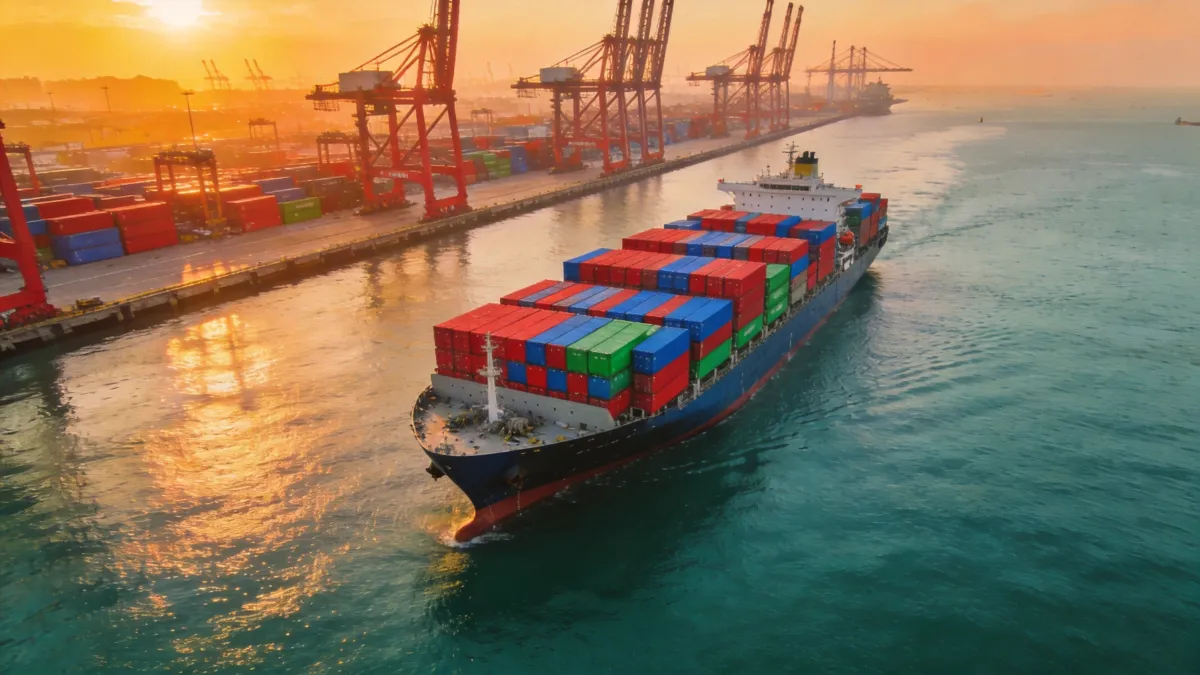
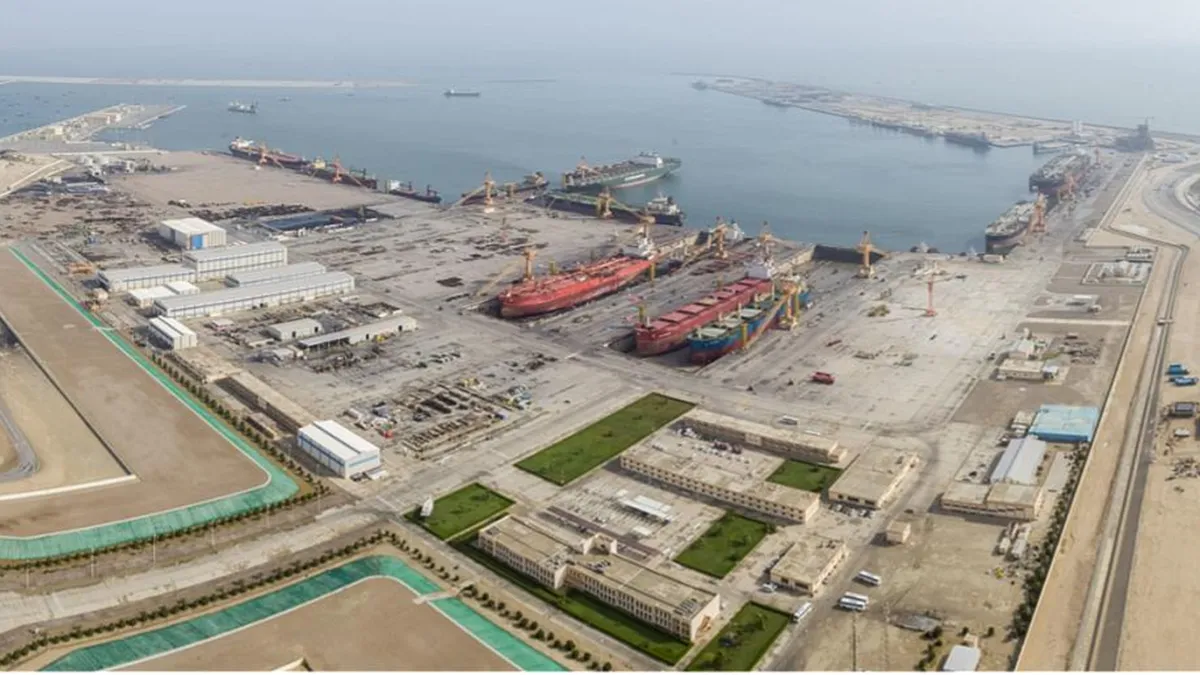
Most Chinese goods enter Kuwait by sea through Shuwaikh and Shuaiba ports, and by air through Kuwait International Airport (KWI). Shuwaikh Port is the country's main commercial gateway; according to the Kuwait Ports Authority it covers 4.4 million square meters and sits west of Kuwait City, close to the capital's markets and warehouses. Shuaiba Port, in the south, serves industrial shipments, large projects and bulk cargo.
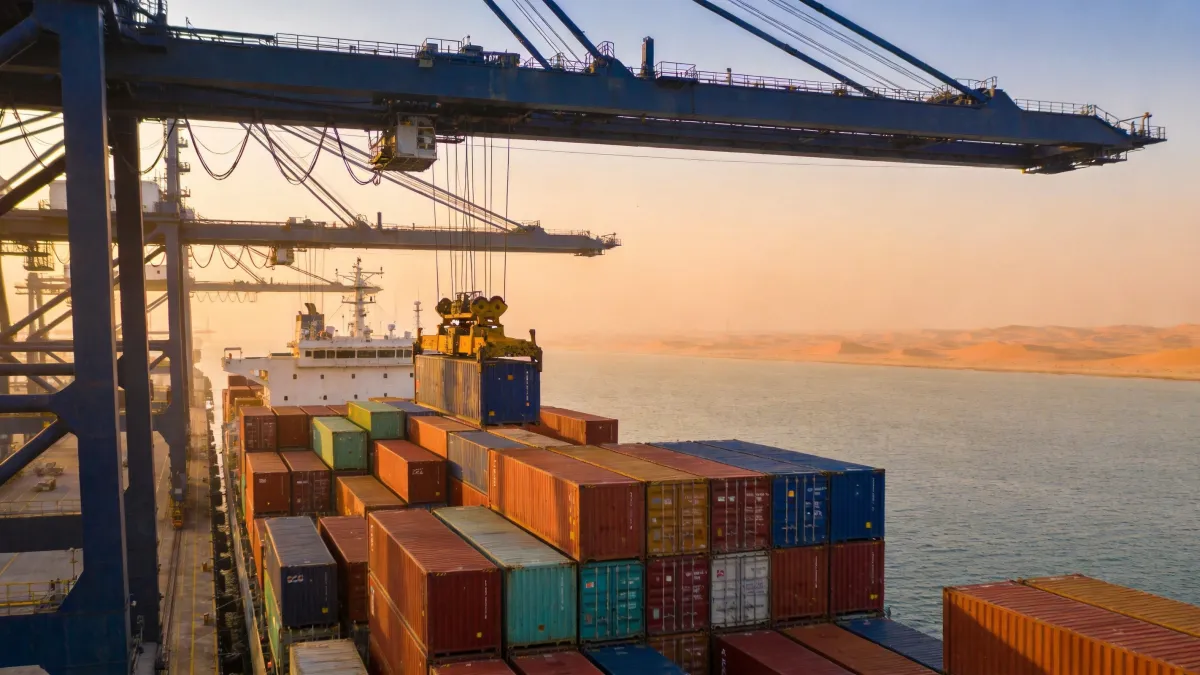
Sea freight is the economical default. Most services route via Jebel Ali in Dubai, then complete the leg to Kuwait on feeder vessels. The table below summarizes transit times and indicative costs based on 2026 data from forwarders active on the lane:
| Route / Mode | Approx. Transit Time | Notes |
|---|---|---|
| Guangzhou / Shenzhen → Shuwaikh (FCL) | 18–22 days | Fastest sea option; weekly sailings via Jebel Ali |
| Shanghai / Ningbo → Shuwaikh (FCL) | 22–28 days | More carrier options and competitive rates |
| Qingdao / Tianjin → Shuwaikh (sea) | 25–32 days | Suited to heavy machinery and building materials |
| Air → Kuwait International (KWI) | 3–5 business days | For urgent parts and high-value electronics |
As a 2026 reference rate, a 20ft container from Shanghai to Shuwaikh runs about $1,700–2,400, and a 40ft container about $2,700–3,500, according to the GCC Freight lane guide. If your cargo is under roughly 15 CBM, LCL consolidation is cheaper than booking a full container.
How Much Are Customs Duties in Kuwait?
Kuwait applies the GCC unified customs tariff: 5% of CIF value (cost, insurance and freight) on most imported goods, a rate it has applied since adopting the Single Customs Tariff on 1 April 2003, according to the U.S. Department of Commerce country guide on trade.gov. 417 essential items — basic foodstuffs, agricultural, medical and pharmaceutical goods — are duty-free, while tobacco products are assessed at 100%.
Kuwait currently does not levy VAT on general commercial imports, which keeps landed-cost calculations simpler than in some neighboring Gulf markets. Alcohol and pork products are prohibited, and used cars older than five years cannot be imported. Remember that duties are paid in Kuwaiti dinars, and that correct HS classification from the start protects you from valuation disputes at clearance.
What Is KUCAS and Which Conformity Certificates Do You Need?
KUCAS (Kuwait Conformity Assurance Scheme) is the mandatory conformity program supervised by the Public Authority for Industry (PAI). Regulated products must obtain a Technical Inspection Report (TIR) before arrival, plus a Technical Evaluation Report (TER) registering the product. Without a TIR from an approved body, PAI will not issue the clearance certificate — your shipment will be held for port inspection and lab testing at your expense, with mounting storage charges.
The approved certification and inspection bodies issuing TIRs in the country of origin are TÜV Rheinland, Intertek, Bureau Veritas and SGS. Regulated products fall into six main groups, the most relevant of which are:
| Group | Example Products | Additional Requirements |
|---|---|---|
| Children's toys | Electric and non-electric toys | Gulf G-Mark and GCTS conformity tracking |
| Household electrical & gas appliances | Refrigerators, washers, ACs, lighting | Energy efficiency (EER) registration via the TABEK portal with mandatory label |
| Automotive | New tires, vehicles | GSO conformity certificate, then PAI technical evaluation |
| Chemicals | Paints, putties, household detergents | Household detergents became mandatory under KWS GSO 151 and KWS GSO 2555 in 2024–2025 |
| Building materials | Rebar, Portland cement, bricks | Kuwait Quality Mark mandatory from 22 December 2025 |
The golden rule confirmed by every operator on this lane: check the PAI regulated-products list and imported conformity services before shipping, and complete your certificates in China before the container closes. A certificate that takes days at origin can take weeks of remote improvisation after the vessel arrives — plus storage fees. And remember: country-of-origin and product labels must be in Arabic (or multilingual including Arabic) and non-removable.
What Are the Best Products to Import from China to Kuwait?
Kuwaiti demand concentrates in categories where Chinese manufacturing already leads. According to Chinese customs and Shanghai trade platform data, China's top exports to Kuwait are motor vehicles, mechanical and electrical products, steel and pipes, and mobile phones and telecom equipment. GCC Statistical Center figures likewise show the bloc's imports from China center on equipment and machinery, motor vehicles, iron and steel, and plastics.
From a practical standpoint, the most promising categories for Kuwaiti traders today are:
- Building and finishing materials: ceramics, sanitary ware, lighting, doors — driven by Vision 2035 infrastructure projects.
- Electronics, phones and accessories: strong retail demand and an e-commerce market growing 14% a year.
- Auto parts: as Chinese cars take a larger share of Kuwait's fleet, aftermarket demand is growing fast.
- Furniture and home goods: mostly sourced from Guangzhou and Foshan; LCL sea freight suits smaller traders.
- Machinery and equipment: drilling, workshop, restaurant and hotel equipment for public- and private-sector projects.
To find reliable factories in these categories, start with Keerki's supplier directory of 35,000+ verified suppliers, or go straight to the factories recommended by Keerki after on-the-ground verification.
Practical Steps: How to Import from China to Kuwait Successfully
- Define your product and HS code, and check whether it is KUCAS-regulated on the PAI website.
- Choose a trustworthy supplier; verify its business registration and export track record, and request samples before any large order.
- Negotiate clear Incoterms (FOB or CIF are most common for Kuwait) and fix currency and payment terms in writing.
- Complete conformity documents early: test reports, then the TIR via an approved body, with pre-shipment inspection (PSI).
- Prepare the paperwork: commercial invoice with accurate description and HS code, packing list, bill of lading, and a legalized certificate of origin.
- Book the right freight: FCL above ~15 CBM, LCL below it, air for urgent high-value cargo.
- Appoint a customs broker in Kuwait registered on the PAI platform to secure the clearance certificate on arrival.
- Receive and inspect: match the goods against the invoice and TIR, and document any discrepancy immediately to protect your claim rights.
A tip from Keerki: the most common problem we see among first-time importers to Kuwait is not price — it is discovering conformity requirements after the container has arrived. Based on the Keerki team's experience in Guangzhou, inspecting the product and obtaining the TIR before shipment costs a fraction of what you would pay in storage fines and lab testing at Shuwaikh Port. If your product falls in a regulated category — detergents, electrical appliances, tires, toys, building materials — start the conformity file in parallel with price negotiation, not after it.
Frequently Asked Questions
How long does shipping from China to Kuwait take?
Sea freight from Guangzhou or Shenzhen to Shuwaikh Port typically takes 18 to 22 days, and from Shanghai or Ningbo 22 to 28 days, with most services routing via Jebel Ali. Air freight to Kuwait International Airport takes 3 to 5 business days.
What customs duty applies to Chinese imports in Kuwait?
Kuwait charges 5% of CIF value on most goods under the GCC unified tariff adopted in 2003. A list of 417 essential food, agricultural and medical items is duty-free, while tobacco products are charged at 100%.
Do I need a KUCAS certificate for every shipment?
You need a TIR only if your product is on the KUCAS regulated list, such as household electrical appliances, children's toys, tires, household detergents and building materials. Non-regulated goods clear with standard commercial documents and no conformity certificate.
Which Kuwaiti ports handle Chinese cargo?
Shuwaikh Port is the main commercial port and receives most imported containers destined for Kuwait City and its markets. Shuaiba Port in the south handles industrial, bulk and project cargo; both are operated by the Kuwait Ports Authority.
Can I import from China to Kuwait without a large company?
Individual traders and small businesses can import partial loads via LCL freight with a licensed Kuwaiti customs broker. However, regular commercial importing under a trade name requires a Kuwaiti commercial registration and importer registration with the relevant authorities.
How do I verify a Chinese supplier before paying?
Check the factory's business registration and export licenses, and commission independent inspection reports or an on-site factory visit before any large payment. Keerki Limited's supplier verification services cover document review, field visits and pre-shipment quality inspection.
Conclusion
Importing from China to Kuwait in 2026 is a strong opportunity: a stable top trading partner for over a decade, a low 5% customs duty, growing demand for building materials, electronics and vehicles, and mature shipping lanes across the Gulf. Your success rests on three rules: classify your product early and confirm KUCAS requirements, complete certificates and documents in China before sailing, and choose an on-the-ground partner who knows both ports and both authorities — Customs and PAI.
Keerki Limited is a China-based sourcing and commercial representation company headquartered in Guangzhou, helping businesses in the Gulf and the Arab world import from China safely for over 10 years. From supplier search and verification to negotiation, quality inspection, cargo consolidation, shipping and customs clearance, our Arabic-, Chinese- and English-speaking team saves you time and money on every shipment to Kuwait. Start today via the service request form or message us on WhatsApp: +86 133 9212 7362, and learn more about our services.