- Haison Shipping launched a direct container route from Taicang port (Jiangsu, China) to Jeddah Islamic Port in October 2026, saving 2–3 weeks of transit time compared to traditional transshipment routes.
- Gemini Cooperation (Maersk + Hapag-Lloyd) relaunched its Far East–Middle East loop via Khor Fakkan instead of Jebel Ali, with the first sailing departing Qingdao on 17 October and arriving 16 November 2026.
- Spot rates to Khor Fakkan have surged 479% since 28 February 2026, reaching $10,626 per 40ft container — surpassing even pandemic-era peaks, according to Xeneta.
- The SCFI composite index held at 3,664.11 points on 9 October 2026, while Asia–Europe rates declined for a 13th consecutive week.
- China–Saudi bilateral trade reached $108.2 billion in 2025, underlining the growing need for efficient direct shipping corridors.
Two major developments in October 2026 are reshaping the container shipping map between China and the Middle East. Haison Shipping inaugurated a direct route from Taicang to Jeddah, while Gemini Cooperation relaunched its Asia–Gulf service via the bypass port of Khor Fakkan. For Arab importers, these changes are not just logistics headlines — they directly affect landed costs, delivery timelines, and sourcing strategies for the quarters ahead.
What changed in China–Gulf shipping lanes this October?
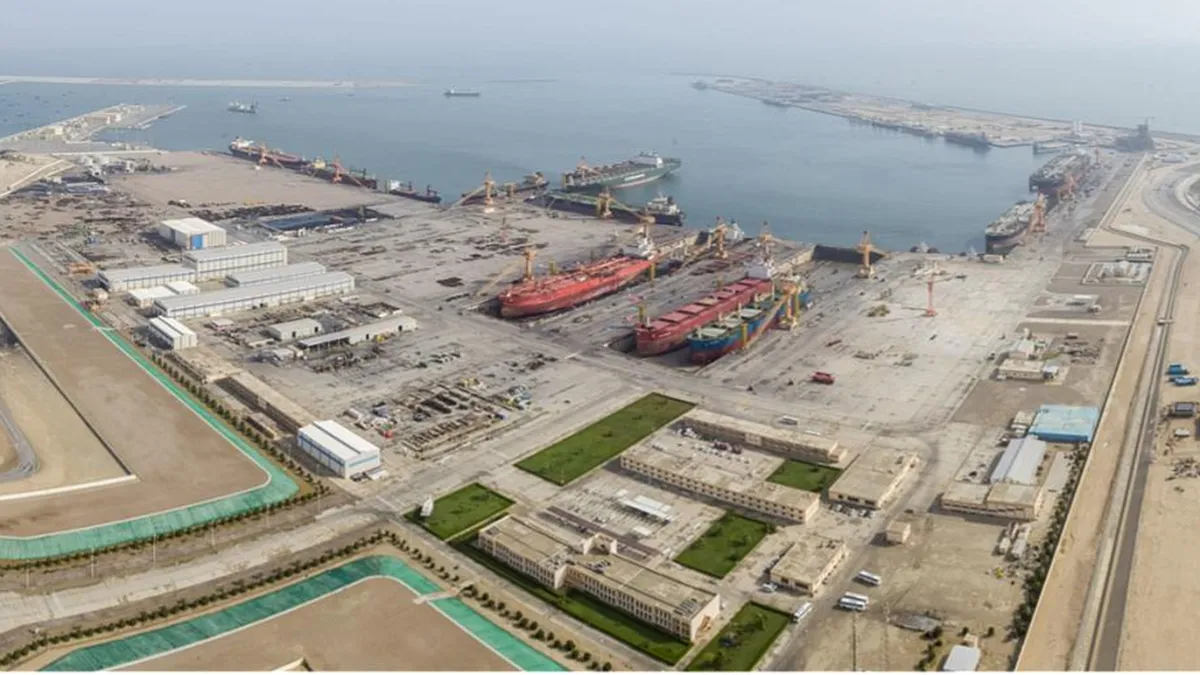
Two simultaneous developments reconfigured China–Middle East shipping in October 2026: a new direct container line from Taicang to Jeddah and the relaunch of a major carrier service via Khor Fakkan. On 10 October 2026, a vessel carrying approximately 1,000 TEUs departed Taicang port in Jiangsu province bound for Jeddah Islamic Port — the maiden voyage of a new direct service operated by Haison Shipping.
In parallel, the Gemini Cooperation — comprising Maersk and Hapag-Lloyd — announced the relaunch of its FM1/AGX loop between East Asia and the Middle East. The critical change: Jebel Ali has been replaced by Khor Fakkan, which sits outside the Strait of Hormuz and has emerged as the Gulf's primary bypass port. The first vessel, the 8,400 TEU Maersk Athabasca, is scheduled to depart Qingdao on 17 October and reach Khor Fakkan on 16 November 2026.
Why are Asia–Europe rates falling while Gulf rates keep climbing?
Asia–Europe rates are declining while Gulf rates continue to rise because of two opposing forces: the gradual return of container ships to the Suez Canal and the ongoing closure of the Strait of Hormuz to container traffic. According to Container News, the Shanghai–Rotterdam rate dropped 2% to $3,337 per 40ft container, marking the 13th consecutive week of decline.
The Gulf trade, however, has reached unprecedented levels. According to The Loadstar, spot rates to Khor Fakkan have surged 479% since 28 February 2026, reaching $10,626 per 40ft — exceeding even the peaks recorded during the COVID-19 disruption.
| Route | Rate (per 40ft) | Weekly Change | Trend |
|---|---|---|---|
| Shanghai – Los Angeles | $7,624 | -3% | ↓ Declining |
| Shanghai – New York | $10,220 | -2% | ↓ Declining |
| Shanghai – Rotterdam | $3,337 | -2% | ↓ 13th week of decline |
| Far East – Khor Fakkan | $10,626 | -- | ↑ +479% since Feb 2026 |
| Shanghai – Genoa | $3,696 | 0% | → Stable |
How does the Taicang–Jeddah direct route compare to traditional shipping?
The fundamental advantage of the new Taicang–Jeddah direct route over traditional shipping paths is the elimination of transshipment at intermediate ports. According to Xu Dapeng, chairman of Haison Shipping, the new line saves 2 to 3 weeks in transit time and offers more precise sailing schedules, as reported by Xinhua.
Previously, cargo from Taicang would first be moved to Shanghai or Ningbo for loading onto larger vessels heading to Jeddah. Each transshipment step adds handling costs (typically $150–$300 per container), documentation complexity, and potential delays. The direct route removes all of these friction points.
Why did carriers choose Khor Fakkan over Jebel Ali?
Carriers chose Khor Fakkan over Jebel Ali because of geography, not commerce. With the Strait of Hormuz effectively closed to container vessels for nearly eight months, Khor Fakkan — located outside the strait on the Gulf of Oman coast — became the only viable maritime gateway for Gulf-bound cargo.
According to Drewry's analysis, Khor Fakkan's weekly throughput has jumped from around 8,000 TEU to 65,000 TEU — a 700% increase. The terminal operator, Gulftainer, had to build truck gates from scratch, scaling from 100 daily truck movements to 8,500. DP World has already moved 500,000 TEU through overland Gulf corridors since March 2026 and acquired 70 additional trucks.
| Port | Status | Weekly Volume | Key Notes |
|---|---|---|---|
| Jebel Ali (Dubai) | Sharp decline | -- | Inside Hormuz; volumes plummeting |
| Khor Fakkan (Fujairah) | +700% growth | 65,000 TEU | Outside strait; requires trucking to Gulf cities |
| Jeddah Islamic Port | New direct line | -- | Taicang–Jeddah direct; ~1,000 TEU/sailing |
| Port of Duqm (Oman) | New RoRo line | -- | Direct Chinese vehicle exports route |
How can Arab importers benefit from these new routes?
Arab importers can benefit from these new shipping routes through three channels: shorter transit times, route diversification, and reduced dependency on a single port. For Saudi importers specifically, the Taicang–Jeddah direct line means cargo arrives in roughly half the time compared to the traditional transshipment route via Shanghai or Singapore.
For importers in the UAE, Kuwait, Bahrain, and Qatar, the new Gemini service via Khor Fakkan offers direct maritime access — even though final delivery requires overland transport from Khor Fakkan. The key advantage is bypassing the Hormuz bottleneck entirely, which has caused unpredictable delays on the old Jebel Ali route.
Practical steps to take advantage of the new routes
- Check if the new direct line covers your origin: If your supplier is located in Jiangsu province (Taicang, Suzhou, Wuxi, Nanjing), the Taicang–Jeddah route eliminates inland transport costs to Shanghai or Ningbo plus transshipment fees.
- Calculate total landed cost, not just ocean freight: A direct route may appear more expensive per TEU at the port level, but it eliminates intermediate THC charges ($150–$300), reduces insurance costs for shorter transit, and cuts demurrage risk. Request all-in quotes.
- Plan for Khor Fakkan overland logistics: If your warehouse is in Dubai, Abu Dhabi, or northern Gulf cities, get quotes for trucking from Khor Fakkan. The 700% throughput increase means infrastructure is now mature, but costs vary by haulage provider.
- Lock in long-term contracts now: Spot rates to the Gulf are at record levels, but long-term contract rates remain significantly lower. If you plan regular shipments through Q1 2027, now is the time to negotiate annual agreements with two different carriers for diversification.
- Align sailing schedules with your production cycle: New routes mean new schedules. Verify that departure dates from China align with your production readiness and seasonal demand windows in your market.
Keerki's tip: From our experience in Guangzhou working with hundreds of Arab importers, we advise against waiting for Gulf shipping rates to return to pre-2026 levels — the route is affected by logistical and geopolitical factors that will remain influential for months. The practical alternative is to diversify routes: use the direct line to Jeddah for Saudi cargo, Khor Fakkan for UAE and northern Gulf destinations, and negotiate annual contracts with at least two different carriers to spread risk. Keerki's team helps you evaluate the optimal route for your shipment based on product type, destination, and total cost.
Frequently Asked Questions
How long does the new Taicang–Jeddah direct route take compared to traditional shipping?
The new direct route saves 2 to 3 weeks compared to the traditional transshipment path via intermediate ports. The exact duration depends on sea conditions, but the main advantage is eliminating transshipment operations that typically add 10–14 days.
Is Khor Fakkan a practical alternative to Jebel Ali for UAE importers?
Yes, Khor Fakkan has become the primary alternative. Although it was originally built as a maritime transshipment terminal rather than a trucking hub, weekly volumes have reached 65,000 TEU with 8,500 daily truck movements. The additional cost is overland transport from Khor Fakkan to UAE cities.
Why are shipping rates to the Gulf rising while Europe rates are falling?
The main reason is the continued closure of the Strait of Hormuz to container vessels for approximately eight months, forcing shipping lines to use longer and more expensive routes. Meanwhile, the return of ships to the Suez Canal has increased capacity on the Europe route, driving rates down.
Can I benefit from the Taicang direct line if my supplier is not in Jiangsu province?
You potentially can. Taicang port serves a broad industrial zone including Suzhou, Wuxi, and Nanjing. If your supplier's factory is in this region, the new direct line saves you inland transport costs to Shanghai or Ningbo plus transshipment handling fees.
What is the difference between contract rates and spot rates for shipping?
Spot rates change weekly and reflect real-time supply and demand. Contract rates are fixed for 6–12 months. Currently the gap is very large: spot rates are significantly higher than contract rates, making long-term agreements a better option if you plan regular shipments.
Do the new routes cover all cargo types or only general containers?
The Taicang–Jeddah direct line serves dry van containers. The Gemini service via Khor Fakkan also handles general containers. For reefer (refrigerated) or hazardous cargo, check directly with shipping lines for coverage and specific conditions.
The shipping map is changing — prepared importers will benefit
The launch of the Taicang–Jeddah direct route and the relaunch of the Asia–Middle East loop via Khor Fakkan are not just daily logistics news — they signal that the shipping industry is fundamentally restructuring its routes between China and the Middle East. For Arab importers, the real opportunity lies in diversifying routes, negotiating long-term contracts, and leveraging direct lines to reduce total landed costs.
Keerki Limited is a China-based sourcing and commercial representation company headquartered in Guangzhou, helping businesses in the Gulf and the Arab world import from China safely for over 10 years. Our team speaks Arabic, Chinese, and English, and works daily to monitor the latest shipping routes and logistics corridors to ensure your cargo arrives at the lowest cost and fastest time. Request your free consultation today or reach us on WhatsApp: +86 133 9212 7362.