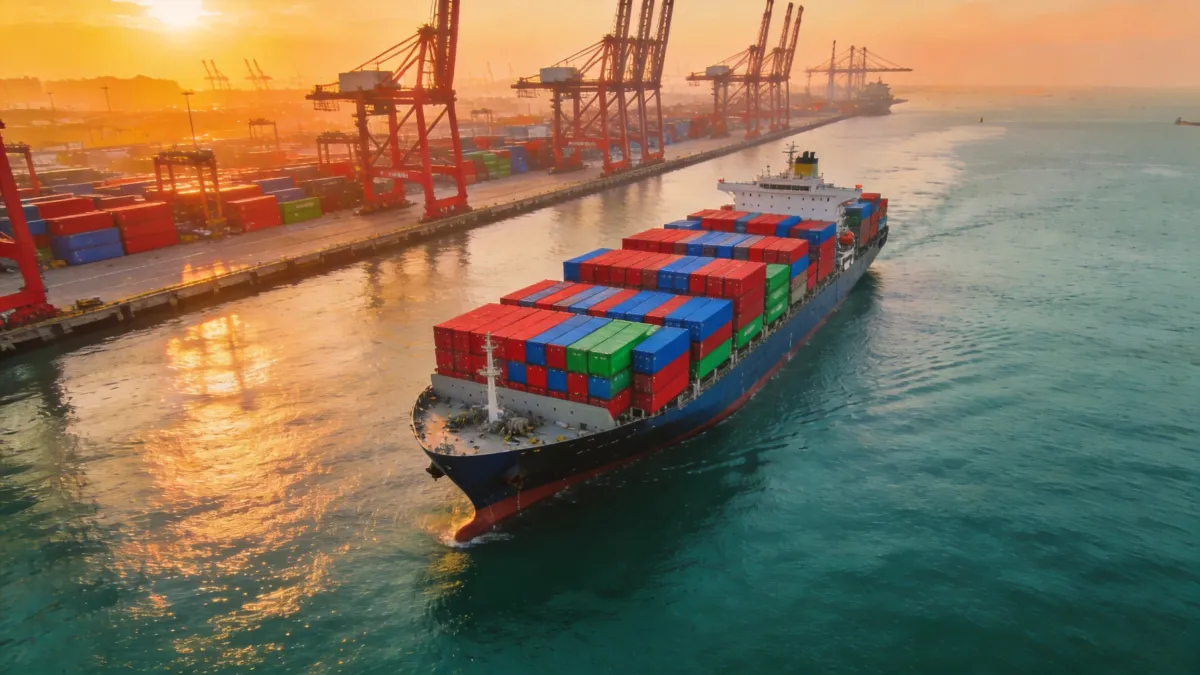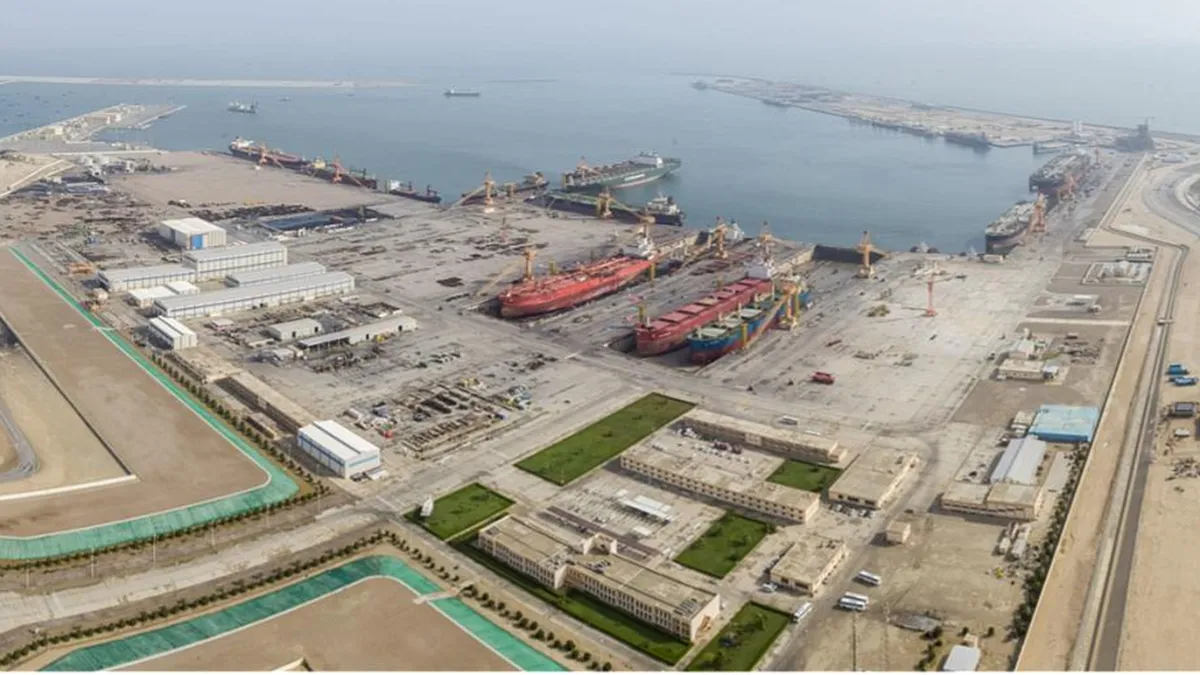
- On 8 October 2026 the RoRo vessel Changrongkou sailed from Qinzhou (Beibu Gulf Port, Guangxi) with 2,727 Chinese vehicles bound directly for the Port of Duqm in Oman — a new record for the port's largest single-voyage vehicle shipment.
- The voyage is direct, with no intermediate port calls, and takes about 15 days — roughly half the time of traditional transshipment routes.
- The new service follows existing Beibu Gulf routes to Jebel Ali (UAE), Dammam (Saudi Arabia) and Aqaba (Jordan), making Duqm the fourth Middle East destination in the network.
- Through September, Beibu Gulf Port had run 10 RoRo voyages exporting over 11,000 fully built vehicles and machines; the Middle East service is now a regular monthly sailing.
- Duqm sits inside the largest special economic zone in the Middle East (~2,000 km²) and is positioning itself as a regional vehicle-distribution hub for the Gulf and East Africa.
- Bottom line for importers: a shorter, simpler direct lane — but still monthly, so book early and plan storage at Duqm or onward inland transport.
In the second week of October 2026, China announced a logistics development that matters to vehicle importers across the Gulf: a roll-on/roll-off (RoRo) ship carrying a record number of cars left Beibu Gulf Port in southern China and sailed directly for the Port of Duqm in Oman, without calling at any intermediate port. This is more than a new shipping statistic. It expands the infrastructure of direct lanes between Chinese factories and Middle East markets, and it changes both the timing and the risk profile for importers and distributors. In this article we set out the documented details of the voyage, explain why Duqm was chosen, show how Arab importers can use the new lane, and list the practical steps before booking the first shipment.
The record voyage: what exactly happened
According to China's Xinhua News Agency and the English-language ECNS service, the RoRo vessel Changrongkou sailed on Thursday, 8 October 2026, from the Qinzhou area of Beibu Gulf Port in Guangxi Zhuang Autonomous Region, carrying 2,727 Chinese-made vehicles bound for the Port of Duqm in the Sultanate of Oman. The voyage was described as a new record for the most vehicles exported in a single sailing through Beibu Gulf Port.
The decisive feature is that the lane is direct, with no intermediate port calls, and the voyage is expected to take about 15 days. Under the traditional model, vehicles often moved to a regional hub port, were discharged, and then reloaded onto feeder vessels before reaching the final destination — adding days, damage risk and extra paperwork. The direct lane removes that transshipment stage.
To speed the process, Qinzhou terminal uses a multimodal model combining rail and RoRo: vehicles travel from factories in the south-western city of Chongqing to the port on dedicated trains and are loaded straight onto the ship, cutting intermediate handling and compressing the logistics timeline.
Why Duqm? A strategic location outside the Hormuz choke point
The choice of Duqm is not random. The port lies in Al Wusta Governorate in south-eastern Oman, facing the Arabian Sea and the Indian Ocean, inside the Special Economic Zone at Duqm — described by the official Public Authority for Special Economic Zones and Free Zones (OPAZ) as "the largest special economic zone in the Middle East and North Africa," covering about 2,000 km² and established in 2011.
The location offers two advantages. First, geography: vessels arriving from the Arabian Sea reach Duqm without transiting the Strait of Hormuz, a sensitive choke point where repeated tensions have affected shipping schedules and insurance. Second, regulation: the special economic zone offers investment incentives, foreign ownership and customs facilitation, making it a base for redistribution rather than merely a discharge port.
Duqm has effectively become a regional vehicle-distribution hub: in September 2026 the Oman Observer reported a growing flow of RoRo vessels arriving with thousands of vehicles for later distribution across the Gulf and the wider region. This is supported by dedicated infrastructure, including a modern container terminal (opened by Asyad in 2024 with three berths and over 1,000 metres of quay) and marine repair facilities (Asyad Drydock at Duqm completed 130 projects in the first eight months of 2026).
China's Middle East RoRo network keeps expanding
The Duqm lane is not a one-off but a new link in a widening network. According to Xinhua, Beibu Gulf Port had previously opened regular RoRo services to Jebel Ali in the UAE and King Abdulaziz Port in Dammam, Saudi Arabia, as well as a lane to Aqaba in Jordan. Duqm now adds a fourth destination, with signals of further expansion.
In volume terms, the port had completed 10 RoRo voyages through September since launching the service, exporting more than 11,000 fully assembled vehicles and construction machines. The Middle East service is now a regular monthly sailing, and carmakers from Fujian, Anhui, Zhejiang and north-eastern China have chosen Beibu Gulf Port as their export gateway.
The expansion sits within the wider context of record Chinese vehicle exports. According to the China Association of Automobile Manufacturers, China exported 7.153 million vehicles in the first eight months of 2026, up 66.7%, including 3.435 million new-energy vehicles, up 120%. It is this volume that justifies dedicated direct lanes rather than reliance on transshipment (see our piece on the record Chinese auto-export numbers).
Comparison: ports of entry for Chinese vehicles in the region
To understand the value of the Duqm lane, it helps to compare the main regional ports receiving Chinese vehicles in terms of typical routing and key advantage.
| Port of entry | Country | Typical routing from China | Key advantage |
|---|---|---|---|
| Duqm | Oman | Direct ~15 days (new lane) | Arabian Sea, outside Hormuz, SEZ, regional distribution |
| Jebel Ali | UAE | Direct / via hub | Largest transshipment and distribution centre in the Gulf |
| Dammam | Saudi Arabia | Direct / Gulf | Gateway to the Saudi market and east coast |
| Aqaba | Jordan | Via Red Sea | Gateway to Jordan and overland to Iraq/Syria |
| Jeddah | Saudi Arabia | Direct (major carrier services) | Gateway to western Saudi Arabia and African markets |
Transit times vary by carrier, vessel type and season: the ~15 days for direct RoRo differs from ordinary container shipping, which schedules suggest may run 22–35 days, so the figures should not be compared across service types.
What the new lane means for Arab importers
The direct Duqm service offers three practical advantages. First, a shorter transit time: about 15 days instead of longer transshipment routes, speeding capital turnover and reducing the time a vehicle is exposed to market shifts. Second, logistical simplicity: a single discharge cuts damage and loss risk and the burden of tracking multiple handling stages. Third, distribution flexibility: vehicles can be stored at Duqm inside the economic zone and then redistributed by land or sea to Saudi Arabia, the UAE and East African markets according to demand.
There are also constraints. The service is still monthly rather than weekly, so missing one sailing can mean waiting for the next; Duqm's infrastructure remains maturing compared with Jebel Ali, and local after-sales and parts coverage vary by brand. Early booking and confirmed storage and onward-transport arrangements are therefore essential to capture the full benefit.
Keerki tip: when evaluating "shipping price," don't look at the ocean freight alone. A direct lane may cost slightly more in freight, but saving 7–15 days, accounting for working-capital cost, and removing one transshipment stage often makes it cheaper in total landed cost. Ask for a full "port-to-your-warehouse" calculation before rejecting the higher-freight option.
Practical steps before booking a first shipment via Duqm
If you are considering the new lane to import vehicles from China, follow these numbered steps:
- Check the date of the next monthly sailing early — the service is monthly and RoRo capacity is limited and fills quickly.
- Define your final destination: selling inside Oman or redistributing overland to Saudi Arabia/UAE determines transport and documentation.
- Prepare the required conformity certificates before booking (SABER/SASO for Saudi Arabia or the destination market's requirements) so vehicles don't wait at port.
- Ask the supplier or agent to confirm the vehicle's regional specifications (heat, air-conditioning, warranty, system language) in writing.
- Arrange storage in Duqm's economic zone in advance if vehicles won't move on immediately, and verify bonded-storage terms.
- Calculate the full cost: RoRo freight + discharge + storage + onward land/sea transport + duties, and compare with a Jebel Ali routing.
- Use a team that tracks and clears the shipment from factory to warehouse to avoid delays at the sea-to-land handover.
Frequently Asked Questions
How long does the direct voyage from China to Duqm take?
About 15 days from Qinzhou (Beibu Gulf) to the Port of Duqm, with no intermediate port calls, according to Xinhua. This applies to the direct RoRo service; ordinary container services may take longer.
How many vehicles were in the record shipment?
2,727 Chinese vehicles aboard the Changrongkou, which sailed on 8 October 2026 — a new record for the most vehicles in a single voyage through Beibu Gulf Port.
Is the lane truly direct with no transshipment?
Yes, it runs straight from Qinzhou to Duqm without intermediate ports, eliminating the reload stage that adds time and damage risk on traditional routes.
Why Duqm instead of Jebel Ali?
Duqm faces the Arabian Sea outside the Strait of Hormuz and lies inside the largest special economic zone in the Middle East, offering a flexible distribution base that complements Jebel Ali, with a short direct transit.
How often does the service run?
The Beibu Gulf–Middle East RoRo service currently runs on a regular monthly schedule; the port completed 10 voyages through September, exporting over 11,000 vehicles and machines.
Can the port be used for redistribution to other countries?
Yes, Duqm is designed as a regional vehicle-distribution hub; goods can be stored in the economic zone and moved by land or sea to the Gulf and East Africa, subject to re-export and destination documentation.
Conclusion
The opening of a direct RoRo lane from China's Beibu Gulf Port to Oman's Port of Duqm signals maturing logistics between Chinese factories and Middle East markets. A record load (2,727 vehicles), a short transit (~15 days), a no-intermediate route and a network already covering Jebel Ali, Dammam and Aqaba give Arab importers faster, simpler options. The main limitation is the monthly cadence, which makes early planning and arranged storage and onward transport the key to benefiting.
If you plan to import vehicles or machinery from China through this new lane, the Keerki team can help verify suppliers, book shipping and handle clearance and distribution. Reach us through the request a service page or WhatsApp at +86 133 9212 7362, and explore our supplier directory and China exhibitions calendar for more resources.