- China's ceramic product exports reached 14.72 million tonnes worth USD 11.02 billion in January–October 2026: volume up 2.4%, value down 17.2% year on year (China Customs, 18 November 2026).
- Average export value per tonne fell to about USD 749 from about USD 926 a year earlier, a drop of roughly 19%.
- The VAT export rebate on building ceramics and sanitary ceramics was cancelled on 1 April 2026, squeezing small factories and pushing some of them to sell close to cost.
- Gulf demand has not faded: Saudi Arabia's planned and underway project pipeline stood at USD 2.07 trillion in the first half of 2026, according to Knight Frank on 5 October 2026.
- The real opportunity is not the cheapest quote but a fixed specification and a fixed landed cost before seasonal freight surcharges that started on 16 November 2026.
On 18 November 2026 China Customs published its January–October trade tables, and one line deserves the attention of every tile importer in the Gulf: the value of Chinese ceramic exports fell 17.2% while the volume rose 2.4%. China shipped more and earned less, which means the average price per tonne dropped by about 19% in a year.
For an importer in Riyadh, Jeddah or Dammam preparing a 2027 project order, that is less a story about China and more a new negotiating position — and a warning: when a price falls that fast, part of the specification usually falls with it.
What do the China Customs figures published on 18 November 2026 actually show?
Chinese ceramic product exports totalled 14.72 million tonnes worth USD 11.02 billion in January–October 2026, with volume up 2.4% and value down 17.2% against the same period of 2025, according to the export-by-trade-mode table published by China Customs on 18 November 2026.
The arithmetic is blunt: 11.02 billion dollars divided by 14.72 million tonnes gives about USD 749 per tonne, against about USD 926 per tonne in January–October 2025. That is not a seasonal swing; it is a structural fall in unit price.
| Indicator | Figure | Period | Source |
|---|---|---|---|
| Value of ceramic product exports | USD 11.02 billion (−17.2%) | January–October 2026 | China Customs |
| Volume of ceramic product exports | 14.72 million tonnes (+2.4%) | January–October 2026 | China Customs |
| Average value per tonne | About USD 749 (−19%) | January–October 2026 | Calculated from Customs data |
| National tile output | 4.86 billion m² (−17.8%) | 2025 | China Building Ceramics and Sanitaryware Association |
| Tile exports | 273 million m² (+0.65%), value −5.51% | First half of 2026 | Same association |
| Kiln utilisation in Foshan | 42–46% | First half of 2026 | Chancheng ceramics association, Foshan |
| VAT export rebate on building ceramics | From 9% to 0% | From 1 April 2026 | China Tax News |
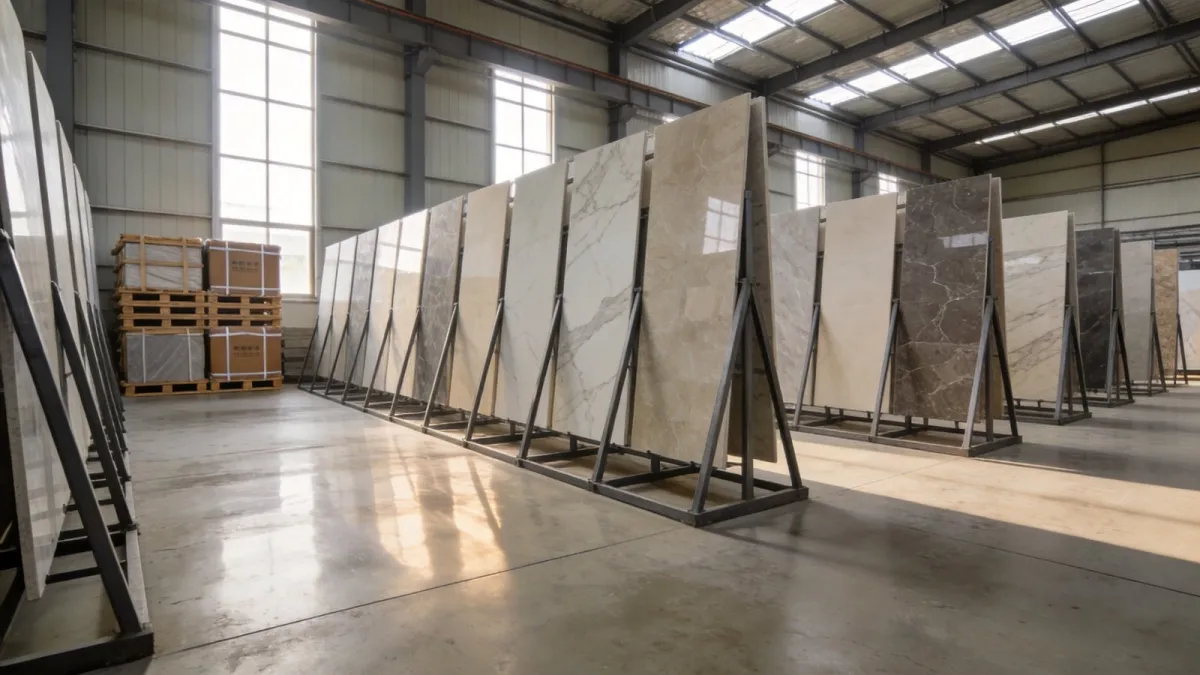
The Customs heading covers building tiles, sanitary ceramics, tableware and decorative ceramics. Building tiles dominate the tonnage, so their price trend sets the aggregate.
Why did volume rise while value fell?
Three forces pressed on price at the same time: a shrinking domestic Chinese market, the removal of the export VAT rebate, and fierce competition for a smaller number of foreign orders.
1. The export rebate ended on 1 April 2026
From 1 April 2026 China cancelled the VAT export rebate on building ceramics, sanitary ceramics, decorative ceramics and ceramic tableware, while technical and industrial ceramics kept their rebate, as reported by China Tax News on 10 August 2026. The rebate had been 9%, and Foshan factories described it as the last floor under the margin of many small exporters.
A factory that sold a tonne at USD 900 and recovered 9% could raise the price or cut the cost. Many chose the second: thinner bodies, lighter glaze and cheaper body mixes. That is how you get more tonnes and less money in one table.
2. Foshan is running at less than half its kiln capacity
Foshan's Chancheng district recorded kiln utilisation of 42–46% and capacity utilisation of 57–59% in the first half of 2026, against 55–60% in 2024 and 48–52% in 2025, according to local association monitoring reported by Southern Weekly on 13 November 2026. New flexible lines run at 70–80%, so the shutdowns hit older, energy-hungry kilns first.
For a buyer that means a large installed base competing for fewer orders: that is where the price is falling, not in the clay.
Does a lower price mean lower quality?
Not automatically, but the 2026 discount is tied to three measurable trade-offs: thinner tiles, weaker shade consistency between batches, and a lower abrasion class than a project specification may require.
In Foshan factory visits, differences show up here:
- Water absorption: porcelain below 0.5% and ceramic between 6% and 10% are different products for different rooms, not just different prices.
- Abrasion class: a tile rated for commercial traffic is not the same as a residential tile in the same size and design.
- Slip resistance: critical for pools, entrances and humid Gulf climates, and specified as a defined rating by the designer.
- Rectification and flatness: rectified tiles allow tighter joints, but only if the cutting tolerance is real.
- Packing: large formats at 120×240 cm and above need wooden crates and corner protection, or they arrive broken.
The simplest protection is a recent test report from a laboratory accredited to ISO/IEC 17025, linked to the batch number printed on the cartons, plus a reference sample held by both parties.
Factory, sourcing agent or export trader?
No route is permanently better; the choice depends on order size and how much quality control you can run yourself.
| Criterion | Direct factory | Sourcing agent | Export trader |
|---|---|---|---|
| Minimum order | High, usually a full container or more | Medium, several items can be consolidated | Low, but priced higher |
| Flexibility on size and packing | High if the mould exists | High, across several factories | Low, they sell what they hold |
| Quality control | Good if you visit or appoint someone to visit | Good, includes pre-shipment inspection | Weak, the source is often unclear |
| Responsibility when a defect appears | Direct and easier to pursue | Acts on your behalf with better paperwork | Often partial compensation at best |
| Time to first shipment | Longer, negotiation and inspection are yours | Shorter if the factories are already vetted | Shortest |
| Best fit for | Importers with an inspection team | Importers consolidating items under one specification | Small orders and fast samples |
Freight: new seasonal surcharges from 16 November 2026
Maersk announced on 4 November 2026 a revised peak season surcharge from China to the UAE, Bahrain, Kuwait, Qatar and Dammam in Saudi Arabia: USD 1,000 per 20-foot container and USD 2,000 per 40-foot and 45-foot container, effective 16 November 2026 until further notice.
The surcharge is charged per container, not per square metre. Tiles are heavy cargo, so a container hits its weight limit before its volume limit and the cost per square metre rises: quote freight per square metre, not per box.
Compliance: SABER and SASO
Building materials, including tiles, ceramics and sanitaryware, fall under Saudi Arabia's Type 3 conformity route, which requires factory inspection, as documented by a SASO-notified conformity body. That means a product certificate through SABER before shipment, then a shipment certificate per consignment; confirm the product scope with your conformity consultant or customs broker.
The latest update to the current trade-remedy investigation list of Saudi Arabia's General Authority for Foreign Trade, dated 9 November 2026, contains no ceramic tile case; the two listed cases cover hot-rolled steel sections (9 November 2026) and carton board (19 August 2026). That is not a permanent status, which is why checking HS 6907 before fixing a long-term price remains necessary.
Practical steps: how to buy tiles from China with fewer surprises
- Write the specification before the price: size, water absorption, abrasion and slip class, shade and packing. A written specification protects the price you agreed.
- Get three quotes from three regions: Foshan in Guangdong, Zibo in Shandong and Gao'an in Jiangxi. The spread tells you where the negotiating room is.
- Verify the factory: business licence, a real production line, live photos of kilns and stock, not a catalogue.
- Request a current test report: from an accredited laboratory, covering the specification you wrote in step one, not a generic one.
- Fix a retained sample: buyer and factory keep the same sample with the batch number written on it, as the reference if a dispute arises.
- Put the penalty clause in the contract: who pays if the specification or shade differs.
- Inspect before shipment: AQL sampling, with photos of container loading and sealing before the goods leave the factory.
- Calculate landed cost per square metre: factory price, freight, seasonal surcharges, clearance, inland delivery and breakage, then compare with the local offer.
From inside China: the most valuable document in a 2026 negotiation is not the price list but the answer to «is this price for the same specification?». On Keerki factory visits in Foshan the pattern repeats: a quote that is 10% cheaper is usually a thinner body or a different shade lot. Ask for two written prices for the same specification, first grade and commercial grade, then decide with your eyes open.
Frequently Asked Questions
What is the minimum order for Chinese tiles?
The practical minimum is one full container, because less-than-container loads are expensive by weight. Some factories accept mixed containers of two or three sizes; the exact minimum depends on size and cartons per container, so ask in writing before you pay.
How long does shipping from China to Jeddah or Dammam take?
Ocean transit from south China ports to Jeddah or Dammam usually falls in the range of three to five weeks, plus loading and clearance time. Maersk announced on 4 November 2026 a peak season surcharge effective 16 November 2026, which does not change the transit time but does change the total cost.
Do Chinese tiles need SASO and SABER certificates?
Yes for most building materials entering Saudi Arabia, which fall under the Type 3 route that includes factory inspection. You need a SABER product certificate before shipment and a shipment certificate per consignment, and the product scope should be confirmed with your conformity consultant before the order is fixed.
How do I know a quote is not for second-grade stock?
Ask for a current test report tied to the batch number, photos of printed cartons, and a pre-shipment inspection. Second-grade tile usually shows up as shade variation between cartons and uneven edges, both detectable before shipment rather than after arrival.
Will the cancelled export rebate raise my price?
It can in specific cases, but not on average. China Customs data published on 18 November 2026 show ceramic export value down 17.2% in January–October 2026: competition absorbed much of the rebate loss. Factory margins are thinner, so the cheapest quote may be paid for in specification.
Which tile size works best for Gulf projects?
No single size fits every project, but 60×60 cm remains the most used in residential and commercial work because it is easy to install and replace, 60×120 cm suits large spaces, and 120×240 cm slabs fit facades and lobbies but need wooden crating and trained installers.
Conclusion
The Chinese tile market in 2026 offers Gulf importers a genuine price opportunity: more volume, less value, factories competing for fewer orders. It becomes a loss only when a buyer shops on price alone, because part of that decline came from downgraded specifications after the rebate ended on 1 April 2026.
Keerki Limited is a China-based sourcing and commercial representation company headquartered in Guangzhou, helping businesses in the Gulf and the Arab world import from China safely for over 10 years. Its work starts with the specification and a comparison of several factories, continues through factory visits, pre-shipment inspection and cargo consolidation, and ends with shipping and customs clearance.
If you are preparing a tile or sanitaryware order for a Gulf project, review the specification and the landed cost with a team working inside China: request a service from Keerki or message WhatsApp on +86 133 9212 7362. To compare factories, browse the supplier directory and the China exhibitions calendar, and to plan a buying trip start with the China city guide.