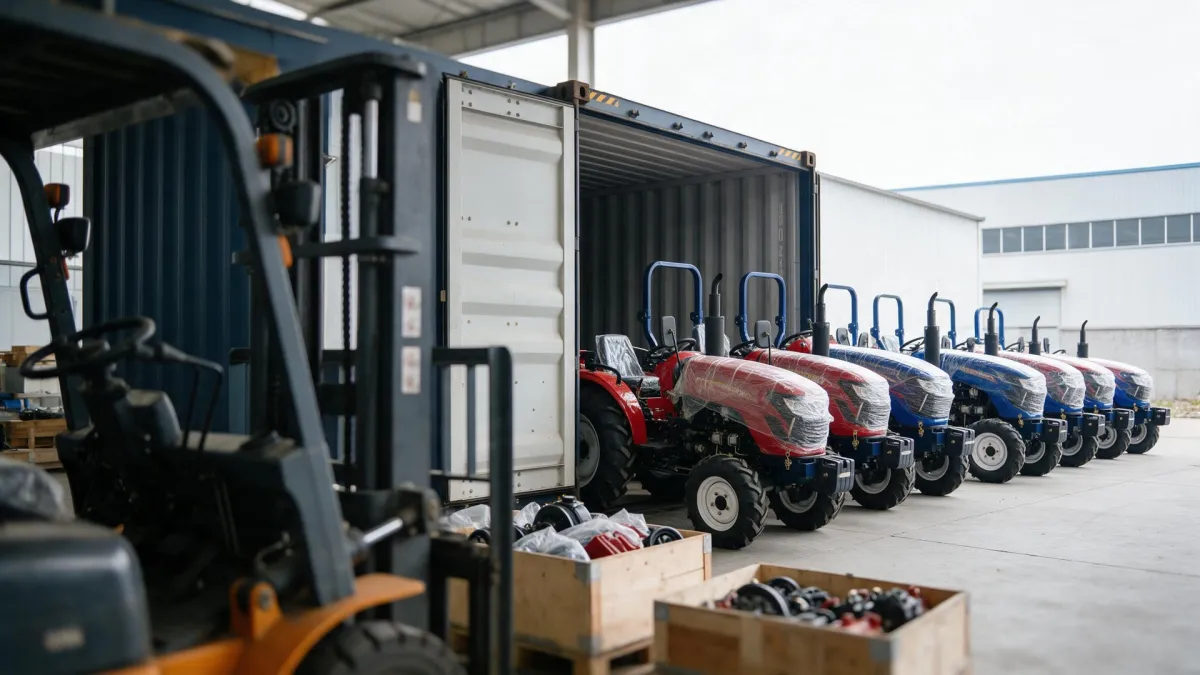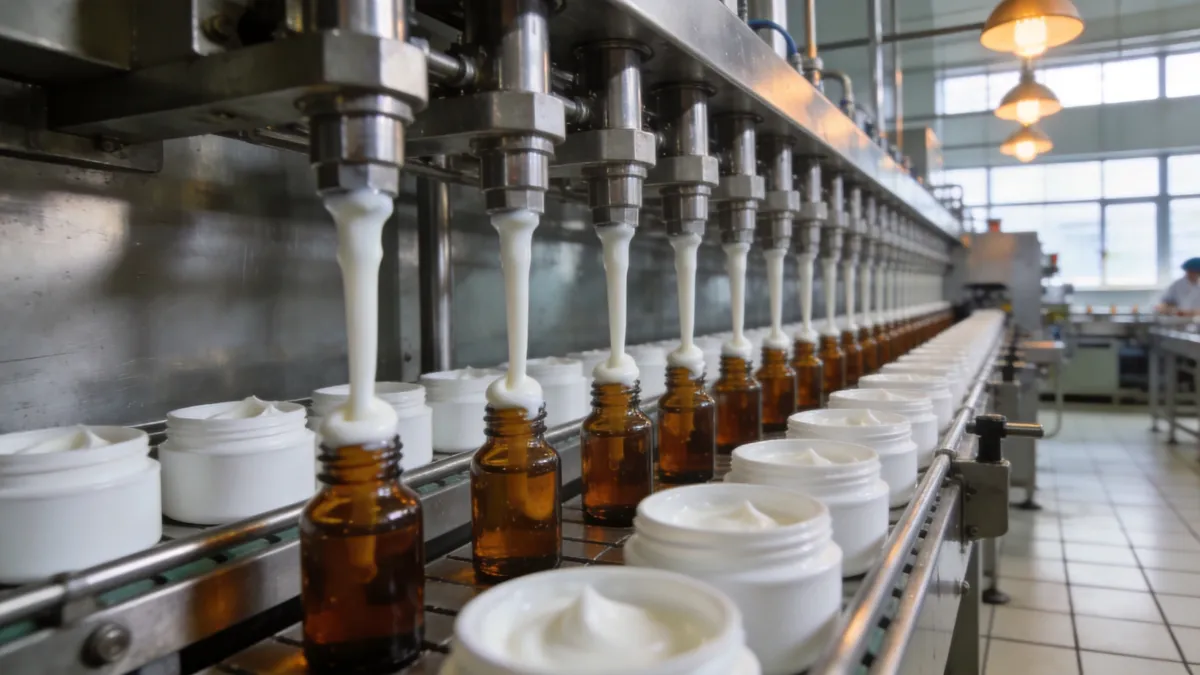
- China's revised inspection and quarantine rules for cosmetics imports and exports take effect on 1 December 2026. They rewrite clearance procedure, not product safety requirements.
- China shipped 932,300 tonnes of cosmetics and personal care products worth USD 4.577 billion in the first half of 2026 — up 33.1% by volume and 28.4% by value.
- The biggest gain for a Gulf importer sits in small orders: declaring at the place of purchase in Yiwu saves 3–5 working days and roughly CNY 5,000 per shipment.
- The Gulf requirements are unchanged: GSO 1943 conformity, an Arabic label, SFDA Ghad notification before arrival in Saudi Arabia, and Montaji+ registration for Dubai.
A cosmetic shipment is rarely stopped in China for what is inside the jar. It is stopped because the Arabic label was designed by someone who never read the Gulf standard, or because the goods were booked before anyone registered them. The 1 December 2026 change speeds up the Chinese half of that journey, not the Gulf half.
Read the reform as a speed gain on the supply side, and treat the compliance file as the part you still control.
What actually changes on 1 December 2026
China's General Administration of Customs has confirmed that the amended rules on the inspection and quarantine of cosmetics in import and export take effect on 1 December 2026. Alongside them, a pilot for electronic labelling of imported cosmetics has been running in Shanghai since 11 May 2026, replacing several pages of physical labels with a single readable code (General Administration of Customs, May 2026).
For an exporter, three procedural changes matter: factory inspection can be done remotely over a video link instead of waiting for an inspector to travel; export declarations can be filed where the goods are purchased rather than where they are produced, under a pilot covering the Yiwu market; and the exemption for samples and exhibition goods has been widened, with the first-import condition dropped.
The published figures are specific: inspection waiting time falls from an average of two to three days to half a day, while the Yiwu pilot removes 3–5 working days and about CNY 5,000 per shipment. For a buyer moving three pallets of serum, that is the difference between a restock that lands before the New Year and one that slips into the first quarter of 2027.
What the reform does not do is lower the safety bar: customs states that data will be cross-checked electronically against registration records, which makes an inaccurate ingredient list more dangerous, not less.
Why the Gulf buyer should care about a Chinese procedural reform
Because supply and demand are expanding at once, and the bottleneck has moved from capacity to paperwork.
China's total cosmetics trade reached CNY 171.61 billion in 2025, up 2.7%, of which CNY 55.92 billion was exports. The first half of 2026 alone produced 932,300 tonnes of exports worth USD 4.577 billion, up 33.1% by volume and 28.4% by value (Securities Times, citing customs data, August 2026).
Guangzhou, the base most Arab buyers already know, hosts around 2,000 cosmetics manufacturers with annual output above CNY 100 billion and exported CNY 6.48 billion in the first seven months of 2026, up 32.9% (General Administration of Customs, August 2026).
On the buying side, Euromonitor puts Gulf beauty and personal care at USD 14.3 billion in 2025, rising to USD 18.9 billion by 2030 — a 5.7% compound rate. Saudi Arabia alone is USD 8.1 billion, heading to USD 11.2 billion, with fragrance at USD 2.9 billion (BeautyMatter, citing Euromonitor).
Mordor Intelligence puts the UAE market at USD 3.49 billion in 2026, heading to USD 4.68 billion by 2031 (Mordor Intelligence). The UAE adds a layer that is easy to miss: that is easy to miss: it imported USD 5.68 billion of HS chapter 33 goods in 2025 and re-exported USD 4.59 billion of them — 81% (Carmel, citing UAE.Stat / FCSC). Registering in Dubai is a regional decision, not a local one.
| Market | Size | Direction | Practical reading |
|---|---|---|---|
| Saudi Arabia | USD 8.1bn (2025) | USD 11.2bn by 2030 | Largest single market; fragrance carries the value |
| UAE | USD 3.49bn (2026) | 81% of imports re-exported | A distribution gateway, not only an end market |
| GCC total | USD 14.3bn (2025) | USD 18.9bn by 2030 | 5.7% compound annual growth |
| China exports | USD 4.577bn (H1 2026) | +28.4% by value | Supply base expanding inside the same window |
Where the time and the money actually come from
For an order of a few thousand units the visible cost is the unit price; the invisible cost is waiting.
Take a buyer restocking 3,000 cream jars: the factory used to wait two or three days for an inspector and then file at the production site; now it files where the goods were bought.
| Step | Before the amendment | From 1 December 2026 | Effect on your order |
|---|---|---|---|
| Factory inspection | 2–3 days waiting for an inspector | Remote inspection, half a day | Sailing date moves up 2–3 days |
| Small-batch export from Yiwu | Declared at production site | Declared at place of purchase | 3–5 working days and CNY 5,000 saved |
| Product labelling | Multi-page physical labels | Single electronic code (Shanghai pilot) | Lower printing and labelling cost |
| Samples and trade-fair goods | Stricter first-import conditions | Wider exemption, first-import condition dropped | Faster sample before the bulk order |
None of it replaces the Gulf file: a faster exit from China only helps if the goods can enter somewhere.
The Gulf file you need before the container sails
Gulf authorities do not assess Chinese export procedure. They ask whether the formula and label meet the Gulf standard, whether the product is notified before arrival, and whether manufacturing can be traced.
GSO 1943:2016, second edition, approved on 12 May 2016, sets safety, packaging and labelling requirements for all cosmetics; a newer edition with the same number was issued in 2024, so confirm which one is in force before printing (GCC Standardization Organization).
In Saudi Arabia notification runs through Ghad. SFDA guidance requires an image of every label side, the barcode, and every ingredient with its concentration and function (SFDA notification guidance).
At the port the inspector checks the INCI list, the product function in Arabic, storage conditions, batch or production date, usage and warnings, country of manufacture and pack size. Medical claims — baldness, weight loss, pigmentation — are rejected, and four units may be drawn for analysis (SFDA official FAQ). In Dubai the same step runs through Montaji+ (Montaji+).
| Item | Saudi Arabia | UAE — Dubai |
|---|---|---|
| Authority | SFDA | Dubai Municipality |
| System | Ghad | Montaji+ |
| Who files | Responsible person or licensed importer inside the Kingdom | Licensed importer or distributor |
| Product file | All label sides, barcode, ingredients with concentrations, safety assessment | Label, technical file, product images |
| Timing | Notification complete before shipment | Registration complete before shipment |
Eight steps from sample to shelf
- Classify the product before you price it. A cream claiming to treat acne or hair loss leaves the cosmetic category for the medicine category, and the route changes.
- Request the full technical file. INCI formula, safety assessment, ISO 22716 or equivalent, free-sale certificate and a high-temperature stability report.
- Verify the factory, not the catalogue. Manufacturing licence, real export record to the Gulf, and the ability to repeat a batch to the same specification.
- Proof the label before printing. Correct Arabic, complete ingredient list, warnings, country of manufacture, pack size, and a barcode that scans on the actual jar.
- Appoint the local responsible party early. Registration is filed by a licensed importer; a late appointment delays the shipment more than a late production run.
- Notify first, ship second. Do not load the full order before the registration number exists. Fixing a label at the port costs several times what it costs at the factory.
- Test an independent sample. Microbiology, heavy metals, preservatives and stability, before the bulk order is confirmed (pre-shipment inspection guide).
- Assemble the document set. Invoice, packing list, certificate of origin, free-sale certificate and conformity certificate, with names and barcodes matching across every page.
The most expensive item in a cosmetics deal is not the price — it is the free sample. Factories that genuinely export to the Gulf know a stability test at high temperature and humidity decides whether a cream survives a Jeddah summer, and that a safety assessment and a free-sale certificate are not optional. Keerki asks for those three before a quote is discussed; if a supplier cannot produce them, you are dealing with a domestic factory recycling stock moulds.
Choosing an OEM or ODM partner in China
Start with the factory's ability to export in an organised way, not its SKU count. A factory without a technical file simply transfers its problem to you after payment.
Does it really export to the Gulf?
Ask which markets it serves and whether any product has been notified. A factory that has filed in Ghad or Montaji+ understands an Arabic label and that ingredients carry concentrations.
What is the MOQ, and does it include the mould?
Quotations often bury tooling and packaging in the unit price and recover it on the reorder. Ask for a split breakdown: formula, packaging, mould, labelling. That is what lets you compare offers.
Who owns the formula?
Under ODM part of the formula stays with the factory, and the same product can surface at a competitor. If you are building a brand, contract for ownership or written exclusivity.
To shortlist, start from the supplier directory, narrow it through verification and negotiation support, and use the trade-fair calendar to meet candidates at beauty and packaging weeks. Keerki Limited's Gulf export files show a pattern: four out of five blocked shipments were resolved at the documentation stage, not the freight stage.
FAQ
Can I import cosmetics from China to Saudi Arabia without a local registrant?
No. Ghad notification is filed by a responsible person or licensed importer inside the Kingdom; a Chinese factory cannot file from abroad. Appoint the importer before booking.
Does GSO 1943 apply to every product?
Yes. It covers all cosmetics and personal care products — safety, packaging and labelling. New editions keep the same number, so confirm the edition in force before printing.
What do port inspectors reject most often?
An incomplete ingredient list, a missing Arabic product function, an unauthorised medical claim, a label-invoice mismatch, or an absent notification number. All are cheap at the factory and expensive at the port.
Do the 1 December 2026 rules change product safety requirements?
No. It covers inspection, clearance, electronic labelling and declaration routes. Safety and formula requirements are unchanged, and reading the reform as a relaxation is how importers end up with a hold at the port.
What is the smallest order I can place with a Chinese factory?
No single minimum; the factory sets it around tooling and packaging. The floor has fallen in practice, because small-batch export through purchase-place channels such as Yiwu is cheaper and faster — which suits a market test before launch.
Is air freight better for cosmetics?
Air suits samples and light, high-value items. Perfumes and alcohol-based products are dangerous goods with specific air-transport conditions. For commercial volumes, sea freight remains the default.
The reform rewards the importer whose file is already prepared and traps the one who reads it as deregulation. Small orders leave China faster; the Gulf file still decides whether they arrive.
Keerki Limited is a Guangzhou-based sourcing and trading representation company that has helped traders across the Gulf and the wider Arab world import from China for more than 10 years — factory verification, product files, pre-shipment inspection, consolidation and clearance.
Testing a new beauty category or reviewing a factory? Send a request here or message us on WhatsApp: +86 133 9212 7362.