- Egypt imported $10.4 billion of goods from China in H1 2026, up 14.3% year on year per CAPMAS; China has been Egypt's largest trading partner for 14 straight years.
- Every sea or air shipment to Egypt needs a 19-digit ACID issued on Nafeza before loading in China; cargo without one is rejected or returned at the importer's expense.
- Customs duty is calculated on the CIF value, then 14% VAT is added; the customs exchange rate stood at 54.47 EGP per USD on October 23, 2026.
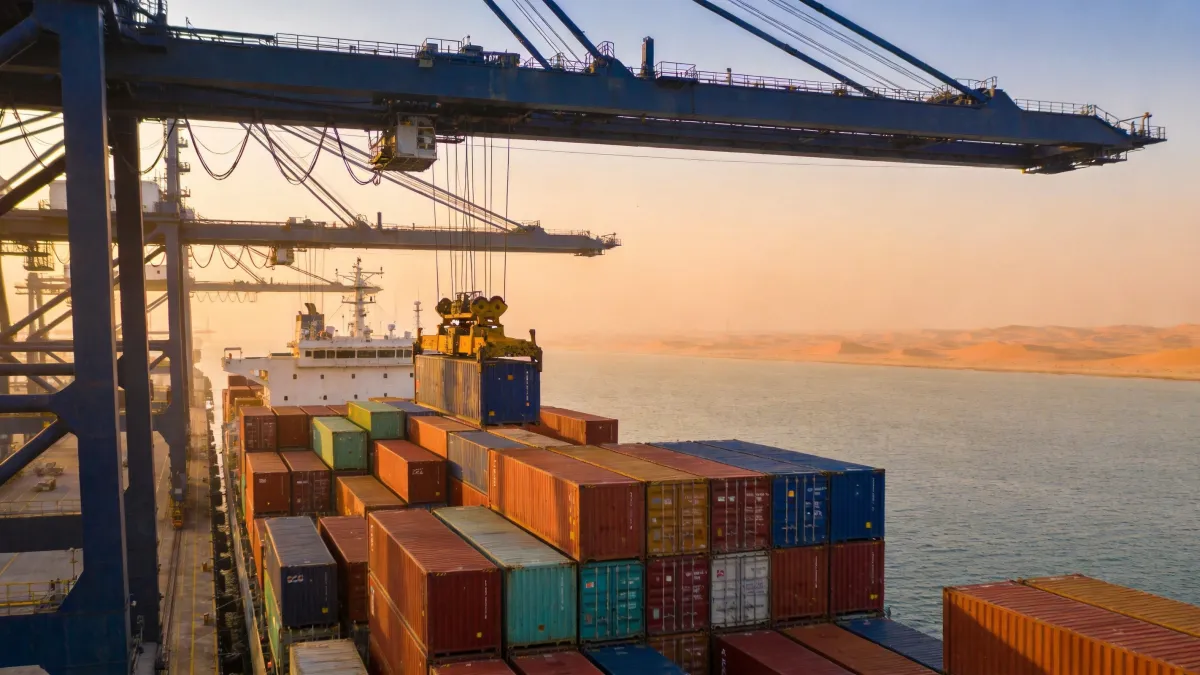
- Ain Sokhna on the Red Sea is the natural gateway for cargo from China; Alexandria handles roughly 60% of Egypt's containers, and average release time there fell from 16 days in 2021 to 8.6 days in 2024.
- Many consumer goods are released in Egypt only if the foreign factory is registered with GOEIC — check before production, not after the container arrives.
When a Gulf company looks at expanding into the Arab world's largest consumer market, Egypt tops the list with a population above 109 million — and China sits on the other side as its biggest supplier. But importing from China to Egypt follows rules a Gulf trader is not used to: a pre-shipment registration system without which cargo is refused, a monthly-moving customs exchange rate, and factory-registration requirements many importers discover only after containers are stuck at the port. Here is how your shipment moves from a Chinese factory to your Egyptian warehouse in 2026, step by step.
Why are Arab importers looking at Egypt right now?
Because Egypt is the largest Arab consumer market by population, with the Arab world's deepest China trade relationship. Bilateral trade reached about $20.78 billion by end-2025, up nearly 19.6% on 2024 according to Egypt's State Information Service, with China holding the position of Egypt's largest trading partner for fourteen straight years.
Egypt's imports from China hit $10.4 billion in H1 2026 versus $9.1 billion a year earlier, a 14.3% rise, according to CAPMAS data. Since May 1, 2026, China has applied zero tariffs on imports from 53 African countries including Egypt, pushing Egyptian exports to China up about 200% in H1 and deepening shipping in both directions.
The practical meaning: this lane is no experimental route — it is a major corridor served by the world's largest carriers, and from Keerki Limited's experience sourcing out of Guangzhou, the importer who learns its rules in advance spares himself most port surprises.
Which Egyptian port should you choose for cargo from China?
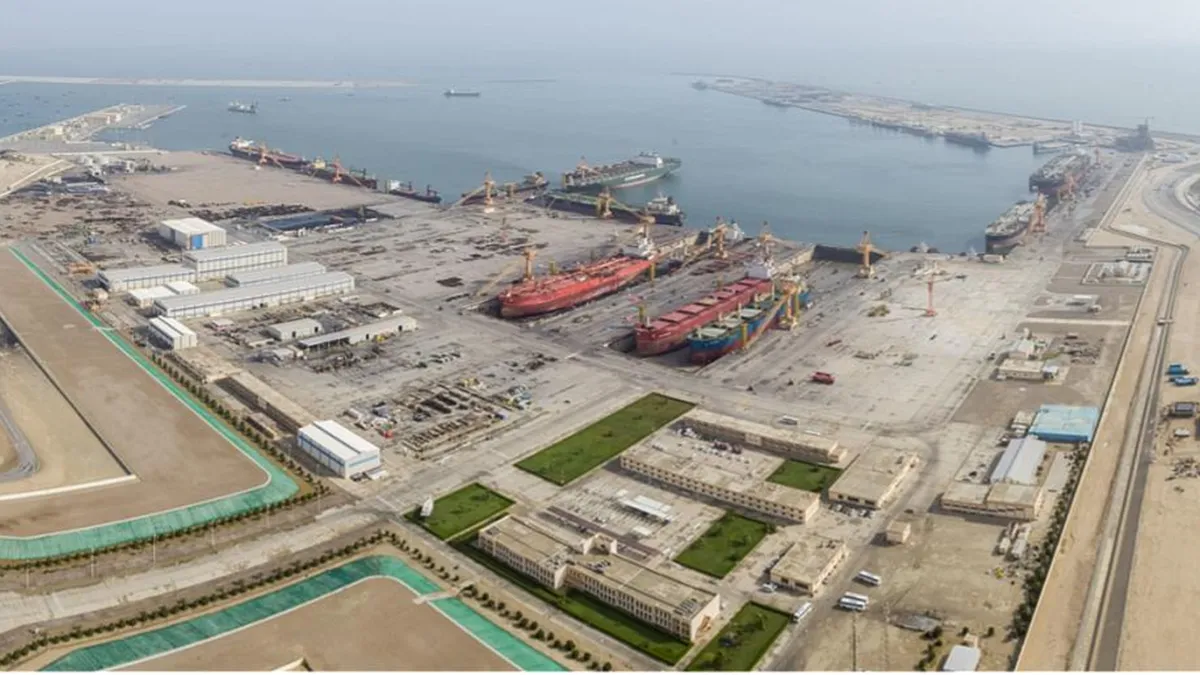
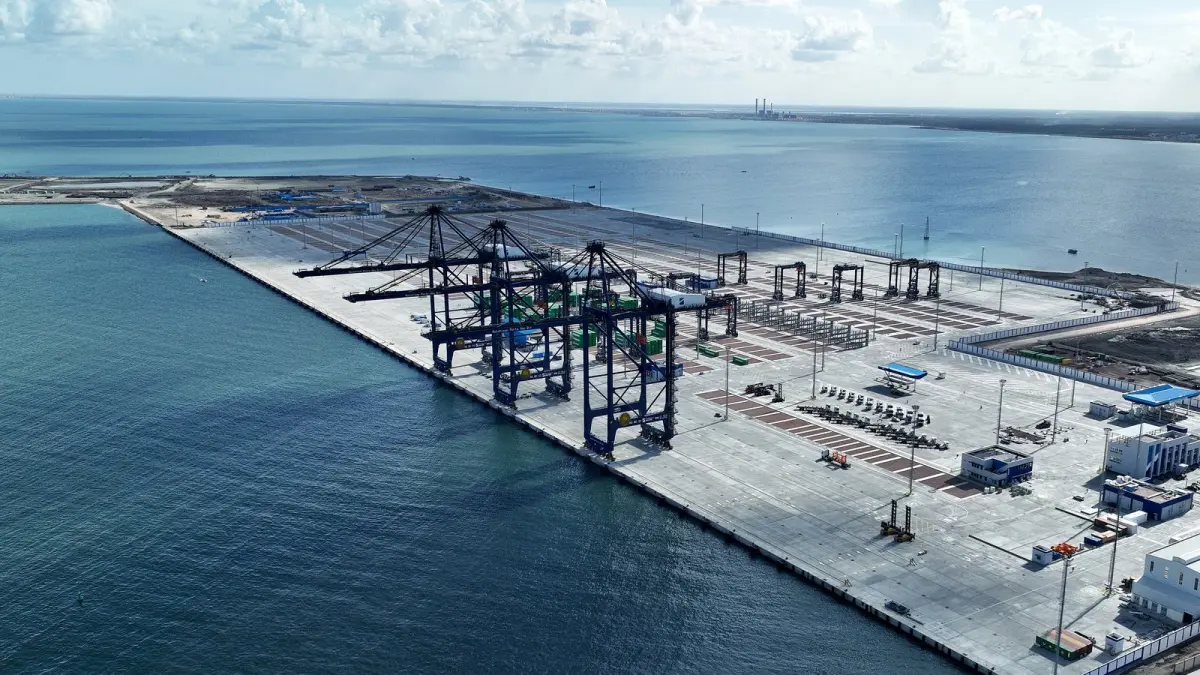
For cargo coming from China, Ain Sokhna on the Red Sea is the natural gateway: no Suez Canal transit to the Mediterranean, and roughly ninety minutes from Cairo. Alexandria, Damietta and Port Said serve the Delta and the north. The wrong port adds days of inland trucking and cost — decide before booking, not after.
| Port | Location | Best for | Practical notes |
|---|---|---|---|
| Ain Sokhna | Red Sea | China cargo bound for Greater Cairo | Heart of the Suez Canal Economic Zone, with growing Chinese logistics investment |
| Alexandria | Mediterranean | The Delta and Cairo via the Desert Road | With El Dekheila handles around 60% of Egypt's Mediterranean trade; congestion is seasonal |
| Damietta | Mediterranean, east of Alexandria | Furniture-industry inputs and grain | A practical alternative when Alexandria is congested |
| East Port Said | Canal entrance on the Mediterranean | Eastern Delta and canal-zone industries | A major transhipment hub on the Asia–Europe trunk route |
Direct sailings from Shanghai, Ningbo and Shenzhen take between 20 and 28 days port-to-port according to major carriers' schedules, with door-to-door reaching roughly 30–40 days after clearance and inland transport. And clearance is faster than it used to be: average container release time at Alexandria fell from 16 days in 2021 to 8.6 days in 2024 — a 46% improvement — per the Egyptian Customs Authority's Time Release Study.
What is the ACID number, and why do shipments stop without it?
The ACID is a 19-digit shipment identifier the Egyptian importer obtains on the Nafeza platform before cargo is loaded in China; under Customs Law No. 207 of 2020 it must appear on the commercial invoice, packing list and bill of lading. This is where shipments "die": cargo sailing without a valid ACID is rejected at the Egyptian port and returned at the importer's expense.
The system requires shipment data and documents electronically at least 48 hours before loading at the export port, so authorities can begin risk assessment before the vessel departs. The Chinese exporter registers once on the CargoX platform connected to Nafeza, then transmits documents through it for every shipment, per Nafeza's official FAQ.
Two details many importers miss: an ACID is valid for six months from its issue date, extendable once with the competent minister's approval under Article 198 of the executive regulations — so do not request it long before the actual shipping date. And for LCL consolidations where the exporter or importer differs across sub-bills, each house bill needs its own ACID under Customs Decree No. 11 of 2021.
How much are customs and costs on imports from China to Egypt?
Customs duty in Egypt is calculated on the CIF value — goods plus freight plus insurance — and 14% VAT is applied on the duty-paid value. The duty rate varies with the HS code, so ask your Egyptian customs broker for a written estimate on your exact tariff line before signing with a factory.
| Product category | Indicative duty rate | VAT |
|---|---|---|
| Machinery and equipment | 2–15% | 14% |
| Textiles and fabrics | 5–20% | 14% |
| Electronics | 10–30% | 14% |
| Automotive parts | 10–35% | 14% |
| Agricultural products | 0–10% | 14% |
These indicative ranges come from an updated 2026 China–Egypt freight guide; the final rate is set by the precise tariff line. Watch a variable that escapes many importers: duties are paid in pounds at the customs exchange rate — 54.47 EGP per USD and 8.16 EGP per yuan on October 23, 2026 per Nafeza — so any move in that rate changes your clearance cost even if your dollar invoice stays flat.
On freight, full-container rates from China to Egypt ranged in September 2026 between $1,700–2,000 for a 20ft box and $2,200–2,600 for a 40ft, with LCL at $250–400 per CBM. Add CMA CGM's peak-season surcharge, raised from July 1, 2026 to $1,400 per 20ft and $2,800 per 40ft — a 56% jump that lands on the invoice of anyone who did not ask at booking.
What is GOEIC registration, and which products does it cover?
GOEIC registration is a registry for foreign factories and trademark owners run by the General Organization for Export and Import Control, created by Ministerial Decree No. 43 of 2016. It blocks the release of specific consumer-goods categories in Egypt unless made by registered factories. Put simply: your product can be fine and your documents complete, yet the container still gets stuck because the factory itself is not on the list.
Under Decree No. 195 of 2022, registration completes within 15 days of completing the documents, and according to GOEIC it requires a quality-system certificate from an ILAC or IAF recognised body, plus legal-status documents attested by the Egyptian embassy with accredited translation. Regulated products also need a certificate of conformity from a GOEIC-approved laboratory before release.
The working rule we apply at Keerki: before signing with a Chinese factory for a product bound for Egypt, ask for its GOEIC registration number or confirm its willingness to register. Many large factories are already registered after years of exporting to Egypt, but a small factory eager for your first order may know nothing about the system — and discovering that after production means goods that cannot legally enter Egypt.
Practical steps: from choosing a supplier in China to receiving goods in Egypt
- Fix your HS code precisely and get a written duty-and-tax estimate on that line from an Egyptian customs broker before any commitment.
- Check whether your product falls under GOEIC registration; if so, make factory registration a contractual condition before the shipping date.
- Choose and verify your supplier through a trusted base such as the Keerki supplier directory of over 35,000 suppliers, confirming export track record and Egypt experience.
- Agree on a clear Incoterm; FOB gives you control over freight and insurance, CIF shifts transport to the supplier — Egyptian clearance stays on you either way.
- Register on Nafeza and obtain the ACID at least a week before loading, remembering its six-month validity.
- Hand the number to the factory in writing; it must print it on the invoice, packing list and bill of lading and transmit documents via CargoX at least 48 hours before departure.
- Run a pre-shipment quality inspection; see our guide to pre-shipment inspection in China for the checklist.
- Track release and receive your cargo, watching the container's free-time balance so demurrage never accumulates.
In Keerki's Guangzhou office we see Egypt-bound containers delayed weekly for reasons one pre-departure review would have prevented: an ACID printed incompletely on the bill of lading, a factory not registered with GOEIC, or an invoice not matching Nafeza data letter for letter. Our simple rule: the container door does not close in China until all three documents — invoice, packing list and bill of lading — match the ACID filing exactly. One hour of checking in China saves a week of demurrage at an Egyptian port.
Frequently Asked Questions
How long does sea freight from China to Egypt take?
Between 20 and 28 days port-to-port on direct sailings from major Chinese ports, and 30 to 40 days door-to-door once clearance and inland transport are included. Choose Ain Sokhna for Greater Cairo to shorten the land leg.
Can I import from China to Egypt without an importer card?
You cannot clear commercial cargo without a commercial registry, an importer card and an Egyptian tax number, because the importer obtains the ACID and files the customs declaration. The alternative is DDP shipping via an agent acting as importer of record, or a licensed Egyptian company importing on your behalf.
How long is an ACID number valid?
Six months from its issue date, extendable once for a similar period with the competent minister's approval under Article 198 of the executive regulations. Request it only a few weeks before the actual shipping date.
Do all Chinese goods need GOEIC registration?
No — only categories covered by Ministerial Decree 43 of 2016 and its amendments, mostly consumer goods such as home appliances, certain textiles and specified building materials. Verify your tariff line before contracting; discovering coverage after production means cargo that cannot be released.
How much is VAT on imports into Egypt?
The standard VAT rate is 14%, calculated on the goods' value after customs duty is added — not the invoice value alone. Some goods receive special treatment, so confirm your product's classification before building final pricing.
Does the duty I pay change when the Egyptian pound's exchange rate moves?
Yes. Duty is a percentage of the CIF value in foreign currency, but collected in pounds at the customs exchange rate — 54.47 EGP per USD on October 23, 2026. A higher customs dollar rate raises your clearance cost even when your invoice is unchanged, so build a movement margin into your calculations.
Conclusion
Importing from China to Egypt in 2026 rewards those who respect its rules: a market of more than 109 million consumers, direct weekly sailings, and digital clearance twice as fast as three years ago. But success is built before departure: a precise HS code, a factory registered where required, and an ACID matching your documents letter for letter.
Keerki Limited is a China-based sourcing and commercial representation company headquartered in Guangzhou, helping Gulf and Arab businesses import from China safely for over 10 years. From supplier search and verification to pre-shipment inspection, cargo consolidation and document preparation — explore our services and free China sourcing guide — our trilingual team gets your shipment to Egypt, or any Arab destination, without surprises. Start at https://keerki.com/request/ or message us on WhatsApp: +86 133 9212 7362.