- China exported about 910,000 trucks between January and September 2026, up 42.4% year on year, which keeps expanding the Chinese truck fleet in the Gulf and the parts demand behind it.
- Most rejected parts are not a price problem: the same truck model is built in several export specifications, and the part number changes with the specification.
- Five pieces of information remove most of the risk: the full VIN, a photo of the engine or gearbox plate, the original part number, photos of the failed part, and the expected annual quantity.
- In Saudi Arabia, regulated parts need a valid product certificate PCoC plus a shipment certificate SCoC for each consignment, while the GCC tariff floor is 5% on most goods and Saudi VAT is 15%.
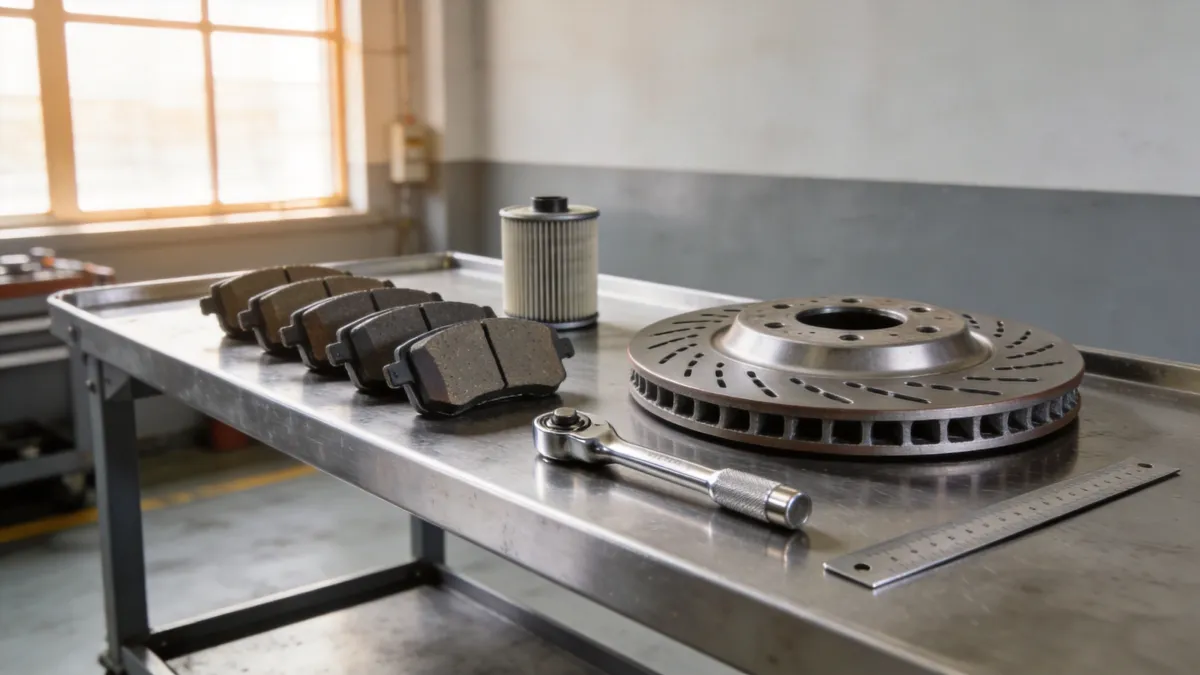
Chinese heavy trucks are no longer a niche in Gulf fleets. They are working vehicles in transport, contracting and building-materials companies, and each unit that enters service creates a fixed maintenance list: filters, brake linings, clutch kits, leaf springs, radiators and suspension joints.
The recurring failure is rarely a shortage of suppliers. It is a part that arrives with a number close to the right one and a fit that is not exact. This guide explains how to order by number, what to demand before a price is quoted, and where compliance sits.
Why Chinese heavy truck parts became a daily buying decision in the Gulf
The direct answer is that the installed base of Chinese trucks in the region is growing faster than the parts networks around it.
China exported roughly 910,000 trucks in January–September 2026, 42.4% more than a year earlier, and exports took 32% of total truck sales, according to an Economic Observer report summarised in this industry review of 7 November 2026.
CAAM data carried by Xinhua on 5 November 2026 puts vehicle exports at about 8.21 million units for January–September 2026, up 65.8%, including more than 4 million new-energy vehicles, with full-year exports expected to pass 10 million units. The same data placed the UAE among the ten largest importers of Chinese vehicles in 2026 (Xinhua).
At manufacturer level, Shaanxi Automobile Group, behind the SHACMAN brand, exported 36,000 vehicles in the first half of 2026, up 34.2%, and sells in more than 160 countries, per its update on 9 November 2026.
Why the part gets rejected even when the model number is right
The direct answer is that a model number is not a specification. The build configuration the truck left the factory with is what fixes the part number.
Chinese manufacturers export several configurations of the same model: a larger cooling package for hot climates, extra air filtration for dusty sites, heavier suspension, different engine calibration. Shaanxi describes its export approach as building a truck for each country rather than one global specification, so the same model sold in Saudi Arabia, Iraq and East Asia can carry parts that do not interchange.
A newer regulatory layer sharpens this. From 1 September 2026, Saudi Arabia's standards body tied local type approval for imported heavy trucks to customs clearance, including driver-assistance functions such as automatic emergency braking and lane departure warning, as summarised in this review. Trucks approved for Saudi Arabia may therefore carry different electronic modules from the same model sold elsewhere.
So do not ask for a part for "a HOWO 371". Ask for the number. Chinese factory numbering is systematic: SINOTRUK numbers commonly begin with AZ or WG, Weichai engine numbers with 6126, Fast Gear transmission numbers with 12JSD, with suppliers quoting a replacement number alongside. The gap between the two is where most wrong samples come from.
What to send a supplier so the part number is right the first time
The direct answer is five items in one message, and no price talk until the supplier writes the number back.
| Item | What it looks like in practice | Why it decides the order |
|---|---|---|
| Full VIN | All 17 characters, as stamped on the windscreen tag or door plate | Fixes the model year and build configuration, which ends the "same model" argument |
| Photo of the engine or gearbox plate | The metal plate on the block showing model and serial number | Separates a 336 hp unit from a 371 or 380, and a 10-speed from a 12-speed transmission |
| Original number from the failed part | The number cast or printed on the component itself, not on the carton | Cartons get replaced; the number on the metal is the last reliable reference |
| Three photos with a ruler | Front, back and side, with dimensions in centimetres | Reveals differences in diameter, bolt pattern and thickness before production |
| Annual quantity and frequency | For example 60 kits a year in three shipments | Tells you whether the supplier keeps the part on the same line or moves it to a cheaper plant |
On small orders, one digit decides whether a shipment fits or comes back. A supplier who knows you will return three times a year has an incentive to confirm the number, because a wrong part costs more than the margin on one deal.
Genuine, Tier-1 equivalent and unbranded: where the money actually goes
The direct answer is that you overpay on genuine consumables, and you underpay dangerously on unbranded safety parts.
| Tier | What it means in practice | Where it fits | What to ask for |
|---|---|---|---|
| Genuine / service part | Sold in factory packaging with the original number printed on it | New or in-warranty trucks, and safety-critical components | Factory invoice, photos of carton and label, batch number |
| Tier-1 equivalent | A plant that supplies the truck maker or builds to the same specification | Daily operation and scheduled maintenance | Quality-system certificate and a batch test report |
| Independent brand | A different plant with a comparable specification and lower price | Non-critical parts and light-duty use | A physical sample with measurements, plus hardness or fatigue data |
| No traceable source | No original number, or a copied label | Not suitable for commercial import | Nothing — establish who made it and where before buying |
What wears fastest in Gulf heat and dust
Wear in the Gulf is driven by environment rather than distance: high temperature for most of the year, airborne dust, and heavy loads on long highway runs.
The repeat items: air, fuel and oil filters first, then brake linings and drums, clutch kits on heavy haulage, leaf springs and suspension joints, radiators, hoses and fan parts, belts, wheel bearings and hubs, and air-conditioning compressors. They rotate predictably, which is why they belong in a mixed container.
Parts that should never be bought on price alone: the complete brake system, propeller shafts, steering components and engine electronics. There, a price gap only justifies one direction: upward.
SABER, duty and VAT: compliance before you book the container
The direct answer is to settle conformity before shipment, because fixing it after the container reaches port costs storage time that cannot be recovered.
GCC states apply a common external tariff of at least 5% to most goods from outside the bloc, assessed on the CIF value, and Saudi Arabia applies 15% VAT at import, as set out in the official Saudi import tariff guide. Rates vary by tariff line, and most truck parts sit under heading 8708, but classification remains with customs.
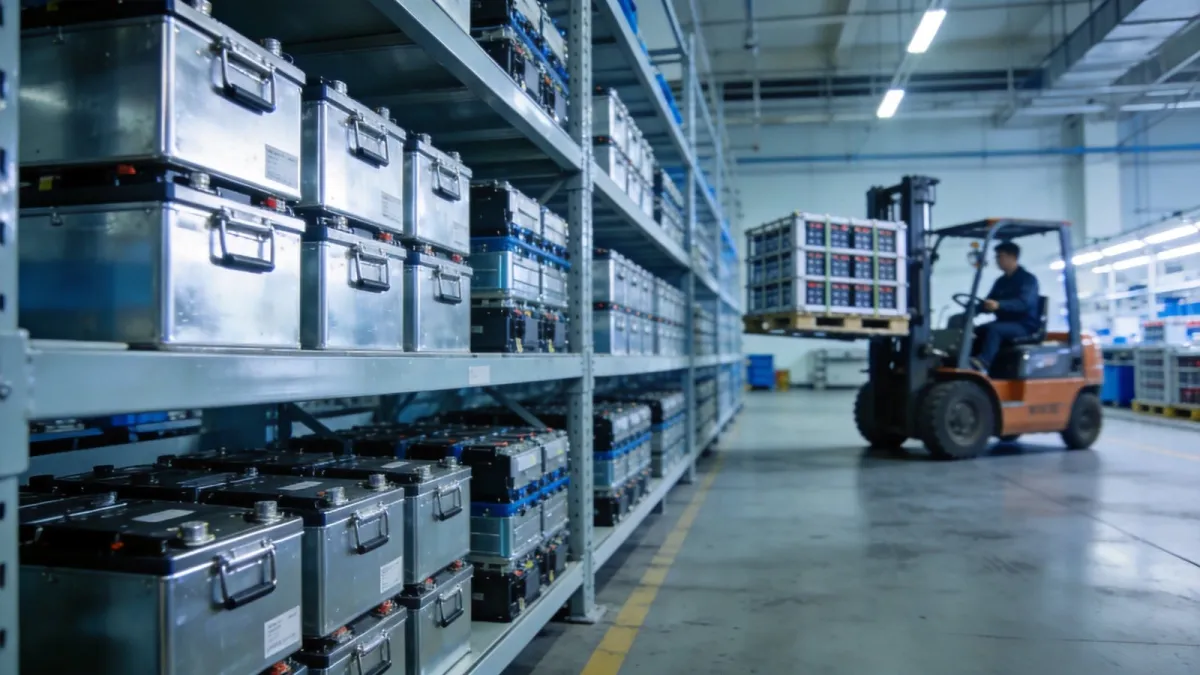
In Saudi Arabia, regulated parts pass through SABER. A product certificate (PCoC) is issued per product or model and is valid for one year, while a shipment certificate (SCoC) is required for each consignment, and a valid product certificate without a fresh shipment certificate does not release the goods, as explained in this review. Safety-critical parts such as brakes, tyres, lighting and batteries follow a full route; others may only need a supplier declaration.
When selecting a plant, ask for IATF 16949 and read the scope. From 1 January 2025 the IATF rules extended eligibility to replacement and aftermarket parts, as certification body TÜV SÜD explains, so the certificate is a meaningful check for parts suppliers, not only original-equipment plants.
Practical steps: from part number to container
- Identify the truck precisely — model, model year, configuration — and store the full VIN in one file per vehicle.
- Photograph the failed part and the engine plate before removal; a photo taken after dismantling loses its mounting position.
- Ask three suppliers to quote against the same number, not a description, and compare the number before the price.
- Require each supplier to write the original and the replacement number in the quotation, and state which one ships.
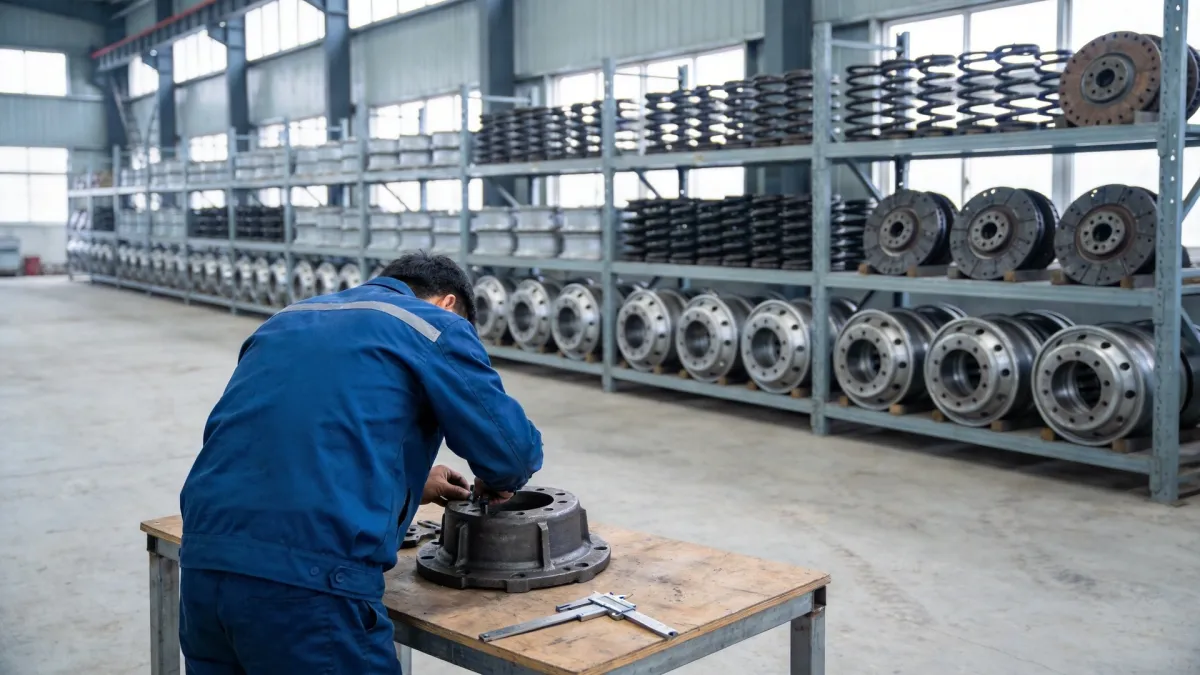
- Buy one sample before the bulk order, and check dimensions, weight and material rather than appearance.
- Fix the specification in a written purchase order: number, material, packaging, quantity and labelling.
- Start the conformity certificate at least a month before shipment, and request a shipment certificate per consignment.
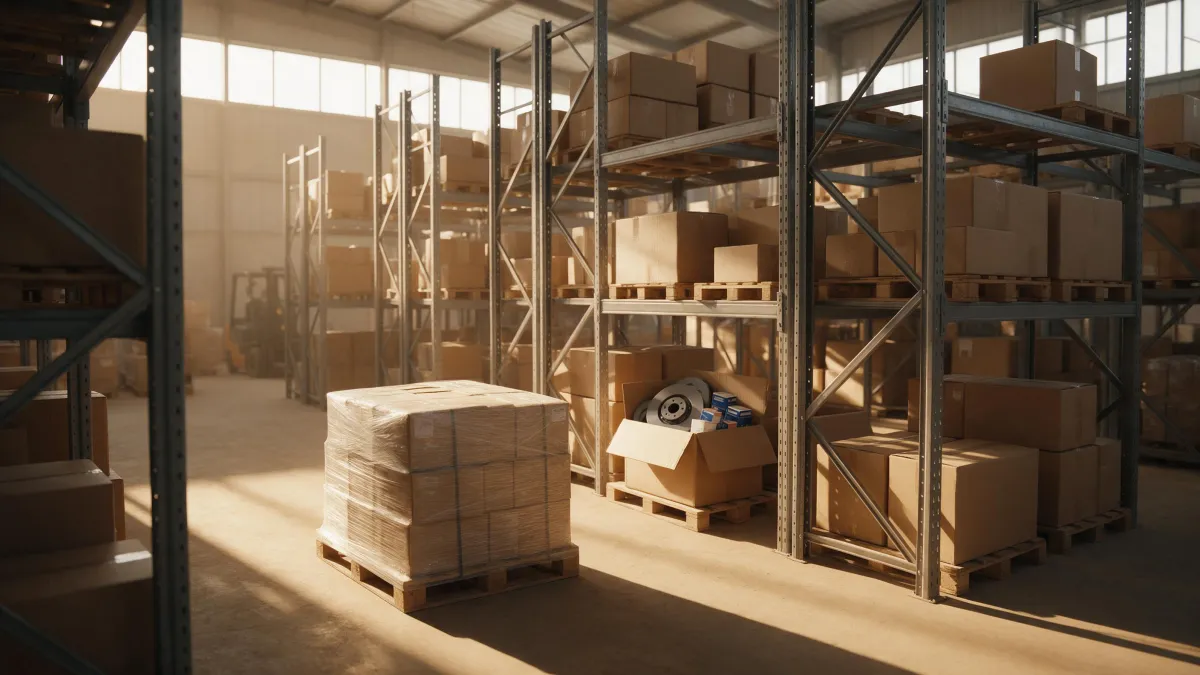
- Plan the mixed container: calculate weight and volume with the supplier, and combine fast-moving with slow-moving parts to cut shipments.
From inside China: a supplier who will not photograph a part next to a ruler, or will not print the original number on the carton, is not a parts plant but a trader re-ordering from someone else. Keerki's team in Guangzhou sees that on factory visits every week, and before any quotation we ask for the part number and a photo of the carton, because the saving starts with eliminating the wrong sample.
Frequently Asked Questions
Are Chinese truck parts available in the Gulf, or do they have to be imported?
Consumables are partly available in regional wholesale markets, but often under other brands and with numbers that are not an exact match. Parts tied to the Gulf specification, and any safety-critical component, are better imported from a source that confirms the number.
How do I find the correct part number for a HOWO or SHACMAN truck?
Start with the VIN and the engine plate, then use the number stamped on the failed part itself rather than on the carton. Send all three to the supplier and ask for the number to be written back before a price is quoted.
What is the smallest order I can place with a Chinese parts factory?
The minimum is set by the factory, not by customs, and varies by item: some parts sell by the piece, others by a set of ten, others by a packaging quantity. Have the minimum and packaging cost confirmed in writing, since packaging drives unit cost on small orders.
Do truck parts need SABER certification for Saudi Arabia?
Parts covered by a technical regulation need registration and conformity through SABER, and safety-critical items such as brakes, lighting, tyres and batteries follow a full route. Other parts may need only a declaration of conformity, so confirm with a conformity body or your customs broker.
How can I tell whether a supplier is a factory or a middleman?
Ask for a factory visit or a third-party inspection report, then match the address on the business licence with the production site. A middleman cannot fix a part number or produce a batch test report, and that gap shows up in the first sample.
Importing Chinese truck parts is less a question of price than of system: the right number, complete data, and conformity arranged before shipment. A trader who builds that system once spends less time than one who restarts with every container.
Keerki Limited is a China-based sourcing and commercial representation company in Guangzhou, helping businesses in the Gulf and the Arab world import from China safely for over 10 years: factory verification, part-number checks, pre-shipment inspection, cargo consolidation and customs clearance. To discuss a requirement, send a service request to Keerki or message WhatsApp +86 133 9212 7362.
For buyers building a supplier list, the site directory lists more than 35,000 Canton Fair suppliers: start from the supplier directory, then read the guides to fast-moving auto parts and Chinese-brand car parts sourcing.