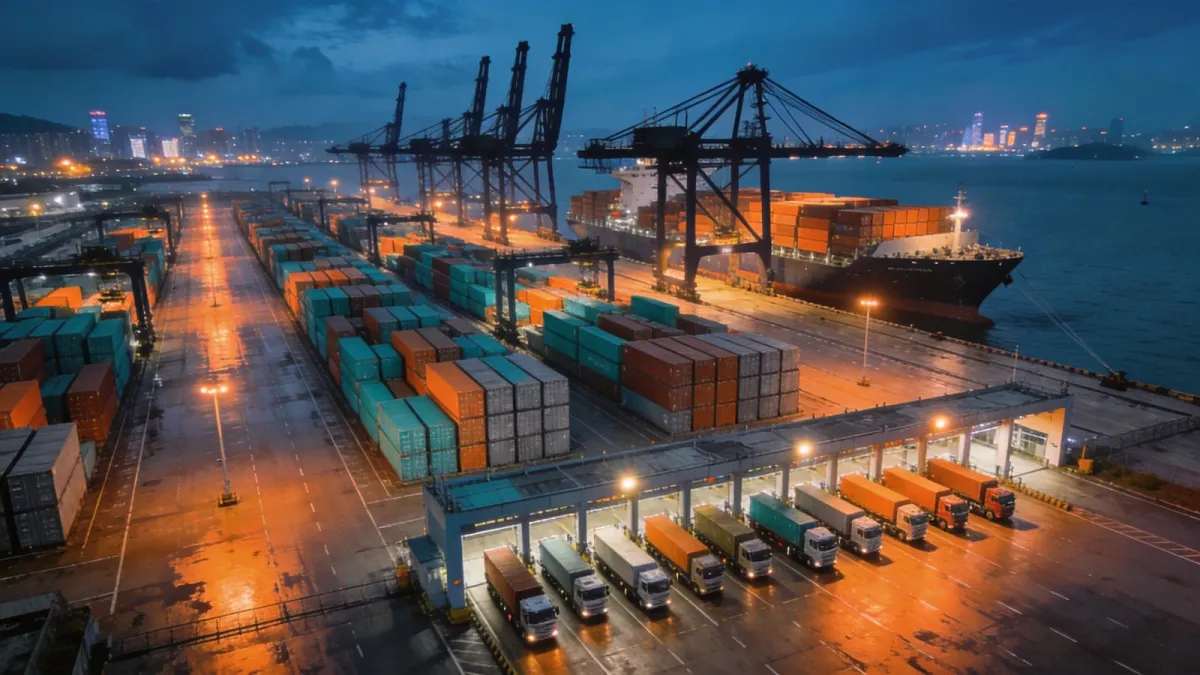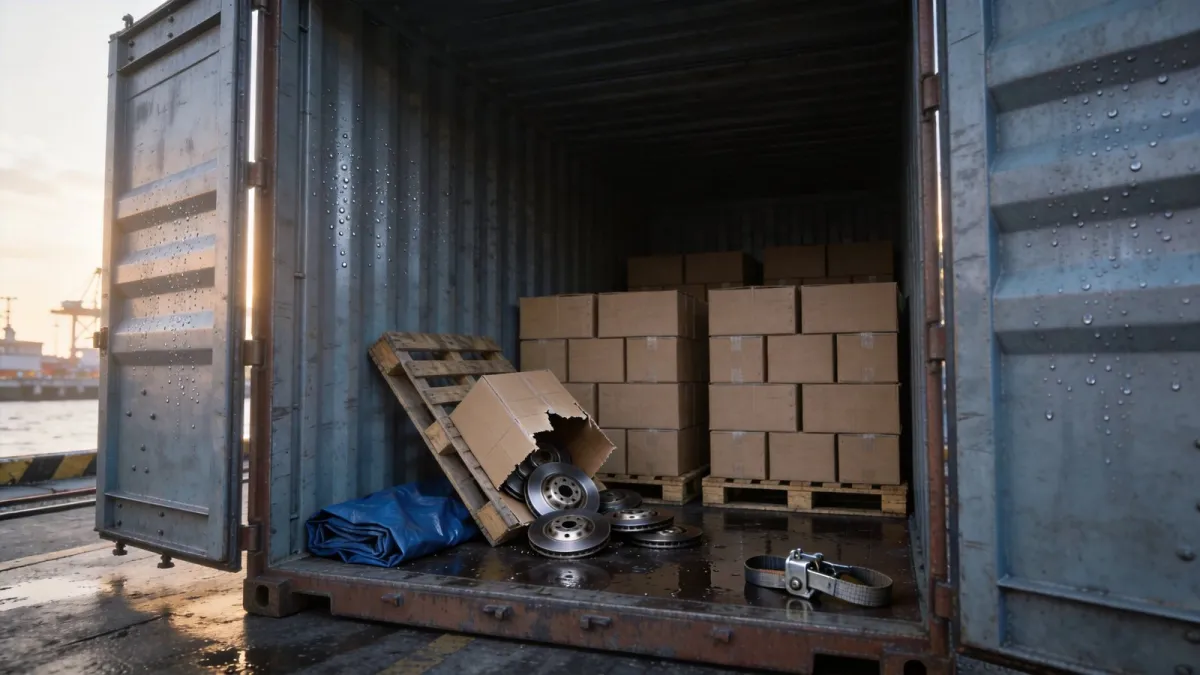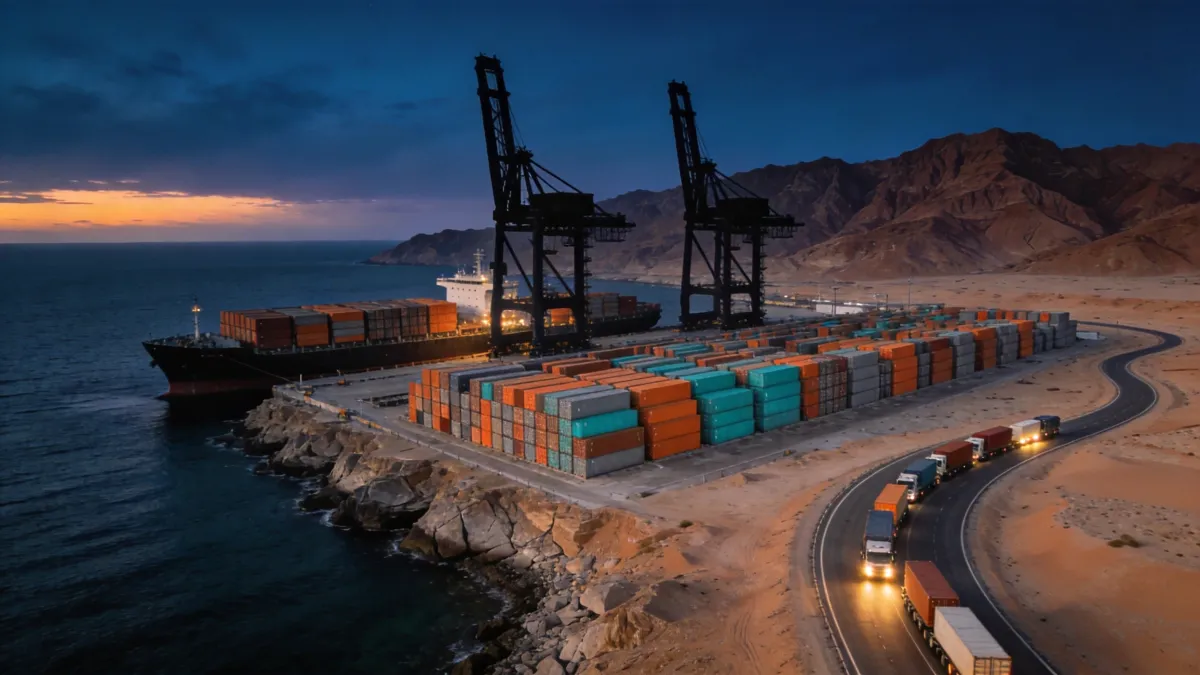
- Since 18 November 2026, containers booked to Kuwait, Iraq, Qatar, Bahrain and the UAE transship through Salalah and Khor Fakkan and then move by landbridge to Sharjah instead of passing through Jeddah.
- Jeddah keeps only Saudi domestic cargo: Jeddah, Riyadh and Dammam imports still arrive through the Red Sea gateway.
- Khor Fakkan is now the constraint — berth congestion, full yards and truck queues are stretching clearance times, and some bookings are being rerouted a second time to Jebel Ali.
- Reefer and dangerous-goods bookings to Iraq, Kuwait, Qatar, Bahrain and parts of Saudi Arabia are suspended or import-only, so cold-chain importers must re-plan December volumes now.
- The practical answer: book two to three weeks earlier, nominate your clearance point in writing, and price the landbridge leg before you confirm FOB or CIF.
For two years the importer's map was simple: China, then Jeddah, then a feeder or a truck. That map is now wrong for five of the six GCC markets. In its 55th Middle East operational update, published on 18 November 2026, Maersk confirmed that cargo booked to Kuwait, Iraq, Qatar, Bahrain and the UAE now transships through Salalah and Khor Fakkan before moving overland to Sharjah.
The change is easy to miss inside a long advisory; the cost consequences are not. Below is what moved, what it costs, where the new queue forms, and how to book without absorbing the difference.
What exactly changed on 18 November 2026?
The change is a transshipment decision, not a port closure: upper-Gulf cargo is now relayed through Omani and UAE east-coast ports instead of the Saudi Red Sea gateway.
Three details in the Maersk operational update matter to an importer:
- The upper-Gulf relay moved. Cargo for Kuwait, Iraq, Qatar, Bahrain and the UAE transships via Salalah and Khor Fakkan, then travels by landbridge to Sharjah, then connects to the intra-Gulf feeder network.
- Jeddah is now a Saudi-only gateway. A container booked to Jeddah with a consignee in another Middle East country is not discharged there; it is routed to the consignee's country through Khor Fakkan.
- Saudi cargo keeps its routing. Cargo with a Saudi port of discharge continues through Jeddah, including Riyadh and Dammam via the established Jeddah landbridge.
The same advisory pauses landside bookings on several lanes and suspends reefer bookings to Iraq, Kuwait, Qatar, Bahrain, Dammam, Jubail, King Abdullah Port and Jordan, with import-only acceptance at Salalah, Sohar and Khor Fakkan.
Why Jeddah stopped being the Gulf's relay station
Jeddah lost the relay role because insurers and carriers repriced the risk of the southern Red Sea corridor faster than the trade could adapt.
Maersk states plainly that several insurers have reduced or withdrawn cover for shipments into the Red Sea, the Gulf of Oman and the Arabian Gulf — particularly on the vessels themselves. When hull cover becomes the scarce input, a carrier does not argue with the market; it rewrites the network. Moving the relay to Salalah, outside the strait and outside the southern Red Sea, is the cheapest way to keep Gulf cargo moving.
A slower force is also at work. Capacity is returning to Suez: Evergreen resumed transits in November, Yang Ming follows in December, and Freightos expects full alliance returns by the first quarter of 2027. That capacity is going to the Asia–Europe trunk, not the Gulf relay, so Gulf space stays tight and Gulf surcharges stay in force while headline indices fall.
Jeddah is not being abandoned. In November 2026 the port added a CRC service run by Emirates Shipping Line with declared capacity of 1,250 TEU, linking Shanghai, Ningbo and Nansha with Sokhna, Aqaba and Jeddah. It is being re-specialised as a Saudi and Red Sea gateway, not a Gulf-wide hub.
What the diversion costs per container
The rerouting carries a published price list, charged on top of your negotiated ocean freight rather than instead of it.
| Charge | Amount | Applies to |
|---|---|---|
| Emergency freight rate, 20' dry | USD 1,800 per container | Iraq, Kuwait, Saudi Arabia (Dammam, Jubail), Bahrain, Qatar, UAE, Oman except Salalah |
| Emergency freight rate, 40' dry | USD 3,000 per container | Same scope |
| Emergency freight rate, reefer, special or DG | USD 3,800 per container | Same scope |
| Strait of Hormuz transit fee | USD 1,000 per container | Any vessel transiting Hormuz, on top of the emergency rate |
| Storage in transit beyond 14 days | USD 25 per TEU per day | Cargo held at a carrier-selected storage port |
| Jebel Ali transshipment storage | USD 25 per TEU per day | From the day of discharge |
| Empty return to Sajaa dry port | Up to USD 1,200 per 40' | Certain imports cleared through Khor Fakkan |
Read the stack, not the headline. One 40' dry container to Kuwait, discharged at Khor Fakkan and forwarded on a feeder that transits Hormuz, carries USD 4,000 of surcharges before a truck moves: USD 3,000 emergency freight plus the USD 1,000 Hormuz fee. Add the empty return to Sajaa at up to USD 1,200 and the destination leg approaches USD 5,200 — excluding ocean freight, duty and VAT.
That is why the headline indices mislead. The Shanghai Containerized Freight Index closed at 3,503.78 on 20 November 2026, down 68.55 points, or 1.9%, week on week and the third consecutive decline, while the Freightos Baltic Index sat at 3,487.20. Gulf lanes are not falling with them, because the Gulf is now priced through surcharges and landbridges rather than base freight.
Khor Fakkan is now the bottleneck, not the shortcut
Khor Fakkan absorbed the relay traffic faster than its terminal and road network could clear it, and the queue is now measurable.
Maersk lists vessel congestion, limited berthing, high yard utilisation, road congestion and long truck waits at Khor Fakkan, and confirms the terminal is relocating containers to ICD Sajaa to relieve pressure. For selected bookings, the final destination is being changed to Jebel Ali — a second rerouting of cargo already rerouted once.
The numbers behind the queue:
- Khor Fakkan handled 1.8 port calls a day in the last 30 days of IMF PortWatch data, against 1.0 a day before the disruption.
- Port-call records for the week to 21 November 2026 show 20 container ships arriving, of which 13 stayed more than 48 hours — 65% — with a median stay of about 66 hours (port records).
- The UAE east-coast ports now push roughly 3,500 TEU a day to inland distribution centres, a 30% rise in the third quarter of 2026 alone, while ships waited about nine days for berths off Fujairah plus 15 days to lift boxes off the dockside, per The Maritime Executive.
The consequence is a chain of delays: berth wait, discharge, bonded trucking to Sajaa or Jebel Ali, customs, inland delivery. Several links add USD 25 per TEU per day of storage if documents are late. Hapag-Lloyd now asks UAE importers to nominate Sajaa or Khor Fakkan, with Sajaa as default and 12 days of free time.
Which gateway should your next container use?
In Keerki Limited's view, the right gateway now depends on where the goods are consumed, not on which port shows the cheapest headline rate.
| Gateway | Best for | Current constraint |
|---|---|---|
| Jeddah | Saudi domestic cargo, including Riyadh and Dammam via landbridge | Saudi-only discharge; non-Saudi consignees rerouted via Khor Fakkan |
| Salalah | Transshipment to the upper Gulf, Oman domestic, East Africa | Capacity raised to 6.5 million TEU after a USD 300 million upgrade; 2.33 million TEU in the first half of 2026, up 15% |
| Khor Fakkan and Sajaa | UAE delivery, upper-Gulf landbridge, Jebel Ali feeder | Congestion, truck queues, second rerouting to Jebel Ali |
| Sohar | Oman and UAE border trade | Import-only acceptance for most cargo types |
| Aqaba | Jordan and Iraq | Cross-border transit via Jordan not accepted by several carriers |
Two rules follow. If your consignee is in Saudi Arabia, insist the booking shows a Saudi port of discharge. If your consignee is in the upper Gulf, price the landbridge leg before accepting a quotation — it is a trucking product, not an ocean rate.
Seven steps to protect your next shipment
- Confirm the discharge port in writing. Ask for a booking confirmation showing port of discharge and place of delivery, not only the port of loading.
- Re-read your Incoterm. On CIF or DAP the seller picks the route, and one who books to Jeddah for a Kuwaiti consignee creates a problem you pay for.
- Nominate your clearance point. Tell the carrier in writing whether you will clear at Sajaa or collect at Khor Fakkan, before the container sails.
- Pre-clear documents. SABER product and shipment certificates for Saudi-bound goods must exist before discharge.
- Book earlier than usual. Two to three weeks of extra lead time is cheaper than one week of air freight on a partial shipment.
- Split the order. Send fast-moving, high-value lines through the route you control; keep bulky cargo on the cheapest sailing.
- Recalculate landed cost per SKU. A USD 4,000–5,200 surcharge stack changes which products still work at today's retail prices.
Tip from Keerki: in Guangzhou we now book space 21 days ahead instead of 10, and we photograph the container seal and the loading tally at the factory gate. When a box is rerouted twice, that record is the first thing an insurer asks for.
Frequently Asked Questions
Is Jeddah port closed to imports?
No. Jeddah remains open and still serves cargo with a Saudi port of discharge, including Riyadh and Dammam via landbridge. Only cargo booked to Jeddah for consignees elsewhere in the Gulf is rerouted through Khor Fakkan.
Why is my Kuwait or Qatar container arriving through Oman?
Because carriers moved the upper-Gulf relay out of the Red Sea corridor. Salalah sits outside the strait, so it can receive ocean vessels and feed the upper Gulf by landbridge to Sharjah plus intra-Gulf feeders.
How much extra should I budget per container?
For a 40' dry container to Kuwait, Qatar, Bahrain or Iraq, published carrier surcharges alone reach USD 4,000 when the feeder transits Hormuz. Add up to USD 1,200 for an empty return to Sajaa and USD 25 per TEU per day of storage if documents are late.
Are reefer and dangerous-goods shipments affected?
Yes, more than dry cargo. Reefer and dangerous-goods bookings to Iraq, Kuwait, Qatar and Bahrain are suspended, as are reefer bookings to Dammam, Jubail, King Abdullah Port and Jordan. Cold-chain importers should plan December volumes now.
Will rates fall when carriers return to Suez?
Only partly, and not on Gulf lanes in the short term. The returning capacity is being deployed on the Asia–Europe trunk: the SCFI fell 1.9% in the week to 20 November 2026 while Gulf-specific surcharges stayed in force, so the two markets are pricing separately.
What should I do if my container is already at sea?
Ask the carrier which of three options applies: complete the voyage with temporary storage, return to origin, or change of destination. A decision taken before the box reaches the region avoids the emergency freight charge; one taken after discharge does not.
Nothing here is permanent, and that is the planning problem. The relay moved in days, the surcharges are reviewed weekly, and the terminal that replaced Jeddah already sends boxes back to Jebel Ali. Treat the next two quarters as a moving network and you will pay the same freight as everyone else while keeping your margin.
Keerki Limited is a China-based sourcing and commercial representation company headquartered in Guangzhou, helping businesses in the Gulf and the Arab world import from China safely for over 10 years. Our team works inside the factories and inside the freight market at the same time, so we can tell you before you pay a deposit whether a supplier's delivery date will survive the current routing.
For a second opinion on a quotation, a route or a supplier before your next booking, use our request form or WhatsApp +86 133 9212 7362. Start from the supplier directory or the China city guide, and see our earlier notes on cargo insurance and on the new direct China–Gulf services.