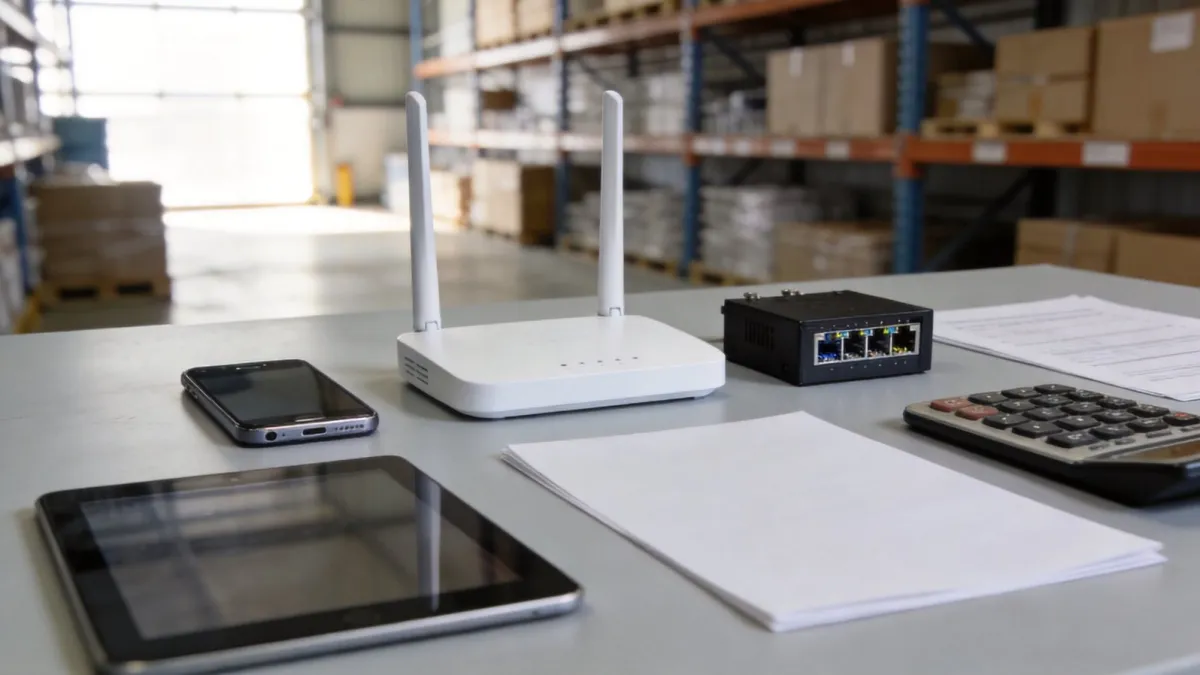
- Since 1 November 2026, Saudi Arabia's SABER platform no longer issues new Certificates of Conformity for covered ICT and telecom devices under the old SASO CITC GEN-002 specification — every new certificate must meet SASO 3114:2026.
- Existing GEN-002 certificates and shipment certificates are not cancelled overnight, but they are discontinued no later than 31 March 2027, after which every covered product needs a SASO 3114:2026 certificate to keep entering the Saudi market.
- Scope is defined by the device's function, not its customs code: smartphones, tablets, mobile computers, routers, CPE, ONTs, home access gateways and Wi-Fi distribution devices.
- Audit every model in your catalogue before your next purchase order — which standard its certificate references and when it was issued — and budget 2–4 extra weeks for CST type approval on wireless devices before shipping.
If you import smartphones, tablets, laptops, routers or home networking gear from China into Saudi Arabia, the conformity rules changed again: as of 1 November 2026, the SABER platform operated by the Saudi Standards, Metrology and Quality Organization (SASO) stopped issuing new certificates for these devices under the outgoing SASO CITC GEN-002 specification, replaced by SASO 3114:2026 — Requirements for Specific ICT Equipment. Because this certificate is a precondition for clearing Saudi ports, an outdated file can quietly become the reason your next container is held. This guide explains what changed and the steps to finish before your 2027 shipments.
What exactly changed on 1 November 2026?
The direct answer: from 1 November 2026, every new Certificate of Conformity for a covered ICT device must be issued against SASO 3114:2026, and the previous GEN-002 specification is closed for new certificates. SASO published the replacement standard in the first half of 2026 — the international testing body Cotecna documented its approval and publication on SASO's official platforms on 21 May 2026 — with a grace period that ran until 31 October 2026, independently confirmed in regulatory bulletins from TÜV Rheinland and CSA Group.
According to TÜV Rheinland, after the grace period no certificate may be issued for covered products unless they meet the updated standard, while existing Certificates of Conformity and Shipment Certificates issued under GEN-002 are discontinued no later than 31 March 2027. The official standard record is on SASO's Wasif standards platform.
One detail importers often miss: the deciding factor is the certificate's issuance date, not the product's manufacturing or shipping date. A batch certified on 28 October 2026 keeps a valid GEN-002 file until 31 March 2027, while the next batch of the same product, recertified on 2 November 2026, needs a certificate under the new standard — a nuance documented in detail by compliance platform Cleo Labs on 30 October 2026.
Which devices fall under SASO 3114:2026?
The new standard covers a broad range of ICT equipment used in carrier networks and in home or office connectivity, from smartphones down to fiber access gateways. The scope below is documented in CSA Group's regulatory update and confirmed by Cotecna:
| Category | Example devices | Importer note |
|---|---|---|
| Mobile devices | Smartphones, mobile phones, tablets | The most-traded category in China sourcing |
| Mobile computing | Laptops and portable computers with wireless connectivity | USB Type-C is also mandatory since 1 April 2026 |
| Networking equipment | Routers, Customer Premises Equipment (CPE) | Common in ISP and contractor orders |
| Fiber access equipment | Optical Network Terminals (ONT), Home Access Gateways (HAG) | Linked to fiber-to-the-home projects |
| Wireless distribution | Wi-Fi distribution devices and access points | Includes home and office coverage systems |
| Other cellular products | Any ICT device using cellular technologies | Classification follows the device's function |
The most practical point, highlighted by Cleo Labs: a device is classified by what it does, not by the HS code it clears under. Two products sharing one customs heading can fall on opposite sides of the boundary because one functions as a router and the other does not. No official list mapping the scope to specific customs codes had been published at the time of writing, so do not rely on the HS code alone — when in doubt, ask a SASO-accredited conformity assessment body.
What happens to your existing certificates and stock? The full timeline
The direct answer: GEN-002 certificates issued before the end of the grace period are not cancelled immediately — they remain valid until 31 March 2027 at the latest, after which the product needs a certificate under the new standard to keep passing SABER. The full timeline, as documented by TÜV Rheinland, CSA Group and Cotecna:
| Date | Event | What it means for importers |
|---|---|---|
| First half of 2026 | SASO publishes SASO 3114:2026, replacing GEN-002 | Transition begins; new-standard certificates become available |
| 31 October 2026 | Grace period ends | Last day for issuing new certificates under the old specification |
| 1 November 2026 | Full enforcement begins | Every new certificate for covered devices follows SASO 3114:2026 only |
| 31 March 2027 | Existing GEN-002 certificates discontinued | Every covered product needs the new-standard certificate after this date |
In practice, the same product can be "compliant" under two standards at once during the transition, depending on when each batch's certificate was issued. That is why you need a per-model record showing the reference standard, issuance date and expiry. If you have stock on the water to Jeddah or Dammam under a GEN-002 certificate issued before 1 November 2026, check its validity and brief your customs broker before the vessel arrives.
How does the change affect your China import cost and lead time?
The direct answer: the immediate impact is not on customs duty but on preparation time and paperwork risk — certification is a pre-shipment step, and any delay in it delays your goods reaching the shelf.
Since 2018, SABER has worked as the electronic system connecting the importer, certification bodies and Saudi customs, issuing a product certificate and then a shipment certificate per consignment, as explained in the US government's trade.gov commercial guide. Regulated products need both documents before arrival, and cargo landing without a valid shipment certificate is held until the file is completed.
Wireless and cellular devices additionally need type approval from the Communications, Space and Technology Commission (CST) before clearance. Data published by TFTIOR in November 2026 indicates this typically adds two to four weeks before shipment, while a SABER shipment-certificate query adds one to three working days when documents are not ready.
The duty structure itself is unchanged: VAT of 15% on the CIF value plus duty, customs duty of 5% for most goods, and a ZATCA administration fee of 0.15% capped at SAR 500 per declaration, according to TFTIOR. Confirm your product's classification with your broker, as some categories deviate from the general rule.
The wider 2026 context reinforces the direction: SABER aligned its HS code mapping with ZATCA from 1 January 2026; USB Type-C became mandatory for portable computers from 1 April 2026; and from 1 October 2026 SASO began requiring the supplier's name and commercial registration number on the product itself under specified regulations, per a tracker published by the Saudi guide Sent on 23 September 2026. The combined message: conformity is no longer a paper you buy at the end of a deal — it starts at product design. From Guangzhou, the Keerki team asks factories for test reports and the exact standard reference before a purchase order is locked, because catching a gap after production costs far more than catching it before.
Practical steps before your next shipment from China
- Map each product's function: flag anything that works as a phone, tablet, laptop, router, CPE, ONT, HAG, Wi-Fi distribution device or cellular-enabled device — these fall inside the new standard's scope.
- Ask the supplier in writing for updated test reports and for the exact standard the certificate will reference; do not accept a generic "we have SASO certificate" reply.
- Build a per-model record: reference standard, issuance date, expiry date, and issuing conformity body.
- Start CST type approval for wireless devices weeks before shipping — it is registered against a specific model and does not cover other variants.
- Match the model name and marking on the product and box to the technical file in SABER, and check the on-product supplier marking where covered regulations apply.
- Coordinate the shipment certificate with your customs broker before the cargo reaches the port.
- Plan the full switch to SASO 3114:2026 before 31 March 2027, starting with new purchase orders and then your fastest-moving stocked models.
When scouting new suppliers for this device category, you can start with the Keerki supplier directory, which lists over 35,000 suppliers, then verify each factory's conformity paperwork before negotiating price. For wider context, see our analysis of recent GCC import compliance changes and our pre-shipment quality inspection guide.
A note from Keerki: do not start production until the factory hands over a recent test report that names SASO 3114:2026 explicitly, and make sure the model name in the report matches the label and the box exactly. Our pre-shipment inspection service helps you spot gaps between the approved sample and mass production before you pay the balance, reducing the risk of re-testing or a port hold.
Frequently Asked Questions
Do products certified under GEN-002 have to leave the Saudi market on 1 November 2026?
No. Certificates and shipment certificates issued under the old specification before the grace period ended remain valid until 31 March 2027 at the latest; the 1 November 2026 change only stops new issuances, as confirmed by TÜV Rheinland and CSA Group.
How do I know whether my product is covered by SASO 3114:2026?
Classification follows the device's function, not its HS code: if the product works as a phone, tablet, laptop, router, CPE, ONT, HAG, Wi-Fi distribution device or cellular-enabled equipment, it is most likely in scope. When in doubt, submit the technical description to a SASO-accredited conformity assessment body before booking.
What is the difference between a product certificate and a shipment certificate on SABER?
The product certificate proves the model meets the applicable technical regulation; the shipment certificate is tied to the actual consignment, invoice and quantities. Holding the first does not replace a new shipment certificate per consignment, as both the Sent guide and trade.gov explain.
What happens if a wireless device shipment arrives without CST type approval?
Radio-frequency devices such as Wi-Fi and cellular equipment need CST type approval before clearance; without it the shipment can be held at the port until approval is completed or the goods are re-exported. Start two to four weeks before shipping and confirm the details with your customs broker.
Does the new standard apply to laptops imported from China?
Yes. Laptops and portable computers with wireless connectivity fall inside the scope, and they are additionally subject to the USB Type-C requirement in force since 1 April 2026. Verify charger and port compliance in the model specification before confirming the order.
When should I complete the switch to SASO 3114:2026?
The practical deadline is 31 March 2027, when existing GEN-002 certificates are discontinued. The safer practice is to request certificates under the new standard from the first purchase order after 1 November 2026.
In summary, the shift from GEN-002 to SASO 3114:2026 is not a formality; it is a new checkpoint on every electronics and telecom importer's list for Saudi Arabia. A product without a certificate under the correct standard means a delayed shipment, storage charges and a selling season that may pass. Review your model files early, fix the standard reference inside the purchase order, and never assume last season's certificate covers the next one.
Keerki Limited is a China-based sourcing and commercial representation company headquartered in Guangzhou, helping businesses in the Gulf and the Arab world import from China safely for over 10 years — from supplier verification and conformity review to pre-shipment inspection and customs coordination.
If you are planning to import telecom or electronics products from China, start your request through our service request form or message us directly on WhatsApp at +86 133 9212 7362 and our team will get back to you.