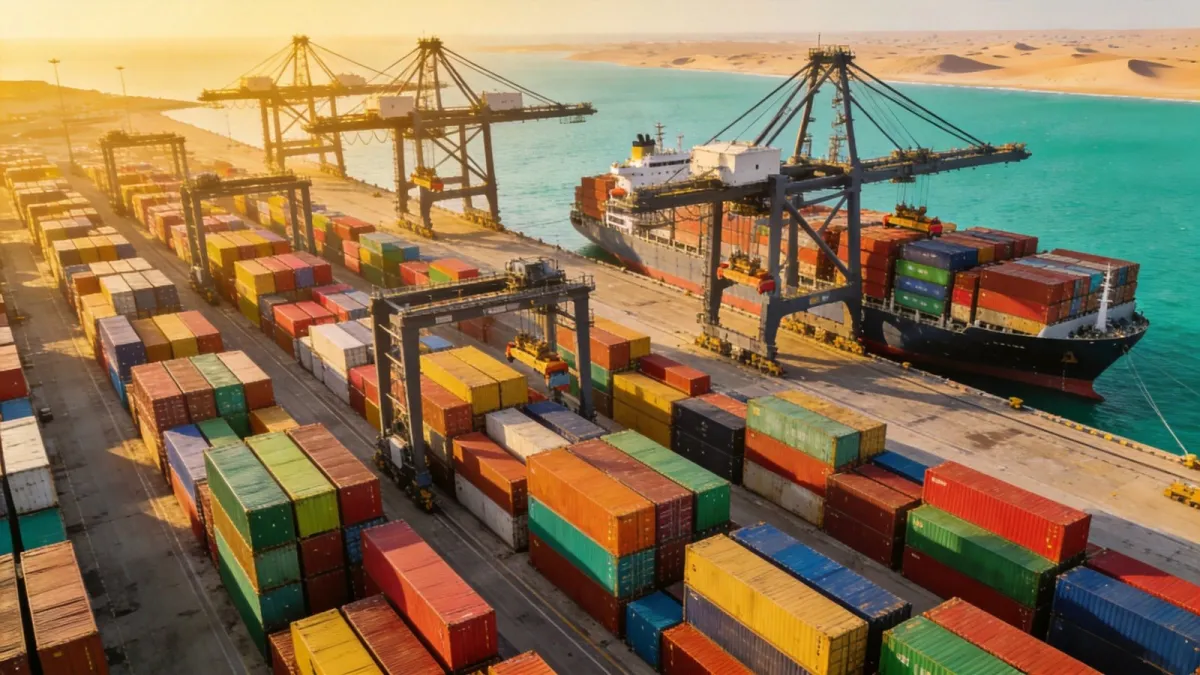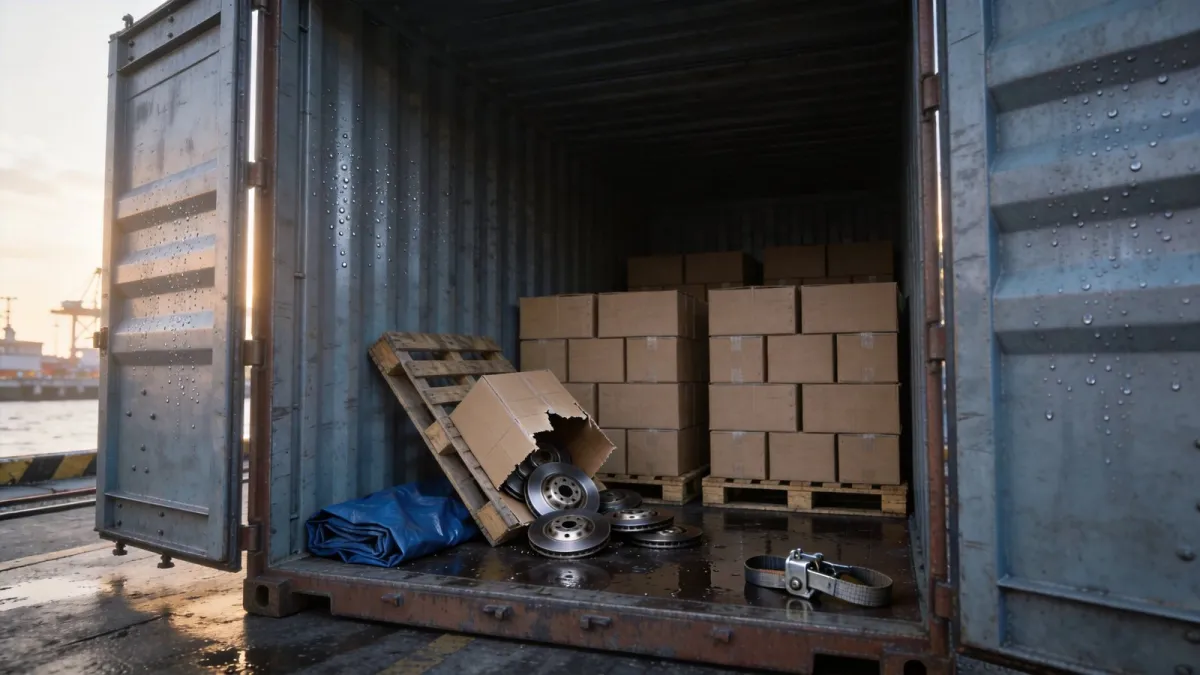
- Under CIF Incoterms 2020 the seller only has to buy minimum cover — Institute Cargo Clauses (C) — for 110% of the contract value, and that wording does not pay for theft, water entering the container or rough handling.
- Base cargo cover on China–Gulf lanes is usually quoted at 0.15%–0.5% of insured value; a war and strikes rider for the same voyage is commonly reported at 0.5%–1.5% of cargo value.
- General average under the York-Antwerp Rules can put your container on hold until a deposit or guarantee is posted, even when your own cartons are dry and intact.
- Cover normally ends 60 days after discharge if the goods have not reached your final warehouse — exactly where free-zone storage and the inland leg to Riyadh or Doha sit.
Most Gulf importers believe they are insured because the supplier's invoice says CIF. What actually travels with a CIF shipment is the narrowest wording in marine insurance, drafted for bulk cargo rather than for pallets of brake pads, filters or LED lamps moving to Jebel Ali, Hamad or Jeddah. The policy looks complete on paper and disappoints at the moment of a claim.
What does CIF insurance actually cover in a China–Gulf contract?
CIF requires the seller to arrange marine insurance for at least 110% of the contract value, but only at the minimum level, Institute Cargo Clauses (C), unless your sales contract states a higher clause.
The ICC Academy, which trains traders on the Incoterms 2020 rules, is explicit: under CIF the seller must obtain insurance complying with Clause (C), the minimum cover, while under CIP the seller must obtain Clause (A). Both are pegged at a minimum of 110% of the contract price.
Two consequences follow. The party choosing the wording is not the party who carries the risk: risk passes to you when the goods are loaded on board in China, but the policy is bought by the factory. And 110% is a floor, not a target — invoice value plus a customary 10% margin, nothing beyond it. Because risk transfers at loading, the trade term you choose is your first insurance decision. Under a letter of credit, UCP 600 article 28 requires the insurance document to cover at least 110% of CIF value and to be dated no later than shipment.
ICC (A), (B) or (C): which clause do you actually need?
For containerised manufactured goods — auto parts, appliances, electronics, hardware — you need ICC (A), because ICC (C) leaves the most common container damage uncovered.
The three sets were reissued by the Lloyd's Market Association and the International Underwriting Association on 1 January 2009 and remain the standard wording behind most cargo policies. The difference is not a matter of degree; it is which perils are named at all.
| Peril | ICC (A) | ICC (B) | ICC (C) |
|---|---|---|---|
| Fire or explosion | Covered | Covered | Covered |
| Vessel stranded, sunk or capsized | Covered | Covered | Covered |
| Collision, discharge at a port of distress | Covered | Covered | Covered |
| General average sacrifice, jettison | Covered | Covered | Covered |
| Earthquake, volcanic eruption, lightning | Covered | Covered | Not covered |
| Sea or river water entering the container | Covered | Covered | Not covered |
| Washing overboard | Covered | Covered | Not covered |
| Theft, pilferage, non-delivery | Covered | Not covered | Not covered |
| Rough handling, breakage, malicious damage | Covered | Not covered | Not covered |
| Any other cause not specifically excluded | Covered | Not covered | Not covered |
All three sets exclude the same core list: wilful misconduct, ordinary leakage and wear, insufficient or unsuitable packing, inherent vice, delay and the insolvency of the shipowner. War, strikes and terrorism must be bought back through the Institute War Clauses (Cargo) and Institute Strikes Clauses (Cargo).
For auto parts this exclusion list matters more than the peril list. Brake discs that arrive with rust bloom after three weeks in a humid container are argued as a packing case, not a sea-water case — so the desiccant bags and the photographs taken at loading decide the claim as much as the clause letter.
Why general average can freeze your container at the port
General average is a maritime rule that makes every cargo owner on board share the cost of a sacrifice made to save the ship, including owners whose own goods arrived undamaged.
If a container ship has a fire, runs aground or jettisons boxes, the shipowner declares general average under the York-Antwerp Rules. The applicable text, the York-Antwerp Rules 2016, defines a general average act as an extraordinary sacrifice intentionally and reasonably made for the common safety, borne by the contributing interests: ship, fuel and cargo.
In practice the average adjuster collects security from every cargo interest before release. Your container can sit at Jebel Ali or Dammam while your forwarder asks for an average bond or a bank guarantee, even though your cartons were nowhere near the fire. Rule E sets a 12-month window to notify claims.
This is where a policy earns its premium: the insurer issues the guarantee instead of your treasury; without cover it is cash out of your account, calculated on cargo value rather than on the damage you suffered.
What does cargo insurance cost on China–Gulf shipments?
Base cover on China–Gulf lanes is usually quoted between 0.15% and 0.5% of insured value, and the war and strikes rider is the line item that has grown fastest on top of freight and surcharges that moved through 2026.
Ranges reported by providers in 2026; your rate depends on commodity, packing, route, deductible and claims history.
| Cover | Typical quoted range | What it responds to | Suited to |
|---|---|---|---|
| ICC (C) | 0.15%–0.3% | Major casualties only | Low-value bulk, scrap, raw material |
| ICC (B) | 0.2%–0.4% | Major casualties plus water entry, earthquake, washing overboard | General merchandise |
| ICC (A) | 0.3%–0.5% | All risks except the standard exclusions | Auto parts, appliances, electronics, retail goods |
| War and strikes rider | 0.5%–1.5% of cargo value | War, strikes, riots, terrorism | Gulf voyages with war and strikes exposure |
Here is the arithmetic. A container of brake pads invoiced at USD 80,000 is insured for 110%, or USD 88,000. At an ICC (A) rate of 0.4% the premium is about USD 352; a war and strikes rider at 1% adds about USD 880. Total cover of roughly USD 1,232 — about 1.5% of cargo value — against a total loss of USD 80,000.
One distinction matters: the war-risk surcharge on your freight invoice covers the vessel and its crew, not your cartons. It is a charge from the line, not a policy in your name, and it pays you nothing if the container is hit.
Where does your cover end? The 60-day rule and the inland gap
Cargo cover runs from the seller's warehouse to your final warehouse, but it stops automatically 60 days after discharge from the vessel if the goods have still not arrived.
That is clause 8 of the Institute Cargo Clauses: cover stays in force during the ordinary course of transit and ends on delivery to your final warehouse, on delivery to any other warehouse chosen for storage, or 60 days after discharge at the final port, whichever comes first.
Gulf supply chains test that clause constantly. A container discharged at Hamad, Jebel Ali or Dammam can wait for a customs inspection, an Arabic labelling check, a free-zone transfer or a truck slot to Riyadh. Cargo stored in a free zone after transit ends is no longer in transit, and the policy is not a warehouse policy.
The carrier's liability does not fill the gap. Under the Hague-Visby regime the carrier's limit is 666.67 units of account per package, or 2 units per kilogram, whichever is higher. On palletised auto parts that is a fraction of the invoice, which is why the trade does not rely on suing the line.
A note from inside China: when Keerki's team in Guangzhou books a pre-shipment inspection for auto parts, the inspector photographs the cartons, the desiccant, the pallet wrap and the container number and seal before the doors close. Insurers ask for exactly those photographs when a moisture claim is filed, and factories rarely keep them.
How do you file a cargo claim that actually gets paid?
A cargo claim is decided in the first 48 hours at the destination port, not in the correspondence that follows weeks later. The order below follows claim guidance published by marine insurers.
- Inspect before you sign. If a seal is broken, missing or different from the shipping document, clause the delivery receipt and keep the seal.
- Photograph the condition. Container number, seal, damaged cartons, water staining, the stow inside the box.
- Notify your insurer or its claims agent immediately, using the contact printed on the certificate — before the cargo is moved, repaired or sold.
- Hold the carrier liable in writing. At sea the window is three days from delivery; air 14 days and road 7 days. Written notice preserves recovery rights.
- Do not dispose of damaged goods. Keep them for survey, and do not repair or scrap before the surveyor has seen them.
- Assemble the file. Policy or certificate, invoice, packing list, bill of lading, survey report, carrier correspondence and a repair or replacement quotation.
- Answer the adjuster if general average is declared, submitting your claim and contributory value within the 12-month window and letting the insurer post the security.
Frequently Asked Questions
Is cargo insurance mandatory when importing from China to the Gulf?
Most Gulf customs authorities do not require a cargo policy to clear a shipment, but the commercial chain does: a letter of credit demands cover of at least 110% of CIF value, and a CIF buyer who trusts the seller's certificate is exposed from the moment goods are on board.
Does CIF insurance cover theft from a container?
No. Institute Cargo Clauses (C), the CIF minimum, does not cover theft, pilferage, non-delivery or rough handling. Theft is covered only under ICC (A) or a specific endorsement, which is why containerised consumer goods should not travel on Clause (C).
Who pays the general average deposit if my cargo is undamaged?
Every cargo interest on board contributes, because the sacrifice preserved the whole adventure, and the share is calculated on the value of your cargo at destination. With a policy the insurer issues the guarantee; without one the deposit is cash before release.
Should I insure the invoice value or 110% of it?
Insure at least 110% of CIF value, the customary margin for freight, duty and expected profit. To cover the full landed cost including duty, VAT and inland trucking, declare that higher value and pay the small extra premium.
Is the war risk surcharge on my freight invoice cargo insurance?
No. The war-risk surcharge is charged by the line to cover the vessel and the carrier's exposure; it creates no right for you to claim. Cargo war and strikes exposure is covered only by adding the Institute War Clauses (Cargo) and Institute Strikes Clauses (Cargo) to your own policy.
The lesson for a Gulf importer is simple: the clause letter on the certificate matters more than the premium, and the last 60 days of the journey matter more than the 20 days at sea. Read the wording before the container sails, not after it arrives wet.
Keerki (Keerki Limited) is a China-based sourcing and commercial representation company headquartered in Guangzhou, helping businesses in the Gulf and the Arab world import from China safely for over 10 years. Its team checks supplier documents, inspects goods before loading and photographs the packing and container seals that insurers later ask for.
If you are preparing a shipment and want a second pair of eyes on the packing, the documents and the insurance certificate before the container leaves China, send the details through the request form or message the team on WhatsApp at +86 133 9212 7362. You can also browse the supplier directory and our services.