- On 2 November 2026, the GCC Secretariat General launched an anti-dumping investigation into uncoated writing and printing paper imported from China, India and Thailand.
- The products covered fall under GCC tariff headings 480255, 480256 and 480257 — in practice most office copy paper and commercial offset paper imported into the Gulf.
- This is an investigation, not a duty yet — but recent 2026 GCC and Saudi cases (float glass, aluminium caps, ductile iron pipes) ended in duties, with Saudi rates of roughly 16% to 39% of CIF value.
- China is Saudi Arabia's largest supplier in this category with $19.2 million in 2024 imports (about 30% share), followed by Indonesia and Thailand, according to World Bank data.
- What to do now: audit your HS codes, secure technical specs from your mill, register as an interested party, and line up Indonesian or regional alternatives before any provisional duties.
If you import printing or copy paper from China into Saudi Arabia or any GCC state, early November 2026 brought news that concerns you directly: the Gulf Cooperation Council has formally opened an anti-dumping investigation into these imports from China, India and Thailand. No duties apply today — but supply of this staple product has entered regulatory uncertainty that could last up to 18 months. This guide covers what was announced, which products are in scope, what 2026 precedents suggest, and the practical steps to take.
What exactly happened on 2 November 2026?
The GCC's Permanent Committee for Anti-Harmful Practices in International Trade issued a decision to initiate an anti-dumping investigation into imports of uncoated paper used for writing, printing or graphic arts purposes, in rolls or rectangular (including square) sheets, originating in or exported from China, India and Thailand. The announcement was published by the GCC Secretariat General in Riyadh; full procedural details appeared in Official Bulletin No. 59 of the Technical Secretariat Office, dated 2 November 2026.
The decision followed a preliminary report by the Technical Secretariat Office, which runs GCC trade-remedy cases. In the official statement on the GCC Secretariat website, the Office's Director General, Mahfoudh bin Nasser Al-Raqadi, confirmed the measure is grounded in the GCC Unified Anti-Dumping, Countervailing and Safeguard Measures Law and is fully consistent with the WTO Anti-Dumping Agreement, adding that the notice gives all concerned parties — including Gulf importers — the chance to defend their interests during the investigation.
One point many miss: opening an investigation means the Technical Secretariat found prima facie evidence of dumping injuring the Gulf paper industry. Not a verdict — but not a formality either.
Which products are covered by the investigation?
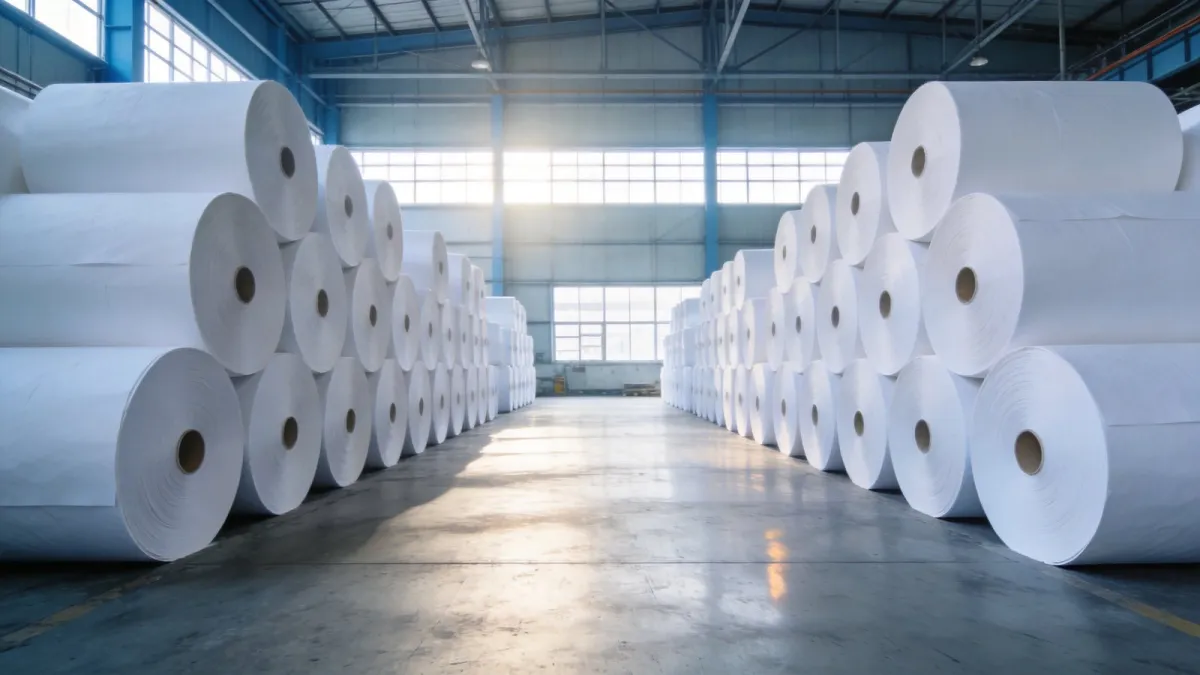
The investigation covers uncoated woodfree paper for writing, printing and graphic purposes, in rolls or rectangular sheets, containing no mechanical or chemi-mechanical fibres — or such fibres at no more than 10% of total fibre content — in grammages between 40 and 150 g/m². According to coverage by China's trade-remedy information network, the products fall under GCC unified tariff headings 480255, 480256 and 480257.
In market language: A4/A3 copy paper (70/80 gsm), commercial offset paper, book and notebook paper, and office reels bought by printers, publishers, schools and corporate offices. If these SKUs sit in your warehouse, you are inside the scope.
Coated paper, paperboard and packaging grades are not covered by this case — but multi-ply paperboard from China and India has been under a parallel Saudi national investigation since 19 August 2026.
Why should Gulf importers care? Market size and China exposure
The Middle East printing paper market is worth roughly $2.82 billion in 2025 and is projected to reach $3.71 billion by 2033, with Saudi Arabia alone accounting for about $0.78 billion, according to Cognitive Market Research. Any duty on this category will touch thousands of importers, printers and stationery distributors.
Customs data shows the supply chain's China exposure. Per the World Bank's WITS database, Saudi Arabia imported $63.6 million (43,500 tonnes) under heading 480252 alone in 2024 — a closely related heading used here as a proxy, since the covered headings are 480255–480257 — with China top supplier at about $19.2 million, followed by Indonesia ($17.0 million) and Thailand ($7.0 million), itself also a subject country.
| Source | Saudi imports 2024 (HS 480252) | Approx. share | Status in investigation |
|---|---|---|---|
| China | $19.2 million | ~30% | Subject country |
| Indonesia | $17.0 million | ~27% | Not covered |
| Thailand | $7.0 million | ~11% | Subject country |
| Finland | $4.1 million | ~6% | Not covered |
| UAE (re-export) | $4.0 million | ~6% | Not covered |
Source: COMTRADE via WITS/World Bank, 2024. The main uncovered Asian alternative (Indonesia) exists, but its capacity cannot absorb a sudden swing in Gulf demand if steep duties land — which is how price spikes begin.
What do the 2026 precedents say about likely outcomes?
Recent cases suggest such investigations usually end with real duties. In just the past few months, the GCC imposed final anti-dumping duties on float glass from China and Iran (Official Bulletin 58, 30 July 2026) and opened an expiry review of duties on Chinese aluminium alloy sheets (Bulletin 57, April 2026). At the Saudi national level, the General Authority of Foreign Trade imposed final duties of 15.8% to 38.7% of CIF value on Chinese easy-open aluminium beverage caps on 13 October 2026, duties of 16.96% to 29.94% on Indian ductile iron pipes in August 2026, and maintains duties on Chinese titanium dioxide.
| Measure | Date | Product | Outcome |
|---|---|---|---|
| GCC Bulletin 58 | 30 July 2026 | Float glass (China, Iran) | Final duties |
| Saudi measure | 4 August 2026 | Ductile iron pipes (India) | 16.96%–29.94% of CIF |
| Saudi measure | 13 October 2026 | Aluminium beverage caps (China) | 15.8%–38.7% of CIF |
| GCC Bulletin 59 | 2 November 2026 | Uncoated paper (China, India, Thailand) | Investigation opened |
On timing, WTO Anti-Dumping Agreement requires investigations to conclude within one year — and never more than 18 months — and bars provisional measures earlier than 60 days after initiation. In practice, the earliest provisional duties would fall around early 2027, with a final determination possible by May 2028. Regional trade publication ME Printer notes regional printing and packaging companies are already being urged to review sourcing early.
What practical steps should you take now?
The right moves now: audit your tariff exposure and secure your supply chain before the market reprices the risk.
- Match your customs records against the case headings: pull import declarations for the past two years and flag every shipment cleared under 480255, 480256 or 480257 from China, India or Thailand — that is your risk base.
- Request a fibre-composition certificate from your Chinese mill: the case excludes paper above 10% mechanical fibre — if your product is documented over that threshold, it may fall outside the scope, but that requires a mill certificate, not a trade description.
- Register with the Technical Secretariat as an interested party: the official notice explicitly lets importers submit data and defend their interests. Importer voices are heard at this stage; early participation beats waiting.
- Diversify toward uncovered origins: Indonesia (already Saudi Arabia's number-two supplier here), Finland and UAE-based mills are outside the case. Request Indonesian samples and quotes now as a plan B, even if never activated.
- Revisit contract timing and inventory: if your stock cycle is 60–90 days, consider strengthening core-SKU inventory ahead of early 2027 — without overstocking, since a no-duties outcome is also possible.
- Reprice long-term supply contracts: if you resell on annual fixed-price contracts, add a clause allowing price revision if duties are imposed, so you don't absorb a potential 15–39% gap alone.
From Guangzhou we expect major Chinese mills to cooperate with the investigation — but their Gulf-bound offers will likely firm up pre-emptively through Q1 2027. Do not sign a single-source fixed-price annual contract with one Chinese mill before requesting a parallel Indonesian or regional offer — the duty gap alone could erase your margin. The Keerki team can verify composition at the factory (mechanical-fibre share, grammage) and identify verified suppliers outside the case.
Will Gulf trade-remedy action spread to more products?
The trend says yes: GCC states — led by Saudi Arabia — are using trade-remedy tools with growing intensity to protect national industry under Vision 2030. In 2026 alone we have seen cases covering glass, aluminium, epoxy resins, titanium dioxide, beverage caps, paperboard, and now printing paper. This coincides with major regional capacity investment noted by Mordor Intelligence, including the Star Paper Mill recycled-containerboard plant that opened in Abu Dhabi in May 2026.
Meanwhile the regional market is large: the Middle East and Africa writing, printing and specialty paper market was estimated at $24.97 billion in 2024 and is forecast to reach $39.21 billion by 2032 at a 5.8% CAGR, according to Data Bridge Market Research. Demand is real; the variable is who supplies it and at what customs cost. Tracking trade-remedy files should be a standing part of supply-chain management — just as we tracked China's new export controls on drones and heavy machinery and their impact on importers.
Frequently Asked Questions
Have anti-dumping duties been imposed on Chinese printing paper in the Gulf yet?
No. As of publication (November 2026) no duties are in force — 2 November 2026 marks only the formal opening of an investigation. Under WTO rules, provisional measures cannot apply earlier than 60 days after initiation, so the earliest date is early January 2027, with a final decision in up to 18 months.
Is the A4 copy paper I import from China covered by the investigation?
Most likely yes. Standard 70/80 gsm uncoated office paper falls under headings 480255–480257, provided mechanical-fibre content does not exceed 10%. Check past customs declarations and ask your mill for a technical certificate to be certain.
How high could the anti-dumping duties be if dumping is confirmed?
No figure is final before the determination, but 2026 GCC and Saudi precedents give a benchmark: 15.8% to 38.7% of CIF on Chinese aluminium caps, and 16.96% to 29.94% on Indian ductile iron pipes. Budget around a similar range with a safety margin.
What sourcing alternatives exist outside China, India and Thailand?
The strongest Asian alternative is Indonesia — already the second-largest supplier of this category to Saudi Arabia at $17 million in 2024, per World Bank data. European mills such as Finland follow, alongside UAE and Saudi producers expanding recycled and office paper capacity.
Can I participate in the investigation as an importer to defend my interests?
Yes. The official notice explicitly gives all concerned parties — including importers — the opportunity to defend their interests during the investigation. Register your position and submit data through the Technical Secretariat Office early, before document deadlines close.
Will the investigation affect Gulf paper prices before a decision is issued?
Very likely, gradually. Markets price risk early: importers build inventory, some Chinese mills raise offers pre-emptively, and Indonesian alternatives receive extra enquiries. Similar cases suggest price firming typically starts one to three months before provisional duties.
Conclusion: treat this file as a permanent part of your sourcing management
This investigation is a milestone in a wider trajectory: the Gulf is building a national paper industry and shielding it with WTO-consistent tools, while China remains a key supplier — possibly under different price terms during 2027. The smart importer audits tariff codes today, secures a backup line from Indonesia or regional mills, and balances inventory with discipline, instead of paying the difference out of margin later.
Keerki Limited is a China-based sourcing and commercial representation company headquartered in Guangzhou, helping businesses in the Gulf and the Arab world import from China safely for over 10 years. On files like this we verify composition at the factory, review your shipments' customs classification, and find verified alternatives through our supplier directory, handling negotiation and pre-shipment quality inspection as part of our services. Start with a review of your sourcing position via our request form, or message us directly on WhatsApp +86 133 9212 7362 — see also our analysis of the new direct China–Gulf shipping routes to optimise freight cost alongside duty cost.